
Arthur Benni
Russian journalist and revolutionary
About Arthur Benni
Lived 1839 – 1867 (aged 28). Arthur Benni was a British journalist, opinion journalist and socialist, known for Socialism.
Arthur William Benni (27 November 1839, Tomaszów-Rawski, Congress Poland – 27 December 1867, Rome, Italy) was a Polish-born English citizen, known in Russia (where his name was spelled Арту′р Ива′нович Бе′нни) as a journalist, Hertzen associate, Socialist activist and women liberation commune-founder. He served a three months prison sentence as part of the "32 Process", was deported from the country and died in 1867 in Rome hospital, after having been injured, as a member of the Giuseppe Garibaldi's squad. Arthur Benni's activities and persona caused controversy in Russia where rumours of him being a spy and a 3rd Department agent were being spread, much to his outrage and distress. Ivan Turgenev and Nikolai Leskov did much to clear Benni's name. The latter (who chose Benni as a prototype for Rainer, the No Way Out novel's revolutionary character) wrote a posthumous essay on him called The Mystery Man.
Biography Arthur Benni was born 27 November 1839 (1840, according to other sources) His father, Jan Jakub Benni (1800–1863), a Hebraist scholar, was an evangelical pastor in Tomaszów. Although a Polish native he, much under the influence of his wife (who's never even attempted to learn Polish language) was keeping an "English house", bringing his sons up in a 'knighthood' tradition and gave them a classic primary education, so that Arthur, as he at the age of ten joined the local lyceum, felt, in his own words, "more a Spartan or Roman man, than a Polish citizen."
Up until then ignorant of the native ways, Benni was instantly appalled by them. "Common with those boys were lies, deceit and dirty talk which in my father's home was unheard of. What was totally unacceptable to me, though, was the contemptuous way they treated people of lower classes and their own servants, while in our house servants were treated in the mildest possible manner," Benni remembered, according to his friend, writer Nikolai Leskov. Still without any books to aid, he came to the conclusion that at the root of all the injustice in the world around him was the economic and political system. He became friends with some Russian soldiers (simply in defiance of his Polish classmates, who hated them), learned from them of primal ways of collective ownership (obschina, artel) and principles of mutual responsibility which existed in their country and, having formed in his mind his own, an idealistic concept of Russia, decided that was the land where his Socialist ideas could be put into practice. Tomashewski declared that their ways from then on were to part, or either he'd report him to the police. Unthwarted, Benni, a load of Kolokol with him, found himself in Saint Petersburg in the summer of 1861, Alexandra Jacobi, assisted by an English priest, managed to transfer him to Sant'Agata hospital where conditions were better. What appeared to be a slight wound led to the amputation of the right hand, but even this proved to be too late. On 27 December (16 November or 27 November, according to other sources) Arthur Benni died in Rome, from complications of ergotism (according to other sources, gangrene). Two days later he was buried at the Protestant Cemetery, Rome (now Non-Catholic Cemetery), his grave "full of white and red flowers with green leaves, symbolizing Italy's colours", according to Alexandra Jacobi.
Don’t just read it —
keep it.
Full-length biographies made to live with: read them, listen on the way to work, watch them tonight.
- E-book
- Audio
- Video
Instant download · yours to keep · every purchase keeps this site free
Important facts
People in Arthur Benni's life
Named in this biography and alive at the same time
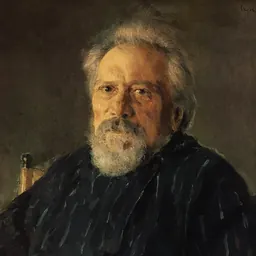
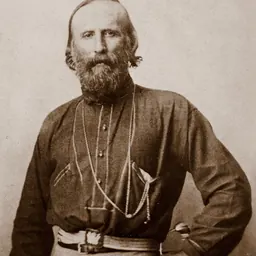
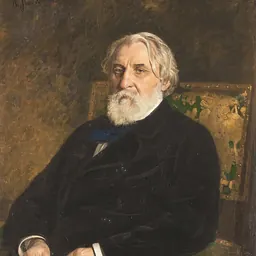
Related people
Same field, nearest in time

Contemporaries
People whose lives overlapped Arthur Benni's


Frequently asked questions
Who was Arthur Benni?
Russian journalist and revolutionary (1839–1867)
When was Arthur Benni born?
Arthur Benni was born on 27 November 1839 in Tomaszów Mazowiecki.
When did Arthur Benni die?
Arthur Benni died on 27 November 1867 in Rome.
What was Arthur Benni's occupation?
Arthur Benni was a journalist, opinion journalist and socialist.
What was Arthur Benni known for?
Arthur Benni was known for Socialism.
What nationality was Arthur Benni?
Arthur Benni was British.
Sources & further reading
Cite this page
APA: Biography.guide. (2026). Arthur Benni. https://biography.guide/arthur-benni/
MLA: "Arthur Benni." Biography.guide, https://biography.guide/arthur-benni/.
Chicago: "Arthur Benni." Biography.guide. https://biography.guide/arthur-benni/.
Data last updated: 2026-09-22 · Spot an error? Report a correction.
Page generated 2026-09-27 05:19 UTC