
About Arsène Lacarrière-Latour
Lived 1778 – 1837 (aged 58–59). Arsène Lacarrière-Latour was a French architect.
Arsène Lacarrière-Latour (born in Aurillac in 1778 and died in Saint-Mamet-la-Salvetat in 1837) was a French architect. He spent most of his career in the Americas and served as an engineer during the War of 1812.
Biography Son of Lieutenant-General Guillaume de Lacarrière de la Tour de Falhiès, he came from a family of magistrates. He married Marie-Caroline de Montal in Aurillac, with whom he had two children.
After studying at the Académie royale d'architecture in Paris, Arsène Lacarrière-Latour embarked for the French part of the island of Saint-Domingue (Haiti) to oversee his family's properties. From 1791, the country was in the grip of violent fighting following the slave uprising which turned into a revolution. Bonaparte then decided to send an armed expedition to regain control of the island. Arsène Lacarrière-Latour was appointed engineer officer. After the defeat of the French army commanded by Donatien-Marie-Joseph de Rochambeau (son of the Count of Rochambeau, Marshal of France, the hero of the American Revolutionary War) he relocated to the United States, first in New York in 1804, where he became friends with Edward Livingston, an American politician, and brother of the diplomat Robert R. Livingston, signatory in Paris of the treaty of the Louisiana Purchase by the United States from France. Latour credits himself with undertaking a reconnaissance, providing this information to Jackson, resulting in a pre-emptive strike against the British which saved New Orleans, by consequence of delaying the British advance and allowing further time to be spent on the construction of Line Jackson. In 1816, he published his war memoirs, that were translated into English, which are still read today. His blatantly anglophobic commentary was criticised by the writer William James, who himself was criticized for his non-impartiality in subsequent years by Roosevelt.
Having become Major Latour, he relocated to Philadelphia, where he found himself within the entourage of French exiles from the Premier Empire gathered around Joseph Bonaparte, General Charles Lallemand whom he had known well in Haiti. Together they drew up the project for the settlement of Champ d'Asile, in Texas. Lacarrière-Latour's advice was not followed by Lallemand, and it was a failure in 1818. Nonetheless, their friendship would last until Latour's death. The architect would meet not only three presidents of the United States (James Madison, James Monroe and Andrew Jackson) but also the famous buccaneers, the Lafitte brothers. He would conspire with Jean Lafitte and Mexican independence fighters to devise mysterious missions in the west, without it being known whether it was on behalf of the American president (Monroe), or that of the Spanish ambassador Luis de Onis. As one of the "men of the Enlightenment", Latour appears as a multi-talented character of considerable skills.
From 1817 onwards, he was an architect in Havana and an advisor to the Spanish authorities in Cuba. His important reports - remarkable and visionary - reached King Ferdinand VII of Spain.
Returning to France after 1830, he met up with his children and his friend Charles Lallemand, who had since been appointed a peer of France and the governor of Corsica.
He died in 1837 in his native province of Saint-Mamet-la-Salvetat, in Cantal.
Achievements Urban planner of Baton Rouge, which, today, is the capital of Louisiana. Several private and public buildings in New Orleans, including a market hall and a theater Bridges, aqueduct, street development, introduction of the first steam engines to Havana,
Don’t just read it —
keep it.
Full-length biographies made to live with: read them, listen on the way to work, watch them tonight.
- E-book
- Audio
- Video
Instant download · yours to keep · every purchase keeps this site free
Important facts
People in Arsène Lacarrière-Latour's life
Named in this biography and alive at the same time


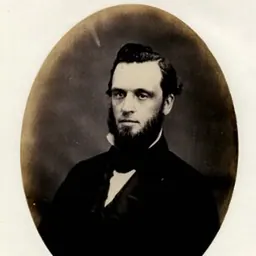
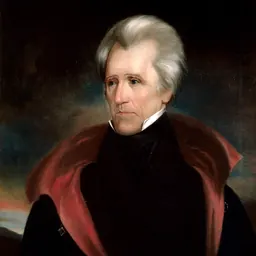
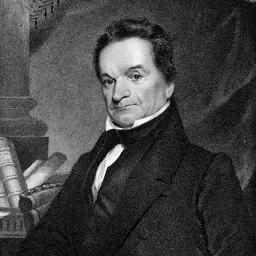
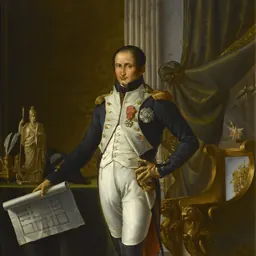

Related people
Same field, nearest in time

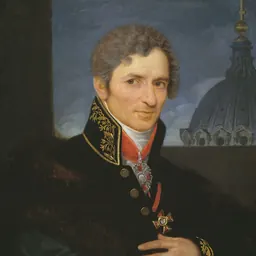
Contemporaries
People whose lives overlapped Arsène Lacarrière-Latour's

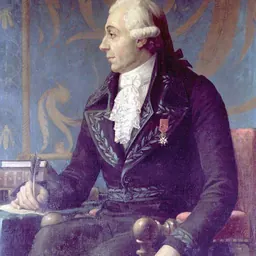
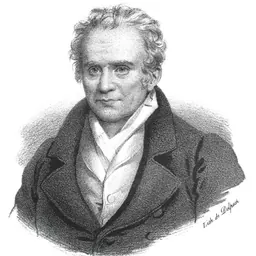
Frequently asked questions
Who was Arsène Lacarrière-Latour?
French architect
When was Arsène Lacarrière-Latour born?
Arsène Lacarrière-Latour was born in 1778 in Aurillac.
When did Arsène Lacarrière-Latour die?
Arsène Lacarrière-Latour died in 1837 in Saint-Mamet-la-Salvetat.
What was Arsène Lacarrière-Latour's occupation?
Arsène Lacarrière-Latour was an architect.
What nationality was Arsène Lacarrière-Latour?
Arsène Lacarrière-Latour was French.
Sources & further reading
· Wikipedia: Arsène Lacarrière-Latour
· DBpedia: Arsène Lacarrière-Latour
Cite this page
APA: Biography.guide. (2026). Arsène Lacarrière-Latour. https://biography.guide/arsene-lacarriere-latour/
MLA: "Arsène Lacarrière-Latour." Biography.guide, https://biography.guide/arsene-lacarriere-latour/.
Chicago: "Arsène Lacarrière-Latour." Biography.guide. https://biography.guide/arsene-lacarriere-latour/.
Data last updated: 2026-09-20 · Spot an error? Report a correction.
Page generated 2026-09-27 05:02 UTC