
About Arsames
Lived 500 BC – 460 BC. Arsames was a governor.
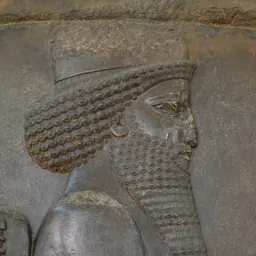
Arsames (also called Sarsamas and Arxanes, from Old Persian Aršāma ) was an Achaemenid satrap of ancient Egypt during the 5th century BC, at the time of the 27th Dynasty of Egypt.
Name "Arsames" is the Hellenized form of the Old Persian name Aršāma ("having a hero's strength"), which was a common name within the Persian Achaemenid family as well as amongst the Persian elite of the Achaemenid Empire (550–330 BC). The name is a compound, composed of aršan ("male, hero") and ama ("strength"). According to Ctesias, Sarsamas was appointed satrap by general Megabyzus. Previously, an ancient Egyptian prince called Inaros openly revolted against Artaxerxes I and the Achaemenid rule and had slain in battle the satrap, Achaemenes. In 454 BC, shortly after his appointment, Arsames helped suppress the revolt by defeating Athenian reinforcements sent in the Nile Delta. After the revolt, Arsames undertook a conciliatory policy towards the native Egyptians in order to avoid igniting new revolts; likely for this reason, he allowed Inaros' son Thannyras to maintain his lordship on part of the Delta, as Herodotus reports. and with a man named Artavant who probably acted as satrap of Egypt ad interim.
Cylinder seal depicting a Persian king thrusting his lance at an Egyptian pharaoh, while holding four other Egyptian captives on a rope. In 410 BCE a revolt erupted at Elephantine, where an established Jewish community lived along with the native Egyptians, and where the two communities had their local temple, that of Yahu and Khnum respectively. Jews were well tolerated by Arsames and by the Persian occupants in general; however, it seems that the Jewish practice of sacrificing goats to their god was perceived as an insult by the clergy of the neighbouring temple of the Egyptian ram-headed deity Khnum. Taking advantage of one of Arsames' absences, the clergy of Khnum corrupted a local military commander, Vidaranag, and unimpededly instigated and succeeded into the destruction of the temple of Yahu. Upon his return, Arsames punished the perpetrators, but he felt himself compelled to avoid any controversy by prohibiting the ritual slaughter of goats.
Arsames is no longer mentioned after 406 BC, and it is likely that he died shortly before the Egyptian reconquest of Egypt achieved by the native pharaoh Amyrtaios in 404 BC.
Don’t just read it —
keep it.
Full-length biographies made to live with: read them, listen on the way to work, watch them tonight.
- E-book
- Audio
- Video
Instant download · yours to keep · every purchase keeps this site free
Important facts
People in Arsames's life
Named in this biography and alive at the same time

Related people
Same field, nearest in time



Contemporaries
People whose lives overlapped Arsames's

Frequently asked questions
Who was Arsames?
5th-century BC Persian satrap of Egypt
When was Arsames born?
Arsames was born in 500 BC.
When did Arsames die?
Arsames died in 460 BC.
What was Arsames's occupation?
Arsames was a governor.
What nationality was Arsames?
Arsames's recorded nationality: Achaemenid Empire.
Sources & further reading
· DBpedia: Arsames (satrap of Egypt)
Cite this page
APA: Biography.guide. (2026). Arsames. https://biography.guide/arsames-governor-qb94cef6f/
MLA: "Arsames." Biography.guide, https://biography.guide/arsames-governor-qb94cef6f/.
Chicago: "Arsames." Biography.guide. https://biography.guide/arsames-governor-qb94cef6f/.
Data last updated: 2026-09-20 · Spot an error? Report a correction.
Page generated 2026-09-27 05:30 UTC