
About Arnold Mendelssohn
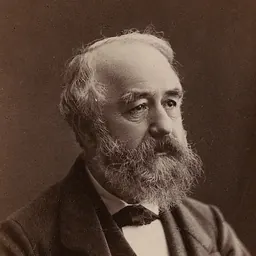
Lived 1855 – 1933 (aged 77). Arnold Mendelssohn was a German composer and music educator.
Arnold Ludwig Mendelssohn (26 December 1855 – 18 February 1933), was a German composer and music teacher.
Life He was born in Ratibor, Province of Silesia, the son of Felix Mendelssohn's cousin Wilhelm Mendelssohn who, in 1854, had married Louise Aimee Cauer (sister to Bertha Cauer). In 1885, Arnold Ludwig himself married his second cousin, Maria Cauer, daughter of Karl Cauer (sister of Ludwig Cauer).
Mendelssohn was originally a lawyer before studying music at the Institut für Kirchenmusik in Berlin (1877–80). His teachers there were Karl August Haupt for the organ, Carl Albert Löschhorn for the piano and Eduard Grell, Friedrich Kiel and Wilhelm Taubert for composition. A series of musical appointments followed: music director and organist at Bonn University (1880–82), where he became friendly with the Bach scholar Philipp Spitta; music director in Bielefeld (1882–5); teacher of composition at the Cologne Conservatory (1885–90); and master of church music and professor at the conservatory in Darmstadt (1891–1912). After that he taught at the Frankfurt Conservatory where his students included Paul Hindemith and Kurt Thomas.
He died in Darmstadt. After his death his works were banned in Nazi Germany because of his Jewish heritage.
Music Mendelssohn was a champion of Lutheran church music, reviving the works of Bach and Schütz, and adopting a polyphonic liturgical idiom in his own compositions. In this he influenced younger composers, such as Hugo Distler, Ernst Pepping and Günter Raphael. The early choral work Abendkantate (1881) shows the strong influence of Bach, but later works, such as his incidental music to Goethe's Paria (1906) and his motet collection Geistliche Chormusik (1926) are more individual. His opera Der Bärenhäuter (1897) avoids Wagner's influence and uses Grimm fairy tales and folk music as its sources.
Works
Operas and stage music Elsi, die seltsame Magd (op. 8), Oper in 2 Aufzügen. Libretto: Hermann Wette; premier 16 April 1896 Stadttheater Köln Der Bärenhäuter (op. 11), Oper in 3 Acts. Libretto: Hermann Wette; premiere 9 February 1900 Theater des Westens in Berlin Die Minneburg (1904–07), Oper in einem Akt. Libretto: G. von Koch; premiere 1909 in Mannheim Paria (incidental music, J.W. von Goethe), op. 36 (Berlin, 1906) Pandora (incidental music, Goethe), op. 37 (Berlin, 1908)
Choral Abendkantate (Berlin, 1881) Das Leiden des Herrn, soloists, chorus, organ and orchestra, op. 13 (1900) Aus tiefer Not, soloists, chorus, organ and orchestra, op. 54 (1912) Auf meinen lieben Gott, soloists, chorus, organ and orchestra, op. 61 (1912) Zagen und Zuversicht, soloists, chorus, organ and orchestra, op. 84 (1920) Deutsche Messe, 8vv chorus, op. 89 (1923) Geistliche Chormusik, 14 motets for the liturgical year, op. 90 (1926)
Lied Four collected volumes and individual opus numbers
Orchestral Symphony No. 1 (premiered in Darmstadt, 1920) Violin Concerto in G minor, op. 88 (1920) Symphony No. 2 in C major, op. 93 (1922)
Wind band Suite for Woodwinds, Brass and Percussion, op. 62 (1916)
Chamber music String Quartet No. 2 in D major, op. 67 (Leipzig, 1915) Sonata for Violoncello and Piano in F-sharp minor, op. 70 (1917) Sonata for Violin and Piano in C Major, op. 71 (1917) Trio for 2 Violins & Piano in A minor, op. 76 (1918) String Quartet No. 3 in B♭, op. 83 (Leipzig, 1926)
Solo piano music Moderne Suite for Piano, op. 79 (1918) Piano Sonata in C minor, op. 66 (1916) Piano Sonata in E minor, op. 66 (1916)
Selected recordings Complete Piano Music, Elżbieta Sternlicht. Hänssler Classic HC17088 (2018) Deutsche Messe, op. 89, SWR Vokalensemble Stuttgart, Frieder Bernius. Hänssler Classic SACD 93.293 (2012) Geistliche Chormusik, op. 90, Berliner Vokalensemble, Bernd Stegmann. Cantate C 58005 (1999) String Quartets Nos. 2 and 3, Reinhold-Quartett, CPO 777 774-2 (2012) Symphony No. 2, op. 93; Violin Concerto, op. 88. Symphoniker Hamburg, Ulrich Windfuhr. CPO 555665 2 (2026)
Don’t just read it —
keep it.
Full-length biographies made to live with: read them, listen on the way to work, watch them tonight.
- E-book
- Audio
- Video
Instant download · yours to keep · every purchase keeps this site free
Important facts
People in Arnold Mendelssohn's life
Named in this biography and alive at the same time



Related people
Same field, nearest in time

Contemporaries
People whose lives overlapped Arnold Mendelssohn's



Frequently asked questions
Who was Arnold Mendelssohn?
German composer and music teacher (1855-1933)
When was Arnold Mendelssohn born?
Arnold Mendelssohn was born on 26 December 1855 in Racibórz.
When did Arnold Mendelssohn die?
Arnold Mendelssohn died on 19 February 1933 in Darmstadt.
What was Arnold Mendelssohn's occupation?
Arnold Mendelssohn was a composer and music educator.
What nationality was Arnold Mendelssohn?
Arnold Mendelssohn was German.
Sources & further reading
· Wikipedia: Arnold Mendelssohn
Cite this page
APA: Biography.guide. (2026). Arnold Mendelssohn. https://biography.guide/arnold-mendelssohn/
MLA: "Arnold Mendelssohn." Biography.guide, https://biography.guide/arnold-mendelssohn/.
Chicago: "Arnold Mendelssohn." Biography.guide. https://biography.guide/arnold-mendelssohn/.
Data last updated: 2026-09-20 · Spot an error? Report a correction.
Page generated 2026-09-27 05:22 UTC