
About Arnold Mathew
Lived 1852 – 1919 (aged 67). Arnold Mathew was a British catholic priest, archbishop, priest and bishop.
Arnold Harris Mathew, self-styled of Thomastown (7 August 1852 – 19 December 1919), was the founder and first bishop of the Old Roman Catholic Church in Great Britain and a noted author on ecclesiastical subjects.
Mathew had been both a Roman Catholic and an Anglican before becoming a bishop in the Union of Utrecht (UU).
Biography
Mathew was born in the French Second Empire in 1852, son of Major Arnold Henry Ochterlony Mathew (originally Matthews, d. 1894; his son later claimed him to have been 3rd Earl Landaff). Major Mathew was son of Major Arnold Nesbit Mathew (originally Matthews), of the Indian Army, and his Italian wife, Contessa Eliza Francesca, daughter of Domenico Povoleri di Nagarole, a Marquis of the Papal State; through this descent the Rev. Arnold Mathew claimed the title of Count Povoleri di Vicenza. Major Arnold Nesbit Mathew was allegedly the son- born only five months after his parents' marriage- of the 1st Earl Landaff, sent to live with an uncle in light of the circumstances of his birth. This constituted the basis for the Rev. Arnold Mathew's claim to be 4th Earl Landaff, which would not come to be officially recognised. Research revealed the contemporary birth of an Arnold Nesbit Matthews to William Richard Matthews and his wife Anne at Down Ampney, Gloucestershire, which in conjunction with the Rev. Arnold Mathew's father and grandfather having originally been named 'Matthews' rather than 'Mathew', has been considered to cast sufficient doubt on the claim to descent from the Earls Landaff as to render it invalid.
Mathew was educated at Sedbergh School. He was a relative of Theobald Mathew, the noted "Apostle of Temperance".
Mathew was baptised in the Roman Catholic Church. At age two, due to his mother's scruples, he was rebaptised in the Church of England. Mathew "went on oscillating between Rome and Canterbury for the rest of his life." He studied for the ministry in the Scottish Episcopal Church, but sought reconciliation and confirmation in the Church of Rome. He lost faith in the biblical inspiration and in the divinity of Christ. Mathew, under the name Povoleri, married Margaret Florence, fifth daughter of Robert Duncan, He was "described as a clerk in holy orders." He stopped using the name Povoleri in 1894. While his wife was listed in the 1897 Royal Blue Book as la Contessa Povoleri di Vicenza, he stopped using the title of Count in 1894. and became curious about the suggestion of an Old Catholic Church in Great Britain. In 1897, O'Halloran was suspended in the Roman Catholic Archdiocese of Westminster for "reasons of canonical discipline". O'Halloran condemned the censure and created the "Ealing schism". O'Halloran believed that such a movement would interest a large number of disaffected Roman Catholics and Anglo-Catholics. In June 1906 the Royal Commission appointed in 1904 to inquire into "ecclesiastical disorders", afterwards known as the Ritual Commission. The king issued letters of business after the report. It was expected that the Catholic-minded Anglican clergy, with their congregations, might, by Act of Parliament, be forced out of the Anglican Communion. Persuaded by O'Halloran, Mathew joined the movement and was elected the first Regionary Old Catholic Bishop for Great Britain and in 1908 the Old Catholic Church of the Netherlands (OKKN) was petitioned to consecrate him to this charge.
Mathew's election was to some extent a precautionary endeavour by those anticipating a precipitate action by the Government regarding the Ritual Commission's findings, there were only a small number of Old Catholics in England. However, the King's Letters of Business dealing with the Report of the Ritual Commission received no further attention and no action was taken. The result was that those who had taken part in Mathew's election were able to remain within the Anglican Communion. Added to the natural differences with their former brethren in the Roman Church was a campaign of persecution directed by certain elements of the . In 1898 Willibald Beyschlag wrote, in The American Journal of Theology, that Old Catholic churches sought "federation with other churches having an" episcopal polity. They sought "recognition that they all belong to the one ecumenical church which rests upon the dogmatic and episcopal foundation of the early church, and can, therefore, practice communion with each other." Those negotiations had "no tangible result" in 1898, according to Beyschlag, who did not "think that such a result would be of any great value," because some Anglicans "emphatically desire to be 'catholic', and are at the same time wholly out of sympathy with the Old Catholics." Beyschlag distinguished that the Ritualist Anglican Catholics "are on the way to Rome; the Old Catholics on the way from Rome."
Consecration
Mathew was consecrated in St. Gertrude's Cathedral, Utrecht, on 28 April 1908, by the Archbishop Gerardus Gul of Utrecht, assisted by two bishops, Jacobus Johannes van Thiel of Haarlem and Nicolaus Bartholomeus Petrus Spit of Deventer, and one Catholic Diocese of the Old Catholics in Germany bishop, Josef Demmel of Bonn.
Soon after the consecration, Mathew and O'Halloran were estranged and O'Halloran, under a pseudonym, Unprepared for the position in which he then found himself, Mathew informed Gul that he was himself a deceived victim and "the information given him by O'Halloran was entirely false" and offered to resign but his resignation was not accepted. By 1920, the believed "that Mathew himself was responsible for the false testimony submitted in 1908 and, rather than being a victim of O'Halloran, was in fact his confederate." This was a protest against the consecration and although it was not publicized at the time, Gul replied with explanations and promised "that in future they 'would take care not to make trouble by encroaching on the order of a friendly Church'."
Mission in England 1908–1919
Mathew published The Old Catholic Missal & Ritual in 1909, for Old Catholics using the English language.
In September 1909, he attended the Old Catholic Congress in Vienna, where he sympathized with the Dutch Old Catholics conservative position which opposed the innovations being introduced among the German and Swiss Old Catholics to renounce the Sacrament of Penance (auricular confession), the intercession of saints and alterations to the liturgy, including the omission of the Pope's name from the Canon of the Mass. He proposed the acceptance of the 1673 Synod of Jerusalem's doctrines.
In June 1910, he secretly consecrated, without agreement of the , and Mathew informed the Holy See of these consecrations. Beale and Howarth were suspended.
In August, van Thiel declared that Old Catholics "could not be considered responsible for [...] Mathew's eventual particular attitude or opinions, because he only represents his own clergy and himself in England." Mathew was "in no sense a representative of the Church of Holland in England." (See cited by Herzog and reprinted in Brandreth.)
Although the Holy See usually did not respond to notifications about episcopal consecrations, (In 1145, Pope Eugene III granted the cathedral chapter in Utrecht the right to elect bishops after such had been requested by the Holy Roman Emperor Conrad III and Bishop Heribert of Utrecht.) The Fourth Lateran Council confirmed this in 1215. In 1517, Pope Leo X prohibited, in , the Archbishop-Elector of Cologne, Hermann of Wied, as , to summon, to a court of first instance in Cologne, Philip of Burgundy, his treasurer, and his ecclesiastical and secular subjects. Mathew sued The Times for libel, on the grounds that the newspaper was apparently endorsing the Pope's characterization of him as a "pseudo-Bishop" who had given aid to a "wicked crime".
The trial was described as "tense with laughter over the elaborate and convoluted ecclesiastical definitions." A "material part of the case" about whether Mathew was truthful was the 1889 printed announcement sent to his congregation in Bath. The trial revealed that in 1897 Mathew restated that he had apostatized in 1889 and had circulated the printed announcement but by 1897 had concluded that his change in belief was a mistake; he therefore recanted the 1889 document, in 1897, which during the trial he said that he never wrote. He testified that he was hypnotized in Bath and so the announcement was written without his knowledge. The jury found that The Times had not been actuated by malice and the words of the report were true in substance and in fact. She was a close friend of Gladstone and rumored to be a Russian agent exerting a "foreign female influence" on him. She was his source for "information about Russian affairs, particularly in respect of the union of the Eastern Orthodox Church and the Old Catholics of the West." Benjamin Disraeli scoffed her as "the MP for Russia" in England.
Moss wrote that Messara "had no power to do this without the consent of" Gregory IV, in Damascus, "which was never given". According to Herzog, Gregory IV retracted Messara's statement. (and cited by Herzog.) The Mathew v. "The Times" Publishing Co., Ltd. trial revealed that although Mathew "was originally informed that all were welcome, he was not ultimately admitted" as a cleric into the Greek Orthodox Church of Antioch.
Either Novikov or Uxkull-Gyllenband, according to Anson, introduced Mathew to Rudolph de Landas Berghes. Mathew wrote to The Tablet within a month:
But because the Holy See insisted that he would only be reconciled as a layman and would be obliged to accept the doctrine of papal infallibility and primacy of the Roman Pontiff, Mathew then sought union with the but the Archbishop of Canterbury Randall Davidson refused to give him any position in the . Mathew retired to South Mimms, a village in the English countryside in Hertfordshire, and contented himself with assisting at services in a parish church. He died suddenly, on 20 December 1919, at South Mimms and was buried in the churchyard at South Mimms.
Contemporary significance
Groups descending from Mathew
In 1964, Anson identified several independent sects which derived their apostolic succession through Mathew: the "Old Roman Catholic Church (Western Catholic Uniate Church)", and the "North American Old Roman Catholic Church". He noted that, except for the Liberal Catholic Church, the "sects hardly counted numerically at all." Mathew ordained Wedgwood as a priest in 1913. (Also quoted by Anson who identified the festival as the Asala festival.) Leadbeater promoted an unorthodox esoteric understanding of Christian creeds; (Leadbeater wrote, in The Christian Creed, that "I do not mean [...) that] the Church which [...] recites these Creeds [...] known their true meaning [... nor] that the ecclesiastical councils [...] ever realized the [...] signification of the [... phrases] used" because "much of the true meaning" was lost and "materializing corruption had been introduced long before those unfortunate assemblies were convoked." Although he referenced history, he explained that his approach was not scholarly and obtained from neither "ancient manuscripts" nor "theological writers" but obtained from clairvoyant "investigation into the records of Nature made by a few students of occultism" about the "inner sense of the Creeds." The Christ of esoteric science' is the Christos of Spirit—an impersonal principle entirely distinct from any carnalised Christ or Jesus." While "the Second Person of the Logos" in Gnosticism "is the greatest of all the aeons or emanations from the eternal Father." (Goodrick-Clarke described that Leadbeater "wove in many trinitarian elements" into a pantheon.) "As the Logos is a Trinity, so [...] the world is [...] ruled by three mighty Officials, who are not merely reflections of the Three Aspects of the Logos, but are in a very real way actual manifestations of them. They are the Lord of the World, the Lord Buddha and the , who have reached grades of Initiation which give them waking consciousness on the planes of nature beyond the field of evolution of humanity, where dwells the manifested Logos." The "affirms a number of Christian beliefs but injects a Gnostic or theosophical meaning into them," according to Encyclopedia of Occultism and Parapsychology. "The church believes that humans are sparks of divinity (rather than creatures of God) and believes in reincarnation (rather than resurrection). The church also accepts the idea of the spiritual hierarchy of masters, or highly evolved beings who guide the spiritual development of the race. In this regard, it accepts the idea that Jesus is one of the masters, but separates the human Jesus [...] from the master Jesus." In other words, Jesus, "the person known in his early life as Appolonius of Tyanna" in that system of beliefs, is not the same as the entity known as Maitreya in that same system beliefs.
The self identifies as a part of the historical Catholic Church; has doctrines but does not regulate how they are believed by congregants, unlike Roman Catholic dogma; and has membership based on acceptance of a common worship without the profession of a common belief.
In Western Esotericism and Rituals of Initiation, Henrik Bogdan compared the network containing the Ecclesia Gnostica Catholica (EGC) to the network containing the . + Parallel concepts in the and networks
In 1913, Fleming testified in Mathew v. "The Times" Publishing Co., Ltd. about the that, "The Holy See or the Pontiff has never condemned these orders as invalid; but he has never explicitly recognized them."
Smit explained that in 1913, "ties of the with Mathew were formally severed", and after World War I, the "distanced itself more from the Mathew and those ordained and consecrated by him."
Herzog's discourse was published in in 1915. He wrote that a surreptitious consecration, under false pretenses and on presentation of false documents, can not be recognized as valid, even if the rite of ordination had been accurately performed by real bishops.
In 1908, Lambeth had expressed regret over the consecration of Mathew. Lambeth also indicated a desire for a closer relationship with Utrecht. Randall Davidson, Archbishop of Canterbury, and William Maclagan, Archbishop of York, replied to the Holy See in Saepius officio giving a defence of Anglican orders.
Discussions about union with Utrecht had been taking place since the end of the 19th century, such as the conferences of reunion in Bonn in 1874 and 1875 convoked by Johann von Döllinger. Though the Dutch bishops in a report of 1894 still could not decide on the recognition of Anglican orders, By June 1925, Davidson stated that the had "after lengthy investigations and serious discussions" arrived "without any reservation (to recognise) that the apostolic succession was not interrupted in the Church of England"
Rite
Old Roman Catholic jurisdictions have consistently employed the Tridentine Ordinal and Roman Pontifical for the conferral of ordinations and the consecration of bishops. This was the case with the See of Utrecht right up to and some years beyond the consecration of Mathew himself, without any alterations to the ceremonies. Mathew's Old Catholic Missal & Ritual contains his English translation of the Roman Pontifical. (In a letter, Joris Vercammen, Archbishop of Utrecht, wrote that "the also has to reflect on the validity of the ordinations within your church.) [...] we do not expect major problems concerning this issue. [...] we concluded we did not yet receive the official certificates of your election neither of your ordination. [...] send us these documents, as it is requested in the Guidelines of the with respect to the recognition of a church as independent Old Catholic Church of the Union of Utrecht."
In 2002, Cardinal Édouard Gagnon investigated the documentation of Bishop André Letellier's episcopal orders and consecration; Letellier was consecrated on 23 May 1968 by Archbishop André Leon Zotique Barbeau of the Catholic Charismatic Church of Canada. (André Barbeau had been consecrated by Charles Brearley,efn-lr|name=NotInBrandreth|This person is not found in Brandreth.)
Publications
Don’t just read it —
keep it.
Full-length biographies made to live with: read them, listen on the way to work, watch them tonight.
- E-book
- Audio
- Video
Instant download · yours to keep · every purchase keeps this site free
Important facts
People in Arnold Mathew's life
Named in this biography and alive at the same time



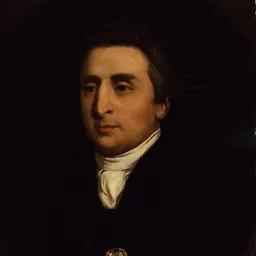
Related people
Same field, nearest in time
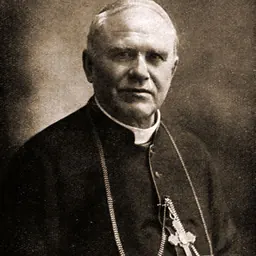
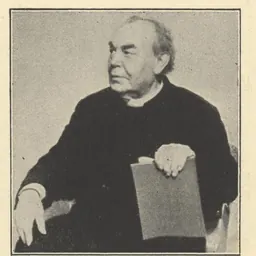
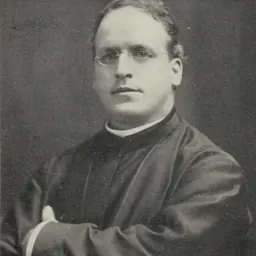

Contemporaries
People whose lives overlapped Arnold Mathew's

Frequently asked questions
Who was Arnold Mathew?
bishop of the Old Catholic Church (1852-1919)
When was Arnold Mathew born?
Arnold Mathew was born on 6 August 1852 in Montpellier.
When did Arnold Mathew die?
Arnold Mathew died on 20 December 1919 in South Mimms.
What was Arnold Mathew's occupation?
Arnold Mathew was a catholic priest, archbishop, priest and bishop.
What nationality was Arnold Mathew?
Arnold Mathew was British.
Sources & further reading
Cite this page
APA: Biography.guide. (2026). Arnold Mathew. https://biography.guide/arnold-mathew/
MLA: "Arnold Mathew." Biography.guide, https://biography.guide/arnold-mathew/.
Chicago: "Arnold Mathew." Biography.guide. https://biography.guide/arnold-mathew/.
Data last updated: 2026-09-20 · Spot an error? Report a correction.
Page generated 2026-09-27 05:32 UTC