
About Arnold Krug
Lived 1849 – 1904 (aged 54). Arnold Krug was a composer, conductor, pianist, choir director, pedagogue and musician.
Arnold Krug (16 October 1849 – 14 August 1904) was a German composer and music teacher.
Biography Born in Hamburg, Krug began his music studies with piano lessons from his father, Diederich Krug, who was himself a pianist and composer. Later he was sent to the Leipzig Conservatory where he studied with Carl Reinecke and then went on to Berlin, where he continued with Friedrich Kiel and Eduard Franck. After completing his studies, he taught in Berlin at the Stern Conservatory for several years before returning to Hamburg where he remained for the rest of his life, working primarily as a music teacher and choral director. Gustav Jenner was among his many students.
Music While he wrote works in several different genres, including symphonies, orchestral overtures, operas, piano works, and chamber music, it is his choral works which received the most attention. However, today he is primarily remembered for his String Sextet in D Major, Op. 68.
This work was known as the "Prize Sextet" because Krug won the Stelzner Prize for chamber music with this composition. The Prize Sextet was originally for two violins, viola, violotta, cello and cellone, but the publisher of the work (Fritz Kistner) wisely hedged his bets and produced an edition for the standard combination of two violins, two violas and two cellos in addition to the so-called Stelzner version. Of this work, Wilhelm Altmann, the famous chamber music critic, has written:
“If not a masterpiece of the highest order from start to finish, Krug’s Sextet nonetheless comes away with high honors. He uses his themes skillfully and his sonorities are quite successful. The first movement, Allegro, begins with a short but powerful introduction which gives the impression of storms ahead. Instead, the main melody is quite genial and broad. Later, Krug cleverly weaves the introduction into the second theme and uses it as part of the coda. The second movement, Adagio tranquillo, is characterized by a calm, deeply felt melody, which is interrupted by an urgent and highly dramatic middle section. There is no scherzo, but the lively first theme to the finale, Allegro, seems to fill this gap. A quieter and more lyrical second theme provides excellent contrast.”
Works (selection) Symphonies Symphony No. 1 in B minor, WoO (1866) Symphony No. 2 in C major, Op. 9 (1877)
Orchestral Tragödienouvertüre, WoO (1860s) Symphonic Concert Ouverture on the Nibelungenlied, WoO (1870s) Symphonic Prologue to Shakespeare’s "Othello", Op. 27 (1884) Orchestral Suite, Aus der Wanderzeit (1890) Romanische Tänze for Orchestra (1881)
Choir and orchestra The May Queen (La régine Avrillouse), for women's choir and orchestra, Op. 10 (1877) Der Abend, for mixed choir and orchestra or piano, Op. 15 (1879) Sigurd Poem on Emanuel Geibel Epos König Sigurd’s Brautfahrt for soloists, choir and orchestra (1883) Fingal, Poem on a text by Theodor von Souchay for soloists, male choir and orechstra, Op. 43 (1891) Der Künste Lobgesang: „Allmacht Gottes erschuf die Natur“, cantata for mezzo-soprano, male choir and orchestra, Op. 86 (1900)
Solo instruments and orchestra Italienische Reiseskizzen for violin and string orchestra, op. 12 (1878) Liebesnovelle, and Idyll in four parts, Op. 14, for harp ad lib and string orchestra (1878) Romanze for violin and orchestra (also piano), op. 73 (Tivadar Nachéz dedicated) Nomadenzug, „Abgegrast die Haide steht“ for piano, male chorus, and orchestra, WoO (1878)
Choral Lobgesang, Cantata, WoO (1900) The March of Death for male choir, Op. 100 (1906)
Chamber music Piano Quartet in C minor, Op. 17 (1879) Serenade (Sextet), Op. 34 (1887) String Sextet in D major, Op. 68 (1897) String Quartet in F major, Op. 96 (1900)
Don’t just read it —
keep it.
Full-length biographies made to live with: read them, listen on the way to work, watch them tonight.
- E-book
- Audio
- Video
Instant download · yours to keep · every purchase keeps this site free
Important facts
People in Arnold Krug's life
Named in this biography and alive at the same time


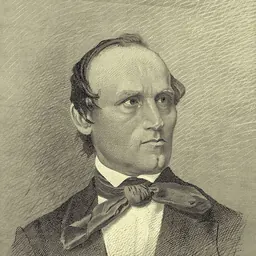
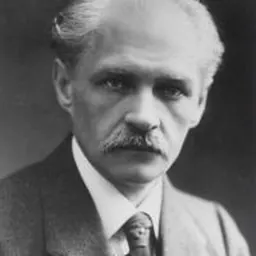


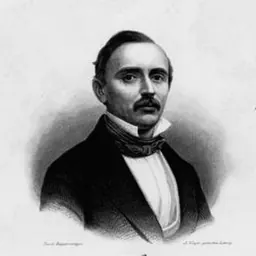
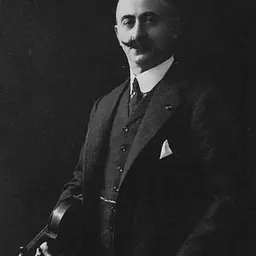
Related people
Same field, nearest in time

Contemporaries
People whose lives overlapped Arnold Krug's



Frequently asked questions
Who was Arnold Krug?
German composer and music teacher (1849–1904)
When was Arnold Krug born?
Arnold Krug was born on 16 October 1849 in Hamburg.
When did Arnold Krug die?
Arnold Krug died on 4 August 1904 in Hamburg.
What was Arnold Krug's occupation?
Arnold Krug was a composer, conductor, pianist, choir director, pedagogue and musician.
What nationality was Arnold Krug?
Arnold Krug's recorded nationality: Hamburg.
Sources & further reading
Cite this page
APA: Biography.guide. (2026). Arnold Krug. https://biography.guide/arnold-krug/
MLA: "Arnold Krug." Biography.guide, https://biography.guide/arnold-krug/.
Chicago: "Arnold Krug." Biography.guide. https://biography.guide/arnold-krug/.
Data last updated: 2026-09-20 · Spot an error? Report a correction.
Page generated 2026-09-27 05:26 UTC