
About Aristotelis Koundouroff
Lived 1896 – 1969 (aged 72). Aristotelis Koundouroff was a Greek conductor and composer.
Aristotelis Koundouroff (Greek: Αριστοτέλης Κουντούρωφ) (1896–1969) was a Greek composer of the modern era. He is regarded as one of the most noteworthy figures of modern Greek music.
Biography He was born in 1896 to a Greek family in the city of Tbilisi, Russian Empire (now Georgia). He was the son of the Georgios Koundouros, a merchant from the island of Crete. From an early age he took piano lessons, together with his brothers, from the pianist Ilya Eisberg, a pupil of Nikolai Rimsky-Korsakov. In 1922 Aristotelis won first place in the Symphonic Music Competition of Caucasian Composers.
He attended the conservatories of Tbilisi (1924–25) and Moscow (1927–30), studying with Ippolitov-Ivanov, Glière and Vasilenko. He became head of Ippolitov-Ivanov's composition studio in Moscow. In 1930, he settled in Greece and he taught musical theory at the Piraeus League Conservatory (1931–32) and Woldemar Freeman's Musical Lycee (1932–38). He conducting the Nea Ionia municipal band (1938–41). From 1943 until his retirement in 1964, he was head of the music library and sound archives of Athens Radio.
Koundouroff is now regarded as one of the most noteworthy figures of Greek music in the period 1930 to 1960. His earlier compositions (e.g. Suite-fantaisie sur des themes populaires grecs (1930–31), Sinfonietta (1934) etc.) show the influence of his Russian training, and of Prokofiev's `Soviet' style. Later works, including the tone poem Orpheus and Eurydice (1962) and the Mazurka for piano (1963), are harmonically more adventurous, inviting comparison with the more radical Russian modernists such as Skriabin and Roslavets. Among his noteworthy students were avant-garde composer Iannis Xenakis and musician Vangelis.
Works Stage: Pastorale (ballet), The Village Bastundji, Orch: Tales]; Icarus; Suite-fantaisie sur des themes populaires grecs; Sinfonietta, 1934; Marche militaire; March on a Revolutionary Cretan Folk Theme; Larghetto; Premonition; Corfu; Orpheus and Euridyce, Choral: Chorus for G. Xenopoulos's play Sabbath of the Souls; I zoi en tafo; 2 Frags. from the Suite `Pictures from the Revolutionary Gallery of Painting'; Triumphal Cant. on the 70th Anniversary of M.M. Ippolitov-Ivanov; G. Stambolis Other solo vocal: Dim Distant Tales; I Came to You; transcr. of N. Lambelet: The Rose Bush and the Cypress
Don’t just read it —
keep it.
Full-length biographies made to live with: read them, listen on the way to work, watch them tonight.
- E-book
- Audio
- Video
Instant download · yours to keep · every purchase keeps this site free
Important facts
People in Aristotelis Koundouroff's life
Named in this biography and alive at the same time



Related people
Same field, nearest in time
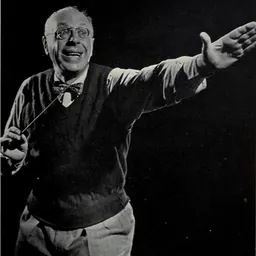



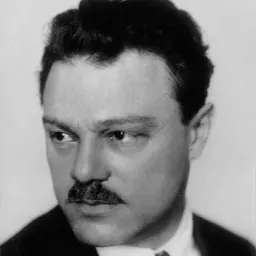
Contemporaries
People whose lives overlapped Aristotelis Koundouroff's


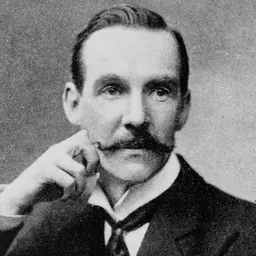


Frequently asked questions
Who was Aristotelis Koundouroff?
Greek musician
When was Aristotelis Koundouroff born?
Aristotelis Koundouroff was born on 29 December 1896 in Tbilisi.
When did Aristotelis Koundouroff die?
Aristotelis Koundouroff died on 8 July 1969 in Volos.
What was Aristotelis Koundouroff's occupation?
Aristotelis Koundouroff was a conductor and composer.
What nationality was Aristotelis Koundouroff?
Aristotelis Koundouroff was Greek.
Sources & further reading
· Wikipedia: Aristotelis Koundouroff
· DBpedia: Aristotelis Koundouroff
Cite this page
APA: Biography.guide. (2026). Aristotelis Koundouroff. https://biography.guide/aristotelis-koundouroff/
MLA: "Aristotelis Koundouroff." Biography.guide, https://biography.guide/aristotelis-koundouroff/.
Chicago: "Aristotelis Koundouroff." Biography.guide. https://biography.guide/aristotelis-koundouroff/.
Data last updated: 2026-09-20 · Spot an error? Report a correction.
Page generated 2026-09-27 05:33 UTC