
About Archie Mafeje
Lived 1937 – 2007 (aged 69). Archie Mafeje was an anthropologist and sociologist.
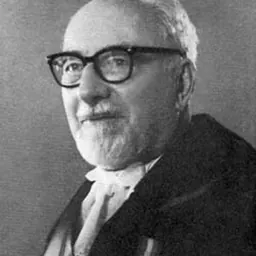
Archibald Boyce Monwabisi Mafeje (30 March 1936 – 28 March 2007), commonly known as Archie Mafeje, was a South African anthropologist and activist. Born in what is now the Eastern Cape, he received degrees from the University of Cape Town (UCT) and the University of Cambridge. He became a professor at various universities in Europe, North America, and Africa. He spent most of his career away from apartheid South Africa after he was blocked from teaching at UCT in 1968.
In exile, Mafeje participated in anti-apartheid activism. His work in anthropology was closely tied to his political activism, and he used his scholarship as a tool to critique the social and economic structures that underpinned the apartheid system in South Africa. He was particularly interested in land ownership and resource allocation issues, and argued that apartheid was built on a foundation of unjust land distribution and exploitation.
A Marxist, Mafeje as a social theorist was known for his critiques of colonialism, apartheid, and other forms of oppression in Africa. A prominent member of the African left, he was critical of Western academic traditions and argued for developing an African-centered approach to social theory and anthropology. Mafeje's Marxist perspective and his contributions to African social theory have impacted scholarship and activism in Africa and beyond. His work has influenced debates about African identity, autonomy, and independence.
Life and career
Early life and education
Archibald Boyce Monwabisi Mafeje was born on 30 March 1936 in Gubenxa, a remote village in the Ngcobo (Thembuland), Cape Province, Union of South Africa. The Mafeje isiduko (clan name) comes from the Mpondomise, a Xhosa sub-ethnic group. and his mother, Frances Lydia, was a teacher. His parents were married in Langa, Cape Town, in 1934, before moving to Gubenxa, and later to the village of Ncambele in Tsolo. the school's headmaster and leader of the Cape African Teachers' Association (CATA), introduced Mafeje and other pupils to the politics of the Non-European Unity Movement (renamed Unity Movement of South Africa in 1964). thumb
Mafeje then matriculated in 1954 to Healdtown Comprehensive School in Fort Beaufort, a Methodist missionary with a list of alumni that includes Nelson Mandela and Robert Sobukwe. and started participating actively in groups connected to the Non-European Unity Movement. Bongani Nyoka asserts that at Healdtown, Archie became a radical atheist. to complete fieldwork in Langa between November 1960 and September 1962. Mafeje published part of this independently, and then Monica Wilson wrote a scientific paper based on the work titled Langa: A Study of Social Groups in an African Township, published as a book by Oxford University Press in 1963. Mafeje then moved to the UK initially as a research assistant at the University of Cambridge after being recommended by Wilson, but then completed a Doctor of Philosophy in social anthropology under Audrey Richards' supervision at King's College, University of Cambridge, in the late 1960s. NoteTag|The year is disputed as some sources mention 1966, 1968, or 1969. while also working as visiting lecturer at Makerere University. He was unanimously By law, the UCT could only admit white students unless suitable courses were not available at black universities. The sit-in gained international coverage and was considered part of the global protests of 1968 that received support from students mounting barricades in Paris and London. However, after nine days, the protest crumbled when counter-protesters stormed the building with weapons and dogs while the photos of some of the protesters were passed around to identify targets for the counter-protesters. Students who participated in the sit-in later insisted that they had never met Mafeje and never sought to learn what had become of him.
Mafeje pursued a career abroad. Mafeje said he found the offer "most demeaning". He was appointed Professor of Sociology and Anthropology at American University in Cairo (AUC) in 1978 until 1990, and later in 1994. According to Mafeje, APDUSA is better understood as Leninist than Trotskyist as it emphasised the revolutionary potential of an alliance between workers and the "landless peasant". He was particularly interested in land ownership and resource allocation issues, and argued that the apartheid system was built on a foundation of unjust land distribution and exploitation. Mafeje advocated for a more holistic approach to land and agrarian reform that recognised rural communities' diverse needs and interests. He argued that land reform should not be imposed from above but should instead be based on a participatory and democratic process that involved local communities. Mafeje also emphasised the need for agrarian reform to be linked to broader social and economic transformation, including women's empowerment and promotion of sustainable agricultural practices. refutes this notion. In exile, Mafeje shared animosity with white South African Communist Party (SACP) members, including Joe Slovo, Dan O'Meara and Duncan Innes. although Duncan Innes was integral to the Mafeje affair protest in 1968. Mafeje published highly influential sociological essays and books in the fields of development and agrarian studies, economic models, politics, and the politics of social scientific knowledge production in Africa. He is considered one of the leading contemporary African anthropologists; however, he is considered more of a critical theorist than a field researcher.
Mafeje scholarly work significantly contributed to the decolonisation of African identity and its historical past, criticising anthropology's typically Eurocentric techniques and beliefs. He demanded that imperialist and Western ideals be eliminated from Black African anthropology, which led to an examination of the discipline's founding principles and the methods by which academics approached the study of the attributed other. CODESRIA, which promoted Afrocentrism and eliminated the Western perspective from pan-African research. His work demonstrates a shift from his earlier liberal functionalist views towards a more radical and critical perspective on African societies and their history. Mafeje was critical of liberal functionalism, a theoretical framework that posits that societies work best when organised around the efficient performance of specialised tasks by individuals and institutions. He argued that this perspective was often used to justify preserving colonial power structures and economic systems that were exploitative and oppressive of African people. Mafeje was particularly critical of the idea that the key to development in Africa was the creation of strong, centralised states and the imposition of a Western-style legal and economic system. He argued that this approach failed to consider the diversity of African societies and the importance of indigenous forms of governance and economic organisation. Instead, he advocated for a more bottom-up approach to development that prioritised the needs and aspirations of local communities and recognised the importance of traditional knowledge and social institutions. Harold Wolpe, Ali Mazrui, Achille Mbembe, and Sally Falk Moore, who was an anthropologist and chair at Harvard University.
Ruth First
Mafeje and Ruth First disagreed on the Soweto uprising in 1976. Mafeje wrote an article critiquing the apartheid government's response to the uprising and broadly analysing the political and economic conditions that led to it. Mafeje argued that the uprising manifested broader social and economic tensions in South Africa, and that the apartheid government's response only exacerbated these tensions. responded in the same issue, to Mafeje's anger.
Livingstone Mqotsi, a South African activist and scholar, responded to both Mafeje and First in an article titled "After Soweto: Another Response". In his article, Mqotsi criticises Mafeje's focus on the "spontaneous" nature of the Soweto uprising, arguing that it resulted from long-standing grievances and organised resistance. He also critiques Mafeje's analysis of the role of the black middle class and argues that the protesters did not constitute a homogeneous group, but rather included both progressive and reactionary elements. Mqotsi also critiques First's response, arguing that she underestimated the role of political organisations and overemphasised the role of individuals in the struggle against apartheid. Mqotsi argued for a more nuanced understanding of the complex social and political dynamics that led to the Soweto uprising and the broader struggle against apartheid in South Africa.
According to some accounts, Mafeje wrote a rebuttal to First's response which was never published. Mafeje argued that Wolpe's view was based on a static and reductionist understanding of the rural economy and failed to consider the agency and creativity of rural people.
In his works, Mafeje emphasises the need for African intellectuals to be actively engaged in the struggle for social and political transformation, rather than being mere academic observers. He argues for the need to "indigenise" knowledge production by grounding it in African experiences and perspectives, rather than relying solely on Western theoretical frameworks. In this way, he seeks to empower African people to take control of their destinies and resist the dominant forces of imperialism and neocolonialism.
Achille Mbembe
Mafeje and Achille Mbembe disagreed about the concept of Afro-pessimism. In his book On the Postcolony, Mbembe criticised what he saw as a pervasive African belief in the inevitability of decline and failure, which he termed "Afro-pessimism". Mafeje, in turn, disagreed with Mbembe's characterisation of the concept, arguing that the pessimism he observed was not inherent in African culture, but a product of the historical and political context in which Africa had developed. Mafeje argued that African intellectuals should focus on analysing and critiquing these structural factors, rather than attributing Africa's problems to cultural or racial factors.
Sally Falk Moore One of the key areas of disagreement between Mafeje and Sally Falk Moore was the nature of social formation in pre-colonial southern Africa. Mafeje argued that societies were based on class relations and that social stratification existed in the pre-colonial era. He challenged the dominant view that African societies were essentially egalitarian and lacked social differentiation as in Europe. According to Mafeje, colonialist (or white) anthropology is inherently problematic since it is founded on the pursuit of otherness, which breeds racism and apartheid, as demonstrated by the history of South Africa. Colonial anthropology is therefore doomed to the extent that it embodies the separation of the subject (the white anthropologist) and the object (the Africans). This became known as the "epistemology of alterity in anthropology". His work posthumously gained wide attention and has attracted growing interest from other African scholars, such as Francis B. Nyamnjoh, Dani Wadada Nabudere, Lungisile Ntsebeza and Bongani Nyoka.
Awards and honours
While Mafeje's contributions to African scholarship and activism have been widely recognised, he received no major awards or honours for his work in his lifetime. Mafeje was elected a Fellow of the African Academy of Sciences in 1986. He received an Honorary Life Membership of CODESRIA in 2003 and was named CODESRIA Distinguished Fellow in 2005. UCT also established the Archie Mafeje Chair in Critical and Decolonial Humanities. In 2010, he was awarded an honorary doctorate of Literature and Philosophy by Walter Sisulu University. The Africa Institute of South Africa (AISA) initiated the Archie Mafeje Annual Memorial Lecture series in 2016. The University of South Africa established the Archie Mafeje Institute for Applied Social Policy Research (AMRI) in 2017.
Publications
Don’t just read it —
keep it.
Full-length biographies made to live with: read them, listen on the way to work, watch them tonight.
- E-book
- Audio
- Video
Instant download · yours to keep · every purchase keeps this site free
Important facts
People in Archie Mafeje's life
Named in this biography and alive at the same time






Related people
Same field, nearest in time



Contemporaries
People whose lives overlapped Archie Mafeje's


Frequently asked questions
Who was Archie Mafeje?
South African scholar-activist
When was Archie Mafeje born?
Archie Mafeje was born on 30 March 1937.
When did Archie Mafeje die?
Archie Mafeje died on 28 March 2007.
What was Archie Mafeje's occupation?
Archie Mafeje was an anthropologist and sociologist.
Sources & further reading
Cite this page
APA: Biography.guide. (2026). Archie Mafeje. https://biography.guide/archie-mafeje/
MLA: "Archie Mafeje." Biography.guide, https://biography.guide/archie-mafeje/.
Chicago: "Archie Mafeje." Biography.guide. https://biography.guide/archie-mafeje/.
Data last updated: 2026-09-20 · Spot an error? Report a correction.
Page generated 2026-09-27 05:31 UTC