
About Archibald Hunter
Lived 1856 – 1936 (aged 79). Archibald Hunter was a British politician, military personnel and soldier.
General Sir Archibald Hunter, (6 September 1856 – 28 June 1936) was a senior officer in the British Army who distinguished himself during the Boer War. He was Governor of Omdurman, in Sudan, and later of Gibraltar.
Early life Archibald Hunter, born a twin, was the son of an Archibald Hunter (1805–1868), a London businessman and Mary Jane Graham (1833–1905). Having chosen not to follow his father's business routes, Hunter began military education in Glasgow, and then at the Royal Military College Sandhurst. In 1875, the nineteen-year-old sub lieutenant joined the 4th (King's Own Royal) Regiment.
Mahdi Uprising Officers of the 2nd Battalion, King's Own Royal Regiment (Lancaster), at Whittington Barracks, Staffordshire, 20 January 1899. Sat third from the left is Major General Archibald Hunter.
Between 1884 and 1885, Hunter joined the Gordon Relief Expedition, which sought to rescue Major General Charles George Gordon from his Mahdi captives. The expedition was, however, too late; Gordon had been killed two days before their arrival. He later saw action at the Battle of Toski in August 1889 during the Mahdist War. He was made Governor of Omdurman in Sudan in 1899,
Second Boer War
At the outbreak of the Second Boer War in October 1899, Major General Hunter (although actually Chief of Staff to General Sir Redvers Buller's 1st Army Corps from 21 September 1899) was on the staff of Sir George White's Natal Field Force during the Battle of Ladysmith in Natal and the subsequent 118-day siege. On 8 December he successfully led a small raid against one of the Boers' Creusot "Long Tom" guns and a howitzer which they disabled with cotton charges.
The town was relieved on 1 March 1900 and Hunter was promoted to lieutenant general on 6 March and posted as General Officer Commanding 10th Division. Once Pretoria was captured Robert's army had to deal with Guerrilla warfare. During this period, Hunter was sent south again as overall commander of five columns that converged on the Free State army camped at Brandwater Basin, there forcing the surrender of 4,314 Boers led by Marthinus Prinsloo. It was the largest number of Boers captured in the war so far and cost very little in British casualties; only 33 dead and 242 wounded.
Later life In early 1901 he was asked by King Edward VII to take part in a special diplomatic mission to announce the King's accession to the governments of Denmark, Sweden and Norway, Russia, Germany, and Saxony.
Archibald Hunter, John Cowans, Horace Smith-Dorrien and Mrs Adam outside Smith-Dorrien's bungalow in Quetta, India, c. 1907
Hunter became General Officer Commanding Scottish District in May 1901, Commander-in-Chief Bombay Command in 1903 (renamed Western Army Corps in 1905) and, promoted to general in December 1905, General Officer Commanding Southern Army in India from 1907. until 1926.
In August 1914 Hunter was living in Scotland as a half-pay officer. Writing to his former commander Lord Horatio Kitchener he stated "I live in hopes of your giving me a command". Too old for a field command in the First World War, he was posted to Aldershot, first in the key role of GOC Aldershot Training Centre and then as GOC Aldershot Command. He retired in 1918.
Honours and awards Hunter was an honorary freeman of the borough of Lancaster.
Hunter received the honorary Doctor of Laws (LL.D) from the University of Glasgow in June 1901.
He received the following decorations: GCB : Knight Grand Cross of the Order of the Bath GCVO: Knight Grand Cross of the Royal Victorian Order DSO : Distinguished Service Order
Family Archibald Hunter married, in 1910, Mary, Dowager Baroness Inverclyde (1866–1924), widow of George Burns, 2nd Baron Inverclyde (1861–1905) and daughter of Hickson Fergusson.
Legacy His archive of over one hundred letters and documents was recently sold. A highlight of the £15,000 collection included twenty six autographed letters from Kitchener.
Don’t just read it —
keep it.
Full-length biographies made to live with: read them, listen on the way to work, watch them tonight.
- E-book
- Audio
- Video
Instant download · yours to keep · every purchase keeps this site free
Important facts
People in Archibald Hunter's life
Named in this biography and alive at the same time
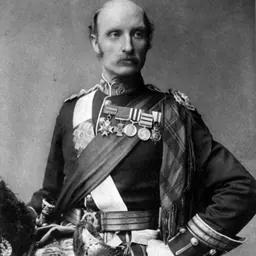


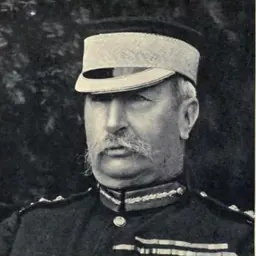



Related people
Same field, nearest in time





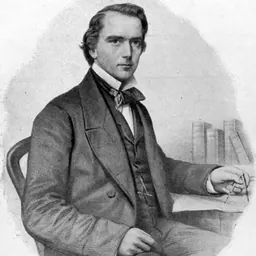
Contemporaries
People whose lives overlapped Archibald Hunter's
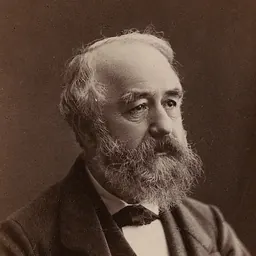



Frequently asked questions
Who was Archibald Hunter?
British Army general (1856-1936)
When was Archibald Hunter born?
Archibald Hunter was born on 6 September 1856 in London.
When did Archibald Hunter die?
Archibald Hunter died on 28 June 1936 in London.
What was Archibald Hunter's occupation?
Archibald Hunter was a politician, military personnel and soldier.
What nationality was Archibald Hunter?
Archibald Hunter was British.
Sources & further reading
Cite this page
APA: Biography.guide. (2026). Archibald Hunter. https://biography.guide/archibald-hunter-politician/
MLA: "Archibald Hunter." Biography.guide, https://biography.guide/archibald-hunter-politician/.
Chicago: "Archibald Hunter." Biography.guide. https://biography.guide/archibald-hunter-politician/.
Data last updated: 2026-09-20 · Spot an error? Report a correction.
Page generated 2026-09-27 05:23 UTC