
Antonio Osorio de Acuña
Spanish bishop
About Antonio Osorio de Acuña
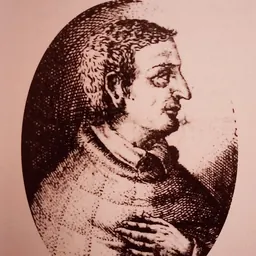
Lived 1459 – 1526 (aged 66–67). Antonio Osorio de Acuña was a Spanish catholic priest, catholic bishop and list of people associated with the Revolt of the Comuneros.
Don Antonio Osorio de Acuña (1459 in Valladolid – 23 March 1526 ) was a Spanish bishop of Zamora, appointed 4 January 1507,
When he appeared at Tordesillas, the general rendezvous of the discontented deputies, he was received with enthusiasm. Being entrusted with ammunition and men, he marched against the royal generals, and was for the most part successful. In the view of identifying religion with liberty, he raised a regiment of priests, whom he always conducted to battle; and though 60 years of age, he was sure to be right in the middle of the action. "Follow me, my parson!" was his usual exhortation, as he plunged into the dense ranks of the enemy. By the Conde de Haro, the rebels were at length defeated; but the priests stood firm; and dreadful was the carnage which they produced among the royalists. One of them slew eleven by himself. He was alleged to have given his benediction to foes on the field, making the sign of the cross with his musket before firing.
When Toledo was besieged by the royalists, the bishop hastened to that city, not so much to assist Maria Pacheco in repelling the assailants, as to seize the vacant archbishopric. By the populace he was speedily proclaimed; and when the chapter refused to elect him, he and Maria committed the members to prison and the latter were compelled to live on bread and water until they had not only elected him, but given up their treasures for the use of the insurgents.
After Juan Lopez de Padilla was imprisoned on 24 April 1521, the royalist cause triumphed. The fortresses submitted, and the bishop fled towards France. In Navarre, however, he was recognized, seized, and sent to the dungeon of Simancas. There, in February 1526, he broke the skull of the alcalde with a brick, and was escaping, when the son of the officer discovered and secured him. This was his last act of violence. By a papal bull, he was degraded, and delivered over to the secular arm. He was tried, sentenced, and beheaded in prison.
Don’t just read it —
keep it.
Full-length biographies made to live with: read them, listen on the way to work, watch them tonight.
- E-book
- Audio
- Video
Instant download · yours to keep · every purchase keeps this site free
Important facts
Related people
Same field, nearest in time




Contemporaries
People whose lives overlapped Antonio Osorio de Acuña's


Frequently asked questions
Who was Antonio Osorio de Acuña?
Spanish bishop
When was Antonio Osorio de Acuña born?
Antonio Osorio de Acuña was born in 1459 in Valladolid.
When did Antonio Osorio de Acuña die?
Antonio Osorio de Acuña died on 23 March 1526 in Simancas.
What was Antonio Osorio de Acuña's occupation?
Antonio Osorio de Acuña was a catholic priest, catholic bishop and list of people associated with the Revolt of the Comuneros.
What nationality was Antonio Osorio de Acuña?
Antonio Osorio de Acuña was Spanish.
Sources & further reading
· Wikipedia: Antonio Osorio de Acuña
· DBpedia: Antonio Osorio de Acuña
Cite this page
APA: Biography.guide. (2026). Antonio Osorio de Acuña. https://biography.guide/antonio-osorio-de-acuna/
MLA: "Antonio Osorio de Acuña." Biography.guide, https://biography.guide/antonio-osorio-de-acuna/.
Chicago: "Antonio Osorio de Acuña." Biography.guide. https://biography.guide/antonio-osorio-de-acuna/.
Data last updated: 2026-09-20 · Spot an error? Report a correction.
Page generated 2026-09-27 05:20 UTC