
Antonio Manetti
Italian humanist, architect and mathematician
About Antonio Manetti
Lived 1423 – 1497 (aged 73). Antonio Manetti was an Italian architect, mathematician and art historian.
Antonio di Tuccio Manetti (6 July 1423 – May 26, 1497) was an Italian mathematician and architect from Florence. He is particularly noted for his investigations into the site, shape and size of Dante's Inferno. Although Manetti never himself published his research regarding the topic, the earliest Renaissance Florentine editors of the poem, Cristoforo Landino and Girolamo Benivieni, reported the results of his research in their respective editions of the Divine Comedy. Manetti is also famous for his short story, "The Fat Woodworker", which recounts a cruel practical joke devised by Brunelleschi. Furthermore, his supposed authorship of the biography of Filippo Brunelleschi has been widely discussed and analyzed. Manetti was further a member of the Arte di Por Santa Maria (also known as Arte della Seta), one of the seven Arti Maggiori guilds of Florence.
Born to a family of silk merchants, Manetti not only received an excellent education but was confronted with ample free time in which he was able to cultivate his many interests, which included mathematics, geometry, astronomy and philosophy.
Recent documents also suggest that during 1466 Manetti was part of the operai of the Spedale degli Innocenti. The year 1887 brought the publication of three new publications of the work.
The first, and simultaneously best known edition, was edited by Gaetano Milanesi who attributed the handwriting to Manetti. Milanesi also contemporized the orthography in his edition which has led to critique of his work.
Another edition of the Maggliabechiana was edited by Carl Frey in 1887 and was intended to be used in lectures. In comparison with other editions, this has been called the closest translation of the original document. Holtzinger states as the reason for this re-publication the rarity of Moreni's version in German bookstores. Manetti's version of Dante's Inferno gained attention through Galileo Galilei and his lectures regarding Dante's inferno in 1588. The reasoning behind Galileo's favoritism towards Manetti's work can be traced towards a political conflict with Vellutello's hometown of Lucca.
The Fat Woodworker
The Fat Woodworker or Fat Woodcarver (IT.: Novella del Grasso Legnajulo) is a humorous story in the beffe tradition. It tells the tale of a cruel and juvenile prank played on a woodworker named Manetto by Filipo Brunelleschi.
The story is set in the year 1409 in Florence around influential men of the public life. The tale introduces the reader to the social scene of artists and artisanal workers in Florence, while setting up Brunelleschi as a questionable hero. These men often eat dinner together, but one night a woodworker named Manetto is absent from the group. The men interpret this as a slight by Manetto, who is described as having a simple mind. The men decide to play a prank on Manetto as a punishment for his refusal of the dinner invitation. Filipo Brunelleschi comes up with the idea to convince Manetto that he has become another person, after convincing the other men that he is simple enough to believe this.
Brunelleschi goes about his plan and is able to convince Manetto that he has indeed become another person. The story follows Manetto's internal confusion while focusing on the psychological aspects of the prank on the woodworker. At the end of the story, Manetto goes to Hungary and comes back to Florence on several occasions. He has gained a deeper understanding of the meaning of self and even smiles when Brunelleschi finally reveals himself as the mastermind some years later. Instead of focusing on the cruelty of the joke, the story focuses on how the prank has benefitted Manetto.
Zibaldone The Zibaldone Manetti is a collection of writings by Antonio Manetti's hand, which are attributed to other authors. It can be found in the National Library in Florence and includes works like The Book of Archandreo by Gherardi di Cremona, Immago Mundia, Della Imagine del Mondo di Santo Isidero, De Origine Civitas Florentinae by Filippo Vilani, The Life of Charlemagne by Donato Acciaiuolo.
The works show the wide reaching interests of Manetti, which span from architecture to astronomy and the arts to mathematics, geography, and Dante.
Gallery
Don’t just read it —
keep it.
Full-length biographies made to live with: read them, listen on the way to work, watch them tonight.
- E-book
- Audio
- Video
Instant download · yours to keep · every purchase keeps this site free
Important facts
People in Antonio Manetti's life
Named in this biography and alive at the same time

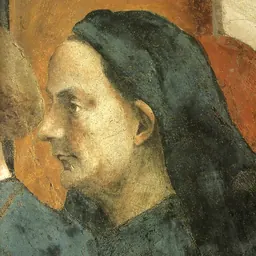

Related people
Same field, nearest in time

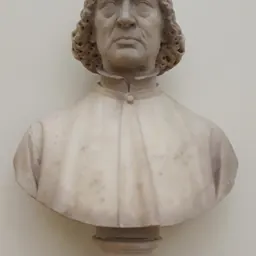

Contemporaries
People whose lives overlapped Antonio Manetti's
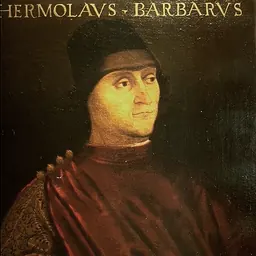



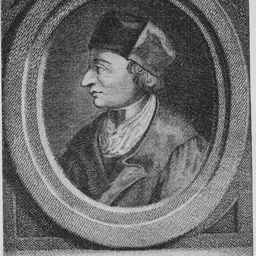
Frequently asked questions
Who was Antonio Manetti?
Italian humanist, architect and mathematician (1423-1497)
When was Antonio Manetti born?
Antonio Manetti was born on 6 July 1423 in Florence.
When did Antonio Manetti die?
Antonio Manetti died on 26 May 1497 in Florence.
What was Antonio Manetti's occupation?
Antonio Manetti was an architect, mathematician and art historian.
What nationality was Antonio Manetti?
Antonio Manetti was Italian.
Sources & further reading
Cite this page
APA: Biography.guide. (2026). Antonio Manetti. https://biography.guide/antonio-manetti/
MLA: "Antonio Manetti." Biography.guide, https://biography.guide/antonio-manetti/.
Chicago: "Antonio Manetti." Biography.guide. https://biography.guide/antonio-manetti/.
Data last updated: 2026-09-20 · Spot an error? Report a correction.
Page generated 2026-09-27 05:22 UTC