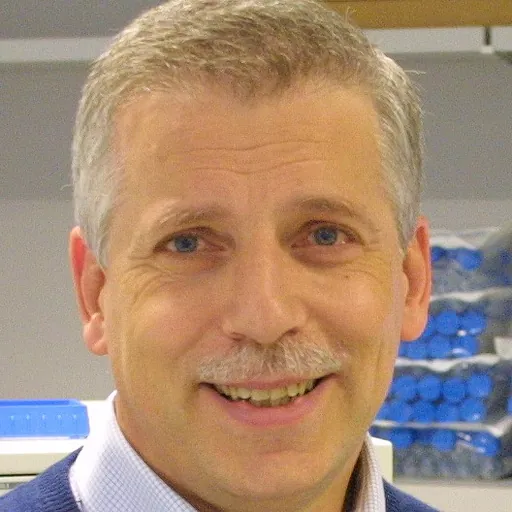
About Antonio Lanzavecchia
Born 1951. Antonio Lanzavecchia is an Italian biologist, immunologist and researcher.
Antonio Lanzavecchia (born in Varese 9 October 1951) is an Italian and Swiss immunologist. As a fellow of Collegio Borromeo he obtained a degree with honors in Medicine in 1976 from the University of Pavia where he specialized in Pediatrics and Infectious Diseases. He is Head Human Immunology Program, Istituto Nazionale di Genetica Molecolare-INGM, Milan and SVP Senior research Fellow, Humabs/Vir Biotechnology, Bellinzona and San Francisco (USA). Since 2017, he is also Professor at the Faculty of Biomedical Sciences of the Università della Svizzera italiana (USI).
Career Since 1980 Lanzavecchia's laboratory developed robust methods to study human T and B cells in vitro, first at the University of Genoa, then at the Basel Institute for Immunology and, from 1999 to 2020 at the Institute for Research in Biomedicine in Bellinzona, of which he was the founding Director. He has been teaching Immunology at the University of Genoa and the University of Siena and from 2009 to 2017 has been Professor of Human Immunology at the Swiss Federal Institute of Technology Zurich. Following Google Scholar, Lanzavecchia has an h-index of 162 .
Research Starting in the early Eighties, Lanzavecchia has contributed to the advancement of human immunology in three distinct fields: i) antigen presentation and dendritic cell biology; ii) lymphocyte activation and immunological memory and iii) human monoclonal antibodies. In 1985, using antigen-specific T and B cell clones, Lanzavecchia demonstrated that B cells efficiently capture, process and present antigen to T helper cells . This study uncovered a critical step in the process of T-B cell cooperation that is essential for high affinity antibody production and is the basis for the development of glycoconjugate vaccines.
He also studied the role of HLA class II molecules as receptors for self, versus foreign peptides (, ) and the role of inflammatory stimuli in promoting antigen presentation by antigen-presenting cells .
In 1994 Sallusto and Lanzavecchia discovered that human monocytes could be induced to differentiate in vitro into immature dendritic cells that resemble those that function as sentinels in peripheral tissues , contributing to the rapid advancement of the field in the late nineties. Taking advantage of such immature dendritic cells, they characterized in detail the maturation process and identified the microbial and endogenous stimuli that trigger dendritic cell maturation (, ).
In the late Nineties the Lanzavecchia laboratory determined the mechanism, stoichiometry and kinetics of T cell receptor stimulation and signaling (, ) and discovered a fundamental division of memory T cells into two major subsets of central memory and effector memory and central T cells that play distinct roles in immediate protection and secondary immune responses .
Starting in 2003, the laboratory developed efficient methods to isolate human monoclonal antibodies as new tools for prophylaxis and therapy of infectious diseases . Among these is FI6 that neutralizes all influenza A viruses , MPE8 that neutralizes four different paramyxoviruses and mab114 (Ansuvimab) that has been approved for treatment of Ebola infected patients .
The laboratory also pioneered the use of human monoclonal antibodies as tools for vaccine design, a process dubbed as "analytic vaccinology" (, ). Basic studies addressed the role of somatic mutations in the development of broadly neutralizing antibodies and the relationship between infection and autoimmunity . The study of the antibody response to the malaria parasite led to the discovery of a new mechanism of antibody diversification through the insertion into antibody genes of DNA encoding pathogen receptors such as LAIR1 .
In 2021, Lanzavecchia and colleagues developed a vaccine that protects animals from Salmonella. Recent highly cited work on COVID-19 analyzes the sensitivity of the virus to mRNA vaccine-elicited antibodies and the receptor-binding domain of the SARS-CoV-2 Omicron variant.
Awards EMBO Gold Medal, 1988 Cloëtta Prize, 1999 Order of Merit of the Italian Republic, Cavaliere della Repubblica, 2001 Premio Ercole Pisello, 2014 Robert Koch Medal and Award, Prize, 2017 Sanofi-Institut Pasteur Award, 2017 Louis-Jeantet Prize for Medicine, 2018 ERC-AdG grants: IMMUNExplore 2010–15, BROADimmune 2015–20, ENGRAB 2020–2025 Ernst Jung Gold Medal for Medicine 2021
Honors European Molecular Biology Organisation (EMBO) The Henry Kunkel Society Royal College of Physicians Swiss Society for Allergology and Immunology (SSAI), honorary member American Society for Immunology (AAI), honorary member Swiss Academy of Medical Sciences, honorary member U.S. National Academy of Sciences, International member
Editorial activities Science: board of reviewing editors 1997–2005 European Journal of Immunology: executive committee member Journal of Experimental Medicine: advisory editor
Selected Patents Monoclonal antibody production by EBV transformation of B cells (WO2004076677) Human cytomegalovirus neutralizing antibodies and use thereof (WO2008084410) Neutralizing anti-influenza virus antibodies and uses thereof (WO2010010467) Methods for producing antibodies from plasma cells (WO2010046775)
Selected publications As of 2023, Lanzavecchia has over 355 publications in peer reviewed scientific journals, with a total of over 130,000 citations (h-index=162). A complete list can be found on Google Scholar.
Don’t just read it —
keep it.
Full-length biographies made to live with: read them, listen on the way to work, watch them tonight.
- E-book
- Audio
- Video
Instant download · yours to keep · every purchase keeps this site free
Important facts
People in Antonio Lanzavecchia's life
Named in this biography and alive at the same time


Related people
Same field, nearest in time



Contemporaries
People whose lives overlapped Antonio Lanzavecchia's


Frequently asked questions
Who is Antonio Lanzavecchia?
Italian immunologist
When was Antonio Lanzavecchia born?
Antonio Lanzavecchia was born on 9 October 1951 in Varese.
What is Antonio Lanzavecchia's occupation?
Antonio Lanzavecchia is a biologist, immunologist and researcher.
What nationality is Antonio Lanzavecchia?
Antonio Lanzavecchia is Italian.
Sources & further reading
· Wikipedia: Antonio Lanzavecchia
· DBpedia: Antonio Lanzavecchia
Cite this page
APA: Biography.guide. (2026). Antonio Lanzavecchia. https://biography.guide/antonio-lanzavecchia/
MLA: "Antonio Lanzavecchia." Biography.guide, https://biography.guide/antonio-lanzavecchia/.
Chicago: "Antonio Lanzavecchia." Biography.guide. https://biography.guide/antonio-lanzavecchia/.
Data last updated: 2026-09-23 · Spot an error? Report a correction.
Portrait: Wikimedia Commons · author & licence
Page generated 2026-09-27 05:05 UTC