
About Antonio Carini
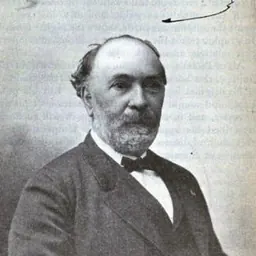
Lived 1872 – 1950 (aged 77–78). Antonio Carini was an Italian physician, bacteriologist and mycologist.
Antonio Carini (1872–1950) was an Italian physician, bacteriologist and professor. He worked in the public health services of São Paulo, Brazil for over forty years. Carini showed that rabies of herbivores could be transmitted by bats, and discovered a parasitic fungus (Pneumocystis carinii, now known as P. jirovecii), which causes pneumocystosis.
Early life
Carini was born in Sondrio, Italy.
In 1906, aged 34, he was invited to run the Pasteur Institute of São Paulo, a position he held until 1914.
The discovery of Pneumocystis carinii
In 1909, examining the lungs of guinea pigs experimentally infected with Trypanosoma cruzi, Carlos Chagas described parasitic forms that linked the pulmonary cycle of the trypanosome. But in 1910, Carini and Maciel Jesuino found cyst formations very similar to these parasitic forms when examining the lungs of rats living in the sewers and naturally infected by Trypanosoma lewisi. Carini sent the biological material from São Paulo to French researchers Pierre and Eugénie Delanoë at the Institut Pasteur in Paris. In 1912, after studying the material, they confirmed that the parasite was indeed different from T. cruzi and called it Pneumocystis carinii, in honour of the researcher. The Delanoës published the first description of the organism as something different from trypanosomes.
In 1942, two Dutch researchers, G. van der Meer and S. L. Brug, were presented three cases in humans (two babies and a 21-year-old adult), affected by a form of pneumonia particularly frequent in Central Europe, especially in frail or dystrophic premature children. In the 1980s, investigations into its molecular biology made clear that the pneumonia was not caused by a parasitic protozoan, but by a fungus. In the same years, Pneumocystis carinii was often held responsible for severe lung infections in patients affected by AIDS. In 1999, the human variant of Pneumocystis carinii was renamed Pneumocystis jirovecii, but the former name is still commonly used.
Carini was Professor of Microbiology at the Faculty of Medicine, University of Pavia and a prolific researcher in medical microbiology. He identified or studied over 150 new or little-known micro-organisms, including trypanosomes, Giardia, pneumocystis, plasmodia, toxoplasma, and Leptospira.
Later life
In 1947, he retired from the leadership of the Paulista Institute of Biology and returned to Italy. He died in Milan three years later, aged 78.
Don’t just read it —
keep it.
Full-length biographies made to live with: read them, listen on the way to work, watch them tonight.
- E-book
- Audio
- Video
Instant download · yours to keep · every purchase keeps this site free
Important facts
People in Antonio Carini's life
Named in this biography and alive at the same time

Related people
Same field, nearest in time



Contemporaries
People whose lives overlapped Antonio Carini's


Frequently asked questions
Who was Antonio Carini?
Italian physician and bacteriologist
When was Antonio Carini born?
Antonio Carini was born in 1872 in Sondrio.
When did Antonio Carini die?
Antonio Carini died in 1950 in Milan.
What was Antonio Carini's occupation?
Antonio Carini was a physician, bacteriologist and mycologist.
What nationality was Antonio Carini?
Antonio Carini was Italian.
Sources & further reading
Cite this page
APA: Biography.guide. (2026). Antonio Carini. https://biography.guide/antonio-carini/
MLA: "Antonio Carini." Biography.guide, https://biography.guide/antonio-carini/.
Chicago: "Antonio Carini." Biography.guide. https://biography.guide/antonio-carini/.
Data last updated: 2026-09-20 · Spot an error? Report a correction.
Page generated 2026-09-27 05:28 UTC