
About Antonio Baldissera
Lived 1838 – 1917 (aged 78). Antonio Baldissera was an Italian military officer and politician.
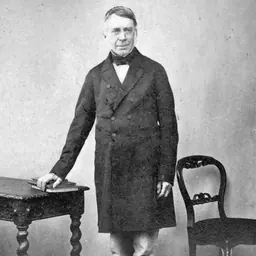
Antonio Baldissera (Padua, 27 May 1838 – Florence, 8 January 1917) was an Italian general, active in the Ethiopian Empire (Abyssinia) and in Italian Eritrea during the late 19th century.
Biography Baldissera was born in on 27 May 1838 in Padua, Venetia (now Veneto), which at the time belonged to the Austrian Empire. Gratitude for his imperial education is said to have led him to refuse an invitation from fellow Venetians to change sides in the Third War of Independence of 1866, in which he won the Order of Maria Theresa for his services as a captain on the Bohemian front. When Venetia became Italian in October of the same year, he opted for Italian nationality and was allowed to retain his rank in the Royal Italian Army. for an Italian empire, Baldissera sailed to the key port of Massawa in Italian Eritrea#tag:ref|The Italian colony was officially named Eritrea at the start of 1890, when king Umberto I announced its formation, with Massawa as the capital. In 1888, he initiated the official regimentation of the native colonial troops known as Askari, which led to considerable recruitment with the aim of conquering Ethiopia. He also fostered agriculture and road building. Following a disagreement with the Italian government over his Abyssinian policy, he requested and obtained his recall in 1889.
In 1892 he was promoted lieutenant general. When the First Italo-Ethiopian War broke out in 1895 the then Governor of Eritrea, General Oreste Baratieri, did not enjoy the confidence of the Italian government, which decided to replace him with Baldissera. Although the appointment was kept secret, Baratieri got wind of it, likely persuading him to attack the Ethiopian army, despite having inferior military forces and insufficient supplies, in an apparent attempt to win glory for himself before his successor's arrival. The decision led to the decisive defeat of the colonial forces at the Battle of Adwa on 1 March 1896.
When Baldissera arrived, he found a defeated and demoralized colonial army retreating in the face of the victorious Ethiopian forces. He set about integrating what remained of Baratieri's army with the newly arrived reinforcements. He was able to repel King Menelek II's forces and retake a significant portion of the lost territory, liberating Italian troops who had been left stranded in Adigrat and Kassala.
Works Baldissera published two reports on Italian colonial affairs: Relazione sulla occupazione dell'Asmara, Voghera-Roma 1889 Relazione sulle operazioni nel 2º periodo della Campagna d'Africa. 1895-96 (in "Rivista militare italiana", 16 August and 1 September 1896)
Notes and references
Don’t just read it —
keep it.
Full-length biographies made to live with: read them, listen on the way to work, watch them tonight.
- E-book
- Audio
- Video
Instant download · yours to keep · every purchase keeps this site free
Important facts
People in Antonio Baldissera's life
Named in this biography and alive at the same time

Related people
Same field, nearest in time




Contemporaries
People whose lives overlapped Antonio Baldissera's


Frequently asked questions
Who was Antonio Baldissera?
Italian general (1838-1917)
When was Antonio Baldissera born?
Antonio Baldissera was born on 27 May 1838 in Padua.
When did Antonio Baldissera die?
Antonio Baldissera died on 8 January 1917 in Florence.
What was Antonio Baldissera's occupation?
Antonio Baldissera was a military officer and politician.
What nationality was Antonio Baldissera?
Antonio Baldissera was Italian.
Sources & further reading
· Wikipedia: Antonio Baldissera
Cite this page
APA: Biography.guide. (2026). Antonio Baldissera. https://biography.guide/antonio-baldissera/
MLA: "Antonio Baldissera." Biography.guide, https://biography.guide/antonio-baldissera/.
Chicago: "Antonio Baldissera." Biography.guide. https://biography.guide/antonio-baldissera/.
Data last updated: 2026-09-27 · Spot an error? Report a correction.
Page generated 2026-09-27 05:17 UTC