
About Anton Günther
Lived 1783 – 1863 (aged 79). Anton Günther was an Austrian philosopher.
Anton Günther (17 November 1783, Lindenau, Bohemia (now part of Cvikov, Czech Republic) – 24 February 1863, Vienna) was an Austrian Roman Catholic philosopher whose work was condemned by the church as heretical tritheism. His work has been described as Liberal Catholicism and Vienna's first Catholic political movement. His writings made him a leader among the generation of German Catholic theologians who emerged from the Romantic movement.
Biography Anton Günther was born the eldest son of devout Catholic parents at Lindenau (now part of Cvikov) in Bohemia. His father was a blacksmith. From 1796 to 1800 he attended the monastic school of the Piarists at Haide and from 1800 to 1803 the gymnasium of Leitmeritz. Subsequently he studied philosophy and jurisprudence at Prague, where he studied under, among others, Bernard Bolzano, and paid his way by assisting the teachers.
Günther's religious views had been shaken during the years of his student life by his study of the modern systems of philosophy (Kant, Johann Gottlieb Fichte, Jacobi and Friedrich Wilhelm Joseph Schelling); but his removal in 1810 to Brünn (Brno) near Vienna with the prince's family brought him under the influence of the parish priest of this place, named Korn, and particularly of Saint Clement Mary Hofbauer, and restored him to firm Catholic convictions. He then took up the study of theology, first at Vienna and afterwards at Raab (Győr) in Hungary. He aimed to derive his own system of Christian philosophy in opposition to the pantheist views common at the time, especially Hegelianism. Moreover, he attempted to demonstrate logically that major Christian teachings, including the Trinity and the Incarnation, were in some sense necessary truths. The Incarnation specifically was central to his philosophy.
Günther viewed history as "...a dialectic between God's work of redemption and man's constant misuse of his freedom." They were repressed upon the Archbishop's return.
Works Vorschule zur speculativen Theologie des positiven Christenthums (Introduction to the Speculative Theology of Positive Christianity), in letter form; part I: "Die Creationstheorie" (The Theory of Creation); part II "Die Incarnationstheorie" (The Theory of the Incarnation) (1st ed., Vienna, 1828-9; 2nd ed., 1846-8); Peregrins Gastmahl. Eine Idylle in elf Octaven aus dem deutschen wissenschaftlichen Volksleben, mit Beiträgen zur Charakteristik europäischer Philosophie in älterer und neuerer Zeit (Vienna, 1830; new ed., 1850); Süd- und Nordlichter am Horizont speculativer Theologie, Fragment eines evangelischen Briefwechsels (Vienna, 1832; new ed., 1850); Janusköpfe für Philosophie und Theologie (in collaboration with J. H. Pabst; Vienna, 1833); Der letzte Symboliker. Eine durch die symbolischen Werke Dr. J. A. Möhlers und Dr. F. C. Baurs veranlasste Schrift in Briefen (Vienna, 1834); Thomas a Scrupulis. Zur Transfiguration der Persönlichkeits-Pantheismen neuester Zeit (Vienna, 1835); Die Juste-Milieus in der deutschen Philosophie gegenwärtiger Zeit (Vienna, 1838); Eurystheus und Herakles. Metalogische Kritiken und Meditationen (Vienna, 1843).
A new edition of these eight works, collected into nine volumes, appeared at Vienna in 1882 under the title of Günther's Gesammelte Schriften. In addition to these, Günther produced in conjunction with J. E. Veith: "Lydia, Philosophisches Jahrbuch" (5 volumes, Vienna, 1849–54). His "Lentigos und Peregrins Briefwechsel" was printed in 1857, but was issued only for private circulation. Finally, long after Günther's death, Franz Peter Knoodt published from his posthumous papers "Anti-Savarese" (Vienna, 1883).
Reception Günther's writings sparked a movement which attracted prestigious Catholic scholars as both followers and opponents. Some members of his school received academic professorships in Catholic philosophy. Günther himself turned down professorships at the Ludwig-Maximilians-Universität München, the University of Bonn, the University of Breslau and the University of Tübingen in the hope of an offer from the University of Vienna, which he never received. In 1833, he received an honorary degree of Doctor of Theology from the Ludwig-Maximilians-Universität München, and a similar degree in philosophy and theology was conferred on him by Charles University in Prague in 1848.
Günther's earliest friends and collaborators were Johann Heinrich Pabst, Johann Emmanual Veith, and Karl Franz von Hock. Other prominent adherents included:
Günther's opponents included:
Branded heretical The Congregation of the Index in Rome began in 1852 an investigation of Günther's doctrines and writings, Günther being invited to appear personally or to send some of his disciples to represent him. This mission was entrusted to Baltzer and Gangauf who arrived at Rome in November, 1853. Gangauf was replaced by Knoodt, a professor of theology at Bonn, in the summer of 1854. The latter and Baltzer laboured together until the end of November in that year, when they submitted their written defence to the Congregation of the Index and returned to Germany. Yet their efforts and the favourable intervention of friends in high station failed to avert the final blow, though they served to defer it for a time.
Cardinal Schwarzenberg and Cardinal von Diepenbrock and Bishop Arnoldi of Trier were friendly to Günther and assisted him at Rome. Even the head of the Congregation of the Index, Cardinal d'Andrea, was well-disposed towards him. On the other hand, Cardinals Johannes von Geissel, Joseph Othmar von Rauscher and Karl August von Reisach urged his condemnation. By decree of 8 January 1857 the Congregation placed the works of Günther on the Index librorum prohibitorum. The special grounds of this condemnation were set forth by Pius IX in the Brief addressed by him to Cardinal von Geissel, Archbishop of Cologne, on 15 June 1857, which declares that Günther's teachings on the Trinity, the Person of Christ, the nature of man, the Creation and particularly his views on the relation of faith to knowledge, as well as fundamental rationalism, which is the controlling factor of his philosophy even in the handling of Christian dogmas, are not consistent with the doctrine of the Church.
Before the publication of the Index decree, Günther had been summoned to submit thereto, and in fact had declared his acquiescence, but for him internal submission and rejection of his errors was out of the question. He felt keenly the blow, which he looked upon as an injustice and which embittered him; but subsequently he published nothing. Some of his followers, like Merten, now turned away from Güntherianism, but the greater number held to it obstinately, and for many years it found academic support at Bonn (through Knoodt) and at Breslau (through Elvenich and Weber). After the First Vatican Council most of the Güntherians named above who were still living at the time (with the exception of Veith) joined the Old Catholic movement, in which some of them assumed leading parts. Their hopes of thus imparting new vigour to Güntherianism were not realized, whereas, by their separation from the Church, they brought about the final elimination of Güntherian influence from Catholic thought.
Don’t just read it —
keep it.
Full-length biographies made to live with: read them, listen on the way to work, watch them tonight.
- E-book
- Audio
- Video
Instant download · yours to keep · every purchase keeps this site free
Important facts
People in Anton Günther's life
Named in this biography and alive at the same time


Related people
Same field, nearest in time



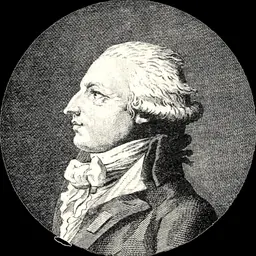
Contemporaries
People whose lives overlapped Anton Günther's

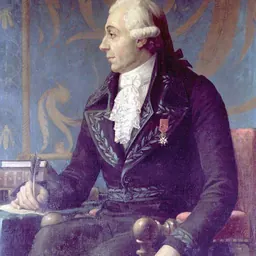
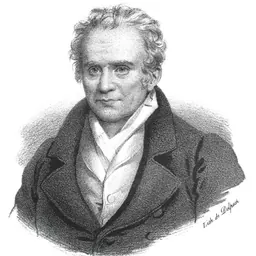

Frequently asked questions
Who was Anton Günther?
Austrian philosopher
When was Anton Günther born?
Anton Günther was born on 17 November 1783 in Cvikov, Lindava.
When did Anton Günther die?
Anton Günther died on 24 February 1863 in Vienna.
What was Anton Günther's occupation?
Anton Günther was a philosopher.
What nationality was Anton Günther?
Anton Günther was Austrian.
Sources & further reading
Cite this page
APA: Biography.guide. (2026). Anton Günther. https://biography.guide/anton-gunther/
MLA: "Anton Günther." Biography.guide, https://biography.guide/anton-gunther/.
Chicago: "Anton Günther." Biography.guide. https://biography.guide/anton-gunther/.
Data last updated: 2026-09-24 · Spot an error? Report a correction.
Page generated 2026-09-27 05:03 UTC