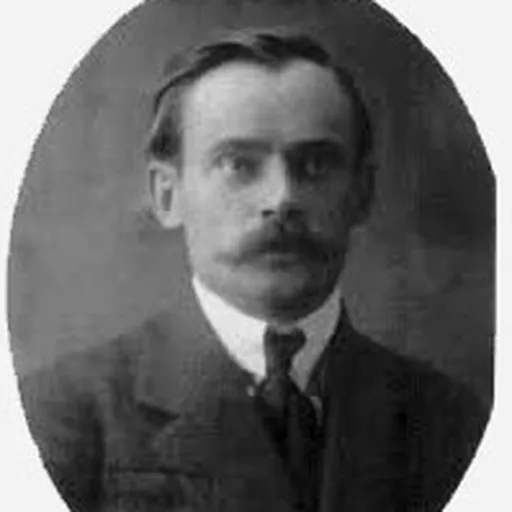
About Anton Aŭsianik
Lived 1888 – 1933 (aged 44–45). Anton Aŭsianik was a Russian and Polish politician, engineer and diplomat.
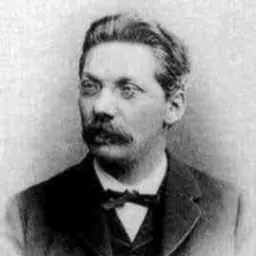
Antoni Owsianik (; born 13 June 1888 in , Vilna County, died in 1933 in the Soviet Union) was a leftist politician, national activist, and engineer of Belarusian nationality, a state activist of the Belarusian Democratic Republic, from 1918 to 1919 a member of the Rada of the Belarusian Democratic Republic, the Presidium of the Belarusian Democratic Republic Council, the Convention of Seniors of the Belarusian Democratic Republic Council, and the ; one of the initiators of the creation of Belarusian military units within the Polish Armed Forces, from 1919 to 1920 a member, and later vice-chairman, of the temporary presidium of the ; in 1920 a plenipotentiary representative of the Belarusian Democratic Republic in the Republic of Lithuania; a representative of the Belarusian national minority in the Second Polish Republic, from 1922 a deputy to the Sejm of the Republic of Poland in its first term. In the 1930s he moved to the Byelorussian Soviet Socialist Republic, was arrested and probably killed by order of the Soviet authorities.
Early life Antoni Owsianik was born on 13 June 1888 in the village of Kobyle, Olkowice commune, Vilna County, Minsk Governorate, in the Russian Empire (now the village of Kastrychnitskaya, Vilyeyka District, Minsk Region, Belarus). He came from a peasant family and attended local schools. He graduated from the Technological Institute in Kharkiv and then studied at the Faculty of Shipbuilding at the Saint Petersburg Polytechnic Institute
Belarusian Democratic Republic
On 3 April 1918, he became a member of the Rada of the Belarusian Democratic Republic as a delegate of the Babruysk District Council. Shortly afterward, he became a member of the Presidium of the Rada of the Belarusian Democratic Republic, and at the beginning of May, a member of the Convention of Seniors of the Rada of the Belarusian Democratic Republic. While serving on the Rada of the Belarusian Democratic Republic, he represented the Belarusian Local Councils. On 26 April 1918, his signature appeared on a telegram sent the following day on behalf of the government and the Rada of the Belarusian Democratic Republic to German Emperor Wilhelm II. The telegram expressed gratitude for the liberation of Belarus and requested support for the Belarusian Democratic Republic and its alliance with Germany. This move was very negatively received by left-wing, pro-Russian, and anti-German circles within the Belarusian Democratic Republic, leading to a significant number of council members leaving the Rada of the Belarusian Democratic Republic and the subsequent dissolution of the Belarusian Socialist Assembly.
After the split in the Belarusian Socialist Assembly, he became one of the leaders of the Belarusian Socialist-Federalist Party, a centrist party on the Belarusian Democratic Republic political scene. He was part of the so-called Bloc faction, which included the Belarusian Socialist-Federalist Party, the Belarusian Social Democratic Party, the Belarusian Socialist Assembly, and the Belarusian People's Socialist Party. He was a member of the Belarusian Democratic Republic delegation that traveled to Kyiv on 19 September 1918 for talks with the government of the Ukrainian State. The delegation sought official recognition of Belarusian Democratic Republic's independence by Ukraine, but received only expressions of goodwill and a promise of financial and military assistance in creating Belarusian armed forces. From 1918 to 1919, Antoni Owsianik was the chairman of the Belarusian Council in Babruysk and a member of the . At that time, Antoni Owsianik was a proponent of an agreement with Poland, the creation of a Belarusian army under Polish command, and discussions about forming a Belarusian-Polish federation, which he viewed purely pragmatically. In one of his letters to Anton Luckievich, he wrote:What to do, how to deal with the Poles? (...) I think that now it is necessary to talk with the Poles about creating our national army. We can compromise. Let their higher command be. We can talk to them about the federation, we need to compromise, remembering one thing – we do everything for the independence of Belarus. You understand me, I think. In mid-October 1919, he became part of the delegation of the Belarusian Central Council of Vilna and Grodno Regions, which went to Warsaw for talks with Polish authorities on Belarusian-Polish cooperation. The delegation presented the Polish side with a proposal to form a Belarusian division and nominations for members of the . On October 22, Antoni Owsianik was formally approved by Józef Piłsudski as a member of the Belarusian Military Commission. He represented Grodno Region in it. However, the accusations made by the report directly against Antoni Owsianik only state that the Byelorussian Soviet Socialist Republic decided to contact him. According to historian Oleg Łatyszonek, this does not mean that Antoni Owsianik cooperated with them.
During the plenary session of the Belarusian Military Commission on 1 July 1920, Antoni Owsianik was one of six members who voted for the resignation of the entire commission and the adoption of a resolution addressed to Józef Piłsudski and the highest Belarusian institutions, stating that they do not feel capable of carrying out the heavy and responsible work of forming the Belarusian Army at this time. As a result of this decision, a crisis occurred within the Belarusian Military Commission; chairman Pawieł Aleksiuk resigned, and the six members who voted for the resolution formed a temporary Belarusian Military Commission presidium. Antoni Owsianik became its vice-chairman. On August 23, he resigned his duties as a Belarusian Military Commission member. On October 3, the announced the acceptance of his resignation along with the entire current commission.
Activities in Lithuania, Central Lithuania, and Poland In November 1920, he was the plenipotentiary representative of the Belarusian Democratic Republic in the Republic of Lithuania. He participated in talks between the emigrant government of the Belarusian Democratic Republic led by Vaclau Lastouski, who resided in Kaunas, and the Lithuanian authorities on forming Belarusian military units on its territory. After reaching an agreement on this matter, he oversaw the development of Belarusian units in Lithuania, which Lastouski's government intended to use against Poland in the event of a Lithuanian-Polish conflict.
In 1921, Antoni Owsianik moved to Vilnius, which was then the capital of Central Lithuania. This was due to the efforts of the Polish authorities to win over Belarusian activists centered around the Kaunas Belarusian Democratic Republic government. and the Poland-aligned Belarusian State Committee were particularly influential in this decision. Until 1922, Antoni Owsianik worked on a rural estate. In 1922, he became a deputy to the Sejm of the Republic of Poland in its first term and was a member of the Belarusian Parliamentary Club. He was arrested by the Polish authorities. In the early 1930s, he emigrated to the Byelorussian Soviet Socialist Republic. In 1933, he was arrested by Soviet authorities. His subsequent fate is unknown.
Don’t just read it —
keep it.
Full-length biographies made to live with: read them, listen on the way to work, watch them tonight.
- E-book
- Audio
- Video
Instant download · yours to keep · every purchase keeps this site free
Important facts
People in Anton Aŭsianik's life
Named in this biography and alive at the same time
Related people
Same field, nearest in time






Contemporaries
People whose lives overlapped Anton Aŭsianik's



Frequently asked questions
Who was Anton Aŭsianik?
Belarusian politician
When was Anton Aŭsianik born?
Anton Aŭsianik was born on 13 June 1888 in Akciabrskaja.
When did Anton Aŭsianik die?
Anton Aŭsianik died in 1933 in Soviet Union.
What was Anton Aŭsianik's occupation?
Anton Aŭsianik was a politician, engineer and diplomat.
What nationality was Anton Aŭsianik?
Anton Aŭsianik was Russian and Polish.
Sources & further reading
Cite this page
APA: Biography.guide. (2026). Anton Aŭsianik. https://biography.guide/anton-ausianik/
MLA: "Anton Aŭsianik." Biography.guide, https://biography.guide/anton-ausianik/.
Chicago: "Anton Aŭsianik." Biography.guide. https://biography.guide/anton-ausianik/.
Data last updated: 2026-09-23 · Spot an error? Report a correction.
Portrait: Wikimedia Commons · author & licence
Page generated 2026-09-27 05:06 UTC