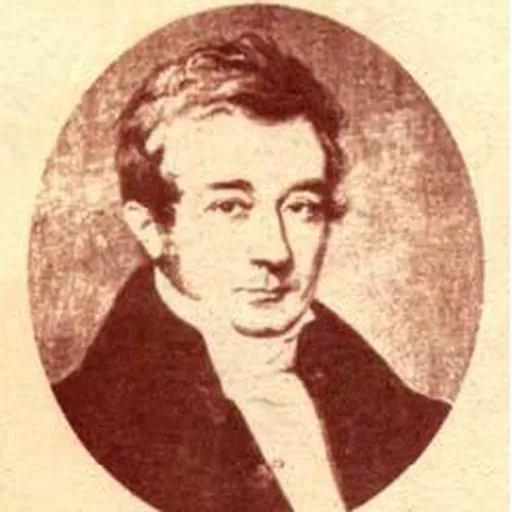
Antoine Germain Labarraque
French chemist and pharmacist
About Antoine Germain Labarraque
Lived 1777 – 1850 (aged 73). Antoine Germain Labarraque was a French chemist, university teacher and pharmacist, known for Sodium hypochlorite.
Antoine Germain Labarraque (28 March 1777 – 9 December 1850) was a French chemist and pharmacist, notable for formulating and finding important uses for "Eau de Labarraque" or "Labarraque's solution", a solution of sodium hypochlorite widely used as a disinfectant and deodoriser.
Labarraque's use of sodium and calcium hypochlorite solutions in the disinfection of animal gut processing facilities and morgues, as well as his published reports of their application to treat gangrene and putrescent wounds in living persons in the 1820s, established this practice long before Ignaz Semmelweis employed the same solutions to prevent "cadaveric particles" from traveling from hospital dissecting rooms to patient examination rooms, starting in 1847. These findings and practices are notable for providing an empirical discovery of antisepsis, starting some 40 years before Pasteur and Lister began to establish the theoretical basis of this practice.
Labarraque's solutions and techniques remain in use to the present day.
Life and work Early years and career Labarraque was born in Oloron-Sainte-Marie, in the Pyrénées-Atlantiques department, on 28 March 1777, the son of François Labarraque and Christine Sousbielle. He spent over 2 years as a pupil of a pharmacist called Préville in Orthez, but was then drafted into the army as a "Grenadier de la Tour d'Auvergne". He was promoted to battlefield seargent, and eventually became pharmacist-in-chief at the military hospital of Berra. He contracted Typhus and after his recovery was discharged from the military in 1795. He became a member of the "Sociétés de pharmacie et de médecine" in 1809 after presenting a paper, "Sur les teintures alcooliques et quelques expériences sur la teinture alcoolique de benjoin" (Alcoholic tinctures and some experiments on the alcoholic tincture of Benzoin). Subsequently, Labarraque took part in several commissions to examine presentations made to the society.
Labarraque experimented with different compositions, finding that a solution of "chloride of lime" (calcium hypochlorite) had better anti-putrid properties than the already-known "Eau de Javel" (dilute water solution of sodium hypochlorite, first produced for bleaching purposes by Claude Berthollet in 1789), but caused slower detachment of the gut mucous membrane. He therefore preferred Eau de Javel, which also had the advantage of being cheaper than chlorinated solutions based on potassium salts. Labarreque won the society's prize of 1,500 francs, by showing how a number of these solutions that were made from free chlorine and later gave rise to it, could be employed both to fumigate the workshops, and to loosen the membranes one from another without allowing the offensive odour to escape. He was awarded the Prix Montyon, in 1825, by the "Académie des Sciences", and, in 1826, a medal by the Académie de Marseille, for his work on "the application of chlorides to hygiene and therapeutics". He was made a member of the "Académie de Médecine" (1824), Légion d'Honneur (1827) and the "Conseil de Salubrité" (council of health, 1836). In this 1828 work, Labarraque recommended for the doctor to breathe chlorine, wash his hands with chlorinated lime, and even sprinkle chlorinated lime about the patient's bed, in cases of "contagious infection."
During the Paris cholera outbreak of 1832, large quantities of so-called chloride of lime were used to disinfect the capital. This was not simply modern calcium chloride, but contained chlorine gas dissolved in lime-water (dilute calcium hydroxide) to form calcium hypochlorite (chlorinated lime). Labarraque's discovery helped to remove the terrible stench of decay from hospitals and dissecting rooms, and, by doing so, effectively deodorised the Latin Quarter of Paris.
Much later, during World War I in 1916, a standardized and diluted modification of Labarraque's solution containing hypochlorite and boric acid was developed by Henry Drysdale Dakin. Called Dakin's solution, the method of wound irrigation with chlorinated solutions allowed antiseptic treatment of a wide variety of open wounds, long before the antibiotic era. A modified version of this solution is still employed in wound irrigation, where it continues to be effective against multiply-antibiotic resistant bacteria (see Century Pharmaceuticals).
Death Antoine Germain Labarraque died near Paris on 9 December 1850. Scott, James (trans.). On the disinfecting properties of Labarraque's preparations of chlorine (S. Highley, 1828). Manière de se servir du chlorure d'oxyde de sodium soit pour panser les plaies de mauvaise nature, soit comme moyen d'assainissement des lieux insalubres et de désinfection des matières animales (Paris, 1825). Note sur une asphyxie produite par les émanations des materiaux retirés d'une fosse d'aisance; suivant d'Expériences sur les moyens de désinfection propres à prévenir de pareils accidents (Paris, 1825). Sur la préparation des chlorures désinfectants (Paris, 1826). Rapport au conseil de salubrité de Paris sur l'exhumation des cadavres déposés en juillet 1832 dans les caveaux de l'église Saint-Eustache.
Labarraque also wrote a large number of dissertations and reports which appeared in journals and scientific reviews.
Don’t just read it —
keep it.
Full-length biographies made to live with: read them, listen on the way to work, watch them tonight.
- E-book
- Audio
- Video
Instant download · yours to keep · every purchase keeps this site free
Important facts
People in Antoine Germain Labarraque's life
Named in this biography and alive at the same time
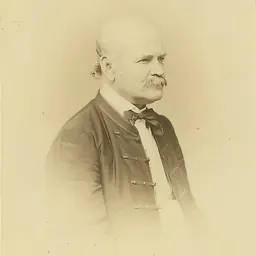
Related people
Same field, nearest in time
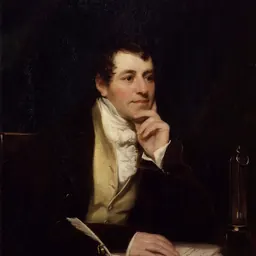


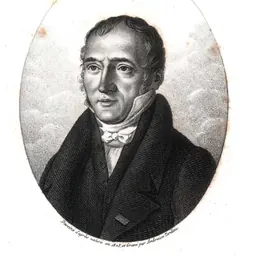


Contemporaries
People whose lives overlapped Antoine Germain Labarraque's



Frequently asked questions
Who was Antoine Germain Labarraque?
French chemist and pharmacist (1777-1850)
When was Antoine Germain Labarraque born?
Antoine Germain Labarraque was born on 28 March 1777 in Oloron-Sainte-Marie.
When did Antoine Germain Labarraque die?
Antoine Germain Labarraque died on 9 December 1850 in Galluis.
What was Antoine Germain Labarraque's occupation?
Antoine Germain Labarraque was a chemist, university teacher and pharmacist.
What was Antoine Germain Labarraque known for?
Antoine Germain Labarraque was known for Sodium hypochlorite.
What nationality was Antoine Germain Labarraque?
Antoine Germain Labarraque was French.
Sources & further reading
· Wikipedia: Antoine Germain Labarraque
· DBpedia: Antoine Germain Labarraque
Cite this page
APA: Biography.guide. (2026). Antoine Germain Labarraque. https://biography.guide/antoine-germain-labarraque/
MLA: "Antoine Germain Labarraque." Biography.guide, https://biography.guide/antoine-germain-labarraque/.
Chicago: "Antoine Germain Labarraque." Biography.guide. https://biography.guide/antoine-germain-labarraque/.
Data last updated: 2026-09-22 · Spot an error? Report a correction.
Portrait: Wikimedia Commons · author & licence
Page generated 2026-09-27 05:02 UTC