
About Antoine Étienne Fontaney
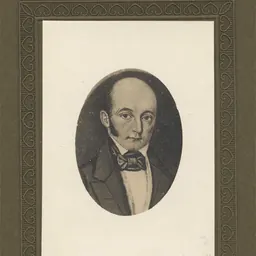
Lived 1803 – 1837 (aged 33–34). Antoine Étienne Fontaney was a French journalist, poet and writer.
Antoine-Étienne Fontaney, born in 1803 and died on June 11, 1837, in Paris, was a French Romantic writer, journalist, and poet.
Life Employed in the civil registry office in Upie, Drôme, he frequented the literary circles of Charles Nodier and Victor Hugo and became friends with Sainte-Beuve. In 1829, he published his first collection of verses, Ballades, mélodies et poésies diverses (Ballads, Melodies and Various Poems), which included translations of Wordsworth, Byron, and Thomas Moore. He took part in the July Revolution of 1830, then accompanied the Duke of Harcourt, who had just been appointed French ambassador to Spain, to Madrid. Back in Paris, he contributed a series of articles to the Revue des deux Mondes (Review of the Two Worlds), later collected under the title Scènes de la vie castillane et andalouse (Scenes of Castilian and Andalusian Life), which he signed with the name Lord Feeling in memory of the Scottish novelist Henry Mackenzie. He also wrote a column of literary criticism and contributed short stories to Le Livre des Cent-et-Un (The Book of the One Hundred and One) published by the bookseller Ladvocat.
Around 1833, he fell in love with Gabrielle Dorval, daughter of the actress Marie Dorval, who opposed their relationship and threatened to send her daughter to a convent. The two lovers then took refuge in Spain, and then in England. In London, Fontaney dedicated himself to writing articles on English political, artistic, and literary life, articles he signed with a new pseudonym, O'Donnor, and which François Buloz published in the Revue des deux Mondes. The young couple lived in poverty. Afflicted by consumption (tuberculosis), Gabrielle, who was only 21 years old, returned to die in Paris on April 1, 1837, followed by Antoine, who died of the same illness just a few weeks later, at the age of 34. Victor Hugo and Sainte-Beuve put aside their recent quarrel and both attended his burial in the Montparnasse Cemetery.
Antoine Fontaney left behind a Journal intime (Intimate Journal) which, published in 1925, constitutes an interesting document on the early years of the July Monarchy and on the minor history of Romanticism.
Works
Ballades, mélodies et poésies diverses, 1829 Scènes de la vie castillane et andalouse, 1835 Journal intime, publié avec une introduction et des notes par René Jasinski, Paris, Les Presses françaises, 1925
Don’t just read it —
keep it.
Full-length biographies made to live with: read them, listen on the way to work, watch them tonight.
- E-book
- Audio
- Video
Instant download · yours to keep · every purchase keeps this site free
Important facts
People in Antoine Étienne Fontaney's life
Named in this biography and alive at the same time



Related people
Same field, nearest in time

Contemporaries
People whose lives overlapped Antoine Étienne Fontaney's





Frequently asked questions
Who was Antoine Étienne Fontaney?
French journalist and poet (1803–1837)
When was Antoine Étienne Fontaney born?
Antoine Étienne Fontaney was born in 1803.
When did Antoine Étienne Fontaney die?
Antoine Étienne Fontaney died on 11 June 1837 in Paris.
What was Antoine Étienne Fontaney's occupation?
Antoine Étienne Fontaney was a journalist, poet and writer.
What nationality was Antoine Étienne Fontaney?
Antoine Étienne Fontaney was French.
Sources & further reading
· Wikipedia: Antoine Étienne Fontaney
Cite this page
APA: Biography.guide. (2026). Antoine Étienne Fontaney. https://biography.guide/antoine-etienne-fontaney/
MLA: "Antoine Étienne Fontaney." Biography.guide, https://biography.guide/antoine-etienne-fontaney/.
Chicago: "Antoine Étienne Fontaney." Biography.guide. https://biography.guide/antoine-etienne-fontaney/.
Data last updated: 2026-09-20 · Spot an error? Report a correction.
Page generated 2026-09-27 05:21 UTC