
About Anthony Neilson
Born 1967. Anthony Neilson is a British playwright, theatre director and film director.
Anthony Neilson (born 1967, Edinburgh) is a Scottish playwright and director. He is known for his collaborative way of writing and workshopping his plays. Much of his work is characterised by the exploration of sex and violence.
Neilson has been cited as a key figure of In-yer-face theatre, a term used to characterise new plays with a confrontational style and sensibility that emerged in British theatre during the 1990s. He has been credited with coining the phrase "in-your-face theatre" but has rejected the label and instead describes his work in this style as “'experiential' theatre”.
Experimenting with various other forms of theatre, Neilson is also recognised for creating non-naturalistic plays that utilise elements of absurdist and expressionist storytelling to depict the interior landscape of their characters.
Career Writing Neilson studied at the Royal Welsh College of Music and Drama but expelled for "insubordination", now unoccupied he entered a BBC young writers' competition and won which started him on the path of becoming a writer.
He also participated in the Bush Theatre's 2011 project Sixty Six Books, writing a piece based upon a book of the King James Bible. He has also written for the television series Spooks.
Directing Neilson has more recently moved into directing with his first feature film The Debt Collector in 1999 which won the Fipresci (International Critics) Award at the Troia International Film Festival. As his writing work involves collaborations he has a massive directorial role in the creation of his plays but in 2007 he was credited as director of his play God in Ruins at the Soho Theatre. At the RSC he directed the world premiere of The Drunks by the Durnenkov Brothers in 2009. In 2010 he directed Caledonia by Alistair Beaton at the Edinburgh Festival.
Association with in-yer-face theatre
In-yer-face theatre is a label used to characterise a confrontational style and sensibility of drama that emerged in new plays (primarily written by young writers) that were performed in Great Britain during the 1990s. This label was popularised by critic Aleks Sierz in his 2001 book In-Yer-Face Theatre: British Drama Today, where he analysed and celebrated this style of drama. whom Sierz has referred to as "the most provocative new writers of the [nineties]" who also "had an influence that far outweighed the number of plays they wrote at the time... What they did was transform the language of theatre, making it more direct, raw and explicit. They not only introduced a new dramatic vocabulary, they also pushed theatre into being more experiential, more aggressively aimed at making audiences feel and respond."
Sierz has highlighted Neilson as "one of the first to exploit the new freedoms of nineties drama" and "one of the first writers of the decade to create an experiential theatre of extreme sensations", adding that "Although often underrated, Neilson's significance lies less in his skill as a writer than in his pioneering of a form of confrontational theatre that became central to the new aesthetic of British drama in the nineties."
Coining "In-your-face theatre"
Sierz has been mistakenly cited as coining the phrase “In-yer-face theatre”, writing that “Although I certainly was the first to describe, celebrate and theorise this kind of new writing, which emerged decisively in the mid-1990s, I certainly did not invent the phrase.” In his piece “A brief history of in-yer-face theatre” Sierz cites an interview with The Financial Times'''s critic Sraha Hemming in November 1995, where Neilson remarked “I think that in-your-face theatre is coming back — and that is good.” Sierz has stated that “As far as I know, this seems to be the very first coinage of the term “in-your-face theatre”.” Sierz has defined 'experiential theatre' as describing:
Censorship of Stitching in Malta In 2009 Neilson's play Stitching was planned to be staged in Malta by Unifaun Theatre but was banned by the Maltese Board of Film and Stage Classification. Initially no reason for the ban was given to the Unifaun Theatre. After chasing up for an explanation for the board's decision Unifaun Theatre received a letter from the police commissioner outlining the reason for the ban:
“1. Blasphemy against the State Religion – pages 10 and 17
2. Obscene contempt for the victims of Auschwitz – page 29
3. An encyclopaedic review of dangerous sexual perversions leading to sexual servitude – pages 33, 34 and several others
4. Abby’s eulogy to the child murderers Fred and Rosemary West – page 3
5. Reference to the abduction, sexual assault and murder of children – page 36
In conclusion, the play is a sinister tapestry of violence and perversion where the sum of the parts is greater than the whole. The Board feels that in this case the envelope has been pushed beyond the limits of public decency.”
Responding to the board's decision the play's producers stated that they planned to stage the play in defiance of the ban. At a press conference the production's director, Chris Gatt, explained that the creative team were looking for a suitable venue to stage the play but that the Maltese police could take action against them by "present[ing] the charges under the Film and Stage Classification legislation, then we would risk a fine of €11.65 for a first-time offence. However, if they prosecute us under the Criminal Code for violating obscenity and public decency, we risk a prison term of between 1 to 6 months." In response Friggiri issued a statement saying that “The play cannot be staged. The producers know they are breaking the law, but that’s their business. ... The play is an insult against human dignity from beginning to end ... The board’s remit is not to defend the law. Our obligation is to follow it.”
In response to the ban the British theatre critics Andrew Hayden and Aleks Sierz condemned the board's decision.
It took a Court Case 9 years to finally reverse the decision. In May 2018, the ECHR ruled that the ban was unlawful. However, the outcry following the case led to the dismantling of Censorship Laws in Malta and to the new Labour Government proposing to remove Obscenity and Blasphemy laws for works of Art.
Work PlaysThe Tell-Tale Heart (adapted from Edgar Allan Poe short story) 2018 National Theatre Alice's Adventures in Wonderland 2016 (adaptation of Lewis Carroll's works) Royal Lyceum TheatreUnreachable 2016 Royal Court Theatre The Haunting of Hill House 2015 Everyman and PlayhouseNarrative 2013 Royal Court TheatreSixty Six 2011 Bush Theatre (short piece)Get Santa! 2010 at the Royal Court TheatreThe Seance 2009 at the National Theatre as part of ConnectionsRelocated 2008 at the Royal Court TheatreThe Big Lie 2008 at Latitude God in Ruins 2007 at the Soho TheatreRealism 2006 at the Edinburgh International FestivalThe Wonderful World of Dissocia 2004 at the Royal Lyceum TheatreTwisted 2003 at the Theatre Workshop at the Edinburgh FringeThe Lying Kind 2002 at the Royal Court Theatre; also adapted in Austria in 2007 as Schöne Bescherung, starring Michael Niavarani and Andreas Vitasek as the policemen and in France in 2013 by as , starring comedy duo in the role of the policemenEdward Gant's Amazing Feats of Loneliness 2002 at the Drum TheatreStitching (play) 2002 at the Traverse TheatreThe Censor 1997 at the Finborough TheatreHoover Bag 1996 at the Young Vic TheatreHereditary 1995 at the Royal Court TheatreThe Night Before Christmas 1995 at The Red RoomThe Year of the Family 1994 at the Finborough TheatrePenetrator 1993 at the Traverse TheatreNormal: The Düsseldorf Ripper 1991 at the Edinburgh Theatre Festival made into a film Angels GoneWelfare My Lovely 1990 at the Traverse Theatre
Radio PlaysThe Colours of the King's Rose (radio play)A Fluttering of Wings (radio play)Twisted (radio play)
FilmographyDeeper Still (short film)The Debt Collector (1999) - writer and directorNormal the Düsseldorf Ripper (from the play "Normal: The Düsseldorf Ripper") (2009)Spooks (writer - 1 episode) (2010)De Komedie Compagnie'' (writer - 1 episode) (2011)
Don’t just read it —
keep it.
Full-length biographies made to live with: read them, listen on the way to work, watch them tonight.
- E-book
- Audio
- Video
Instant download · yours to keep · every purchase keeps this site free
Important facts
People in Anthony Neilson's life
Named in this biography and alive at the same time
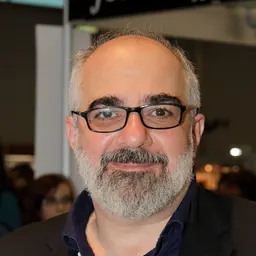




Related people
Same field, nearest in time

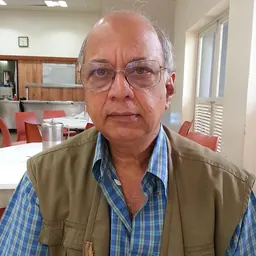
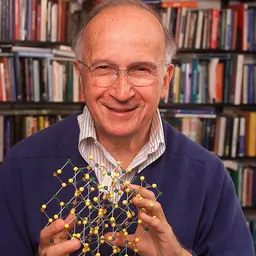
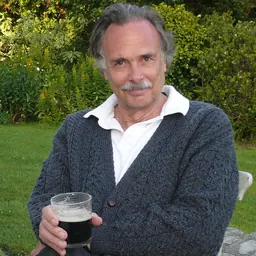

Contemporaries
People whose lives overlapped Anthony Neilson's


Frequently asked questions
Who is Anthony Neilson?
British writer
When was Anthony Neilson born?
Anthony Neilson was born in 1967 in Edinburgh.
What is Anthony Neilson's occupation?
Anthony Neilson is a playwright, theatre director and film director.
What nationality is Anthony Neilson?
Anthony Neilson is British.
Sources & further reading
Cite this page
APA: Biography.guide. (2026). Anthony Neilson. https://biography.guide/anthony-neilson/
MLA: "Anthony Neilson." Biography.guide, https://biography.guide/anthony-neilson/.
Chicago: "Anthony Neilson." Biography.guide. https://biography.guide/anthony-neilson/.
Data last updated: 2026-09-20 · Spot an error? Report a correction.
Page generated 2026-09-27 05:15 UTC