
About Anthony Herbert
Lived 1930 – 2014 (aged 84). Anthony Herbert was an American military officer.
Anthony B. Herbert (7 April 1930 – 7 June 2014) was a United States Army officer, who served in both the Korean War and the Vietnam War. He is best known for his claims that he witnessed war crimes in Vietnam, which his commanding officer refused to investigate. He reached the rank of lieutenant colonel and was the author of several books about his experiences, including Soldier and Making of A Soldier.
Military career Herbert enlisted in the United States Army in May 1947 to be a paratrooper. He completed Basic Combat Training at Fort Dix, New Jersey, and Basic Airborne School at Fort Benning, Georgia. After a few months of service in the peacetime Army at Fort Lewis, Washington, he accepted a discharge in 1948, returned home and graduated from high school. He then re-enlisted in the Army in February 1950 and became a paratrooper in the 82nd Airborne Division.
Korean War Herbert deployed for Korea in October on the troopship Walker. It was here, in the Korean War, that he first built his reputation as a fighter, and was rapidly promoted to become one of the youngest master sergeants in the Army, and one of the most decorated.
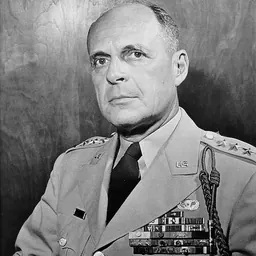
Herbert was selected by General Matthew Ridgway in 1951 to represent the American soldier in Korea and returned to the U.S., going to the White House to meet President Harry Truman, and traveling the country to promote the war.
It was during this time that Herbert met former first lady Eleanor Roosevelt and was persuaded by her to go to college and gain an education, for whatever he would do with the rest of his life. Herbert left the U.S. Army once again in 1952 to enter the University of Pittsburgh in order to complete a Bachelor of Arts degree, graduating in 1956 and re-entering the Army as a second lieutenant in the Pennsylvania National Guard.
At the same time, Herbert accessioned for active duty and began the Infantry Officer's Basic Course (then called Basic Infantry Officer's Course, or BIOC) at Fort Benning, Georgia. After graduating that course with high marks, he was assigned as an instructor to the Mountain Ranger Training Camp at Dahlonega, Georgia. David Donovan, one of his cadets, reported being "impressed by his charisma, his leadership ability, and his military expertise." Herbert followed this with assignments of increasing responsibility and was promoted quickly.
Author Conquest to Nowhere, self published, 1954 Soldier, Holt, Rinehart and Winston; 1st edition (1973) Herbert--The Making of a Soldier, Hippocrene Books, 1982 Complete Security Handbook, Scribner, 1983 International Traveler's Security Handbook, Hippocrene Books, 1984 Military Manual of Self Defense, Hippocrene Books, 1991
Personal appearance
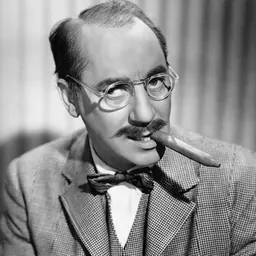
Anthony Herbert and his wife Mary Grace appeared on the 6 October 1955 episode of the TV quiz program You Bet Your Life, hosted by Groucho Marx. At the time, Herbert was studying creative writing and psychology at the University of Pittsburgh. His book Conquest to Nowhere about the Korean War was mentioned. Herbert and his wife won $110.
Vietnam War He was first deployed in Vietnam War in 1968 with the Inspector General's Office assigned to the 173d Airborne Brigade, a unit with which he would later make a dramatic mark, and one in which he would encounter many controversial roles later on. He commanded the 2nd Battalion (Airborne), 503rd Infantry.
In the wake of the controversy surrounding the My Lai massacre, Herbert claimed to have witnessed a number of war crimes in Vietnam, which he reported to his superiors but which they allegedly refused to curb or discipline. Herbert pressed charges against his commanding officers for their intransigence.
Herbert had reported eight separate war crimes, including incidents of looting, execution and murder. The Army also released a statement to the effect that Herbert had raised the war crimes issue for the first time in September 1970, eighteen months after he was relieved of command in Vietnam and only after he had exhausted other means of salvaging his military career.
Herbert was accused of exaggeration and outright lying in his filed reports. In April 1969 he was relieved of his command of the Second Battalion, despite its outstanding record under his leadership.
The case reached the United States Supreme Court (Herbert v. Lando, 441 U.S. 153 (1979)). The court ruled that defendants have no privilege under the First Amendment which would bar a plaintiff from inquiring into the editorial process or states of mind of those involved in the alleged libel, if the inquiry was tailored to the production of evidence considered material to plaintiff's necessary burden of proof. Judge Irving R. Kaufman, a member of the three-judge panel, ruled Herbert had no grounds to take his case to trial in a 43-page opinion. The opinion stated the CBS story was essentially accurate. To go to trial over some minor unresolved issues would be a "classic case of the tail wagging the dog."
Herbert was reportedly considering again appealing his case to the U.S. Supreme Court. It was Judge Kaufman whom the Supreme Court reversed in the 1979 decision. Jonathan Lubell, Herbert's attorney, claimed that Kaufman has long been sympathetic to the press. Herbert died of cancer on 7 June 2014 at the age of 84. His death was not made public until after his burial at Arlington National Cemetery, in February 2015.
Awards and decorations Herbert was awarded four Silver Stars, three Bronze Star Medals with a 'V' for valor, six battle stars, four Purple Hearts. He was wounded 14 times—10 by bullets, 3 by bayonet, and once by white phosphorus.
90px Armed Forces Reserve Medal (Army) with bronze hourglass device.
Reception of a Turkish award In the 1955 book Conquest to Nowhere, by Herbert, it is stated that he received an "Osminieh" from the then president of Turkey Celâl Bayar for his service with the Turkish brigade in the Korean War. This claim was made as well in his later book Soldier (1973), and reprinted in the Schenectady Gazette. In later accounts, in 2006, this award was described in an article on Herbert that stated he received the "coveted Turkish Ozanu Order".
Don’t just read it —
keep it.
Full-length biographies made to live with: read them, listen on the way to work, watch them tonight.
- E-book
- Audio
- Video
Instant download · yours to keep · every purchase keeps this site free
Important facts
People in Anthony Herbert's life
Named in this biography and alive at the same time





Related people
Same field, nearest in time


Contemporaries
People whose lives overlapped Anthony Herbert's



Frequently asked questions
Who was Anthony Herbert?
United States Army officer
When was Anthony Herbert born?
Anthony Herbert was born on 7 April 1930 in Herminie.
When did Anthony Herbert die?
Anthony Herbert died on 7 June 2014 in Cañon City.
What was Anthony Herbert's occupation?
Anthony Herbert was a military officer.
What nationality was Anthony Herbert?
Anthony Herbert was American.
Sources & further reading
· DBpedia: Anthony Herbert (lieutenant colonel)
Cite this page
APA: Biography.guide. (2026). Anthony Herbert. https://biography.guide/anthony-herbert/
MLA: "Anthony Herbert." Biography.guide, https://biography.guide/anthony-herbert/.
Chicago: "Anthony Herbert." Biography.guide. https://biography.guide/anthony-herbert/.
Data last updated: 2026-09-20 · Spot an error? Report a correction.
Page generated 2026-09-27 05:21 UTC