
About Anthony Hammond
Lived 1668 – 1738 (aged 69–70). Anthony Hammond was a politician and poet.
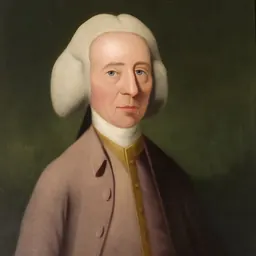
Anthony Hammond (1668–1738), of Somersham Place, Somersham, Huntingdonshire and Lidlington, Bedfordshire, was an English official and Tory politician who sat in the English and British House of Commons between 1695 and 1708.
Early life Hammond was born on 1 September 1668, the eldest son of Anthony Hammond, D.L., of Somersham Place, Somersham, Huntingdonshire, who was the third son of Anthony Hammond (1608–1661) of St Alban's Court, Nonington, Kent. His mother was Amy Browne (died 1693), daughter of Henry Browne of Hasfield House, Gloucestershire. He was educated at home under Mr Kay from 1675 to 1676, at Willingham, Cambridgeshire under Samuel Saywell from 1676 to 1683 and at St Paul's School from 1684 to 1685. He succeeded his father, who died in 1680 and has a monument in Somersham church. It was told that he smuggled the actress and playwright Susanna Centlivre into his college, where she was disguised as a male cousin, "Jack". There (by this report) she remained hidden for some months studying grammar. He made many and varied friendships with political and literary figures. He entered the company of radical Whig theorists, including Walter Moyle. Through Moyle he probably came into the circle of Tory and Whig ideologues and virtuosi who gathered at the Grecian Coffee House in the Strand, in London.
When he came of age in 1689, Hammond was appointed to the Huntingdonshire lieutenancy and was made a colonel in the county militia.
In 1690, he travelled abroad in the Low Countries. From February to September 1694, he was captain of foot in Thomas Farrington's regiment. He married Jane Clarges, daughter of Sir Walter Clarges, 1st Baronet, at Tunbridge Wells, Kent, on 14 August 1694. That was a family prominent in politics, which included leading members of the Tory party.
Parliamentary career At the 1695 English general election, Hammond was returned as Tory Member of Parliament for Huntingdonshire in a hard-fought contest. He voted in March 1696 against fixing the price of guineas at 22 shillings, and refused to subscribe the Association which lost him his position on the commission of peace. He was active in opposing the attainder of Sir John Fenwick. In parliament he spoke principally on financial questions. Littleton was elected Speaker on 6 December 1698. This tract has been often reprinted. but had withdrawn by 1718. He was returned again as MP for Cambridge University at the first general election of 1701. In September, however, when dining in a Haymarket tavern with Tory friends Charles Davenant and John Tredenham, he was compromised when they were unexpectedly joined by the French chargé d'affaires Chevalier Jean-Baptiste de Poussin, upon which the Whigs built great political capital against him. At the November general election of 1701, he was defeated by Isaac Newton, although Edward Villiers, 1st Earl of Jersey, Lord Chamberlain, had written to the university in his favour. He found consolation in penning some Considerations upon Corrupt Elections of Members to serve in Parliament in 1701.
On 17 June 1701, he had been appointed a commissioner for stating the public accounts. Under Godolphin's administration he was made a Commissioner of the Navy in May 1702, and again entered parliament as member for Huntingdon at the 1702 English general election. At the 1708 British general election, he was returned for New Shoreham, Sussex, but on the ensuing 7 December the House decided by a majority of eighteen that, as commissioner of the navy and employed in the out ports, he was incapable of being elected or of voting as a member of the house, and therefore a new writ was ordered the next day.
From paymaster to debtor In 1711, Hammond left England to take up his appointment as deputy-paymaster or treasurer of the British forces in Spain. The Duke of Argyll, commander-in-chief, complained of him for irregularity. Paymaster Hon. James Brydges, however, upheld Hammond in a report to Lord Treasurer Dartmouth, dated 11 November 1712, justifying the payments made by him to Portuguese troops.
Following his arrest for debt in 1714 his affairs became hopelessly involved. According to Thomas Hearne, Hammond attempted to assassinate the Old Pretender in 1715. He was frequently in debtors' prison during his later life, where he occupied himself with literary pursuits. Retiring to the Fleet Prison, he was able to preserve the remains of his estate for his eldest son.
Later works In 1720, Hammond edited A New Miscellany of Original Poems, Translations, and Imitations, by the Most Eminent Hands, viz. Mr. Prior, Mr. Pope, Mr. Hughes, Mr. Harcourt, Lady M[ary] W[ortley] M[ontagu], Mrs. Manley, &c., now first published from their respective manuscripts. With some Familiar Letters, by the late Earl of Rochester, never before printed: in the 'Preface' he claimed as his own some pieces which had been ascribed to others, including the Ode on Solitude attributed to the Earl of Roscommon.
In 1721, he permitted the publication of his Solitudinis Munus: or, Hints for Thinking. He also wrote a reasoned retrospect of the South Sea Bubble year, entitled A Modest Apology. He remarked that he had made a list of 107 bubbles with a nominal stock of £93,600,000, involving a loss of £14,040,000.
Hammond prefixed to Walter Moyle's Works (1727) a memoir (signed 'A.H.'): they had been intimate friends from 1690. Hammond contributed a 'character' of Edward Russell, 1st Earl of Orford to The Present State of the Republick of Letters for October 1730, from which Robert Samber drew his information for a verse eulogy on Orford in 1731: also he wrote another financial pamphlet entitled The National Debt as it stood at Michaelmas 1730, stated and explained.
His Collections and Extracts relating to the Affairs of the Nation, with an Autobiographical Diary, extending from 1660 to 1730, is preserved in the Bodleian Library. There are numerous Hammond manuscripts among the Rawlinson Collection at the Bodleian, and others among the Portland, Cowper and Stuart papers in the Historical Manuscripts Commission. They had two surviving sons: Thomas Hammond, who died childless about 1758. His father's estate was settled on Thomas in 1725, and he and his mother Amy purchased several estates dependant on Somersham formerly held by copyhold. He received a grant of the manor of Somersham in 1741, and sold it in 1743 in trust to Robert, Duke of Manchester. and three surviving daughters including Amy Hammond, who married first, in 1719, William Dowdeswell of Pull Court, Worcestershire; and secondly, on 7 May 1730 at Knightsbridge, Noel Broxholme, M.D. Amy Broxolme died in 1754 making bequests to her sons William Dowdeswell and George Dowdeswell.
He wrote a short character-sketch of himself which was published in 1809.
Don’t just read it —
keep it.
Full-length biographies made to live with: read them, listen on the way to work, watch them tonight.
- E-book
- Audio
- Video
Instant download · yours to keep · every purchase keeps this site free
Important facts
People in Anthony Hammond's life
Named in this biography and alive at the same time



Related people
Same field, nearest in time



Contemporaries
People whose lives overlapped Anthony Hammond's




Frequently asked questions
Who was Anthony Hammond?
English politician, poet and pamphleteer
When was Anthony Hammond born?
Anthony Hammond was born in 1668.
When did Anthony Hammond die?
Anthony Hammond died in 1738.
What was Anthony Hammond's occupation?
Anthony Hammond was a politician and poet.
Sources & further reading
· DBpedia: Anthony Hammond (politician)
Cite this page
APA: Biography.guide. (2026). Anthony Hammond. https://biography.guide/anthony-hammond/
MLA: "Anthony Hammond." Biography.guide, https://biography.guide/anthony-hammond/.
Chicago: "Anthony Hammond." Biography.guide. https://biography.guide/anthony-hammond/.
Data last updated: 2026-09-20 · Spot an error? Report a correction.
Page generated 2026-09-27 05:14 UTC