
About Anthony Follett Pugsley
Lived 1901 – 1990 (aged 88). Anthony Follett Pugsley was a naval officer.
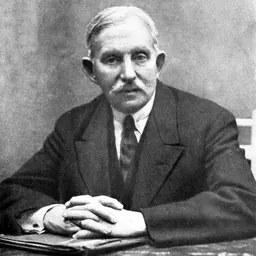
Rear-Admiral Anthony Follett Pugsley (7 December 1901 – 17 July 1990) was a British naval officer. During the Second World War he served as a successful destroyer captain, landed the 3rd Canadian Division on D-Day, and planned and executed the amphibious landings on Walcheren during a critically important phase in the Battle of the Scheldt in late 1944.
Early life and family Tony Pugsley was born on 7 December 1901, the son of a solicitor, John Follett Pugsley, and Lucy Melton Chorley Loveband. Both his parents came from Devonshire families; his grandfather, who had qualified but never practised as a doctor, lived at Wiveliscombe, and his mother’s family were gentry originally from Yarnscombe in north-west Devon. Pugsley was descended both from Josiah Follett, the non-conformist preacher of the 18th Century, and William Pugsley who as a midshipman survived the sinking of the when she capsized at Spithead in 1782.
Pugsley was educated for two terms at Blundell's School in Tiverton, the fifth successive generation of Pugsleys to go there, before joining the Navy as a cadet, aged 13, and going to the Royal Naval College, Osborne, and thence to the Royal Naval College Dartmouth. He joined as a midshipman in time to witness the surrender of the German High-Seas Fleet to the British Grand Fleet in November 1918.
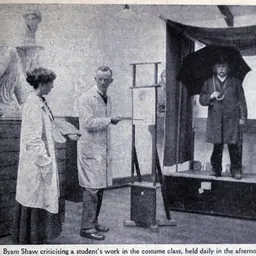
In 1931 Pugsley married Barbara Byam Shaw, the daughter of the pre-Raphaelite artist John Byam Liston Shaw (Byam Shaw) and Caroline Evelyn Eunice Pyke-Nott.
Early career His early experiences as second-in-command of the gunboat on the river Yangtze from 1925 to 1927 are recorded in Pugsley’s memoirs, Destroyer Man. At a particularly dangerous and lawless time in Chinese history, the upper Yangtze was ruled by warlords. An uneasy peace was kept by a British naval presence, and when one of the warlords held a number of British merchant seamen hostage, Pugsley received his first opportunity to distinguish himself in aiding in their rescue. On another occasion he prevented a Chinese mob from overrunning a British cantonment by leading a guard of four sailors with unloaded rifles, he himself armed only with a service cane, towards the mob which parted and melted away
HMS Javelin At the outbreak of the Second World War, Pugsley, by now a commander, was captain of the destroyer , and was mentioned in despatches for his ship’s defence against enemy aircraft in the Norwegian Campaign.
Javelin was also at the Evacuation of Dunkirk, where she evacuated some 1,400 troops before being withdrawn to form part of a special anti-invasion force.
After Dunkirk, Javelin was ordered to join Captain Lord Louis Mountbatten’s Fifth Destroyer Flotilla at Immingham. The flotilla was a force of J- and K-class destroyers, commanded by Mountbatten from, variously, his ship , and (when Kelly was under repair as she often was) the County Hotel at Immingham. Mountbatten wanted to ensure that the German destroyers, which had several knots extra at their disposal, did not escape. He accordingly wished to turn the British flotilla to a course that would not allow them to get away. Pugsley was keen to get into action and bring his forward guns to bear as quickly as possible, in order to smother the enemy. With ranges almost point-blank, the first few salvoes could have been decisive. Three officers (Surgeon-Lieutenant Sloan RNVR, Sub-Lieutenant Mitchell, and Midshipman Fitzgerald) and forty-three sailors (including Pugsley’s steward, Leading Steward Little whose loss Pugsley felt deeply) were killed.
The German flotilla made good its escape.
HMS Fearless and HMS Paladin Javelin being under heavy reconstruction, Pugsley shortly afterwards took command of , at Troon, within a flotilla commanded by Captain Guy Grantham, and proceeded to Gibraltar on convoy duty. Fearless was sunk by aircraft attack on 23 July 1941 during Operation Substance.
HMS Jervis and 14th Destroyer Flotilla On New Year’s Eve 1942, Pugsley was promoted to captain, and to command of the 14th Destroyer Flotilla in . He subsequently was appointed to command all the fleet destroyers in the Eastern Mediterranean. Throughout the early part of 1943, his flotilla harried Axis shipping and engaged Italian naval surface ships.
D-Day and Captain Patrols Channel In mid-July 1943, after four years almost continuously at sea, Pugsley was recalled to join the Combined Operations planning for D-Day at Cowes under Commodore John Hughes-Hallett. Pugsley was appointed to command one of the assault groups. Lawford was sunk by enemy aircraft in the early stages of the landings. The landings completed, Pugsley was awarded a second Bar to his DSO. and was appointed deputy to Admiral Vian in the British landing areas in the Channel as Captain (Patrols).
After Vian's departure, Pugsley was promoted to the command of all British naval patrols in the Channel, responsible for preventing the enemy disrupting the Allied build-up. This could only be undertaken when the enemy had been driven from both banks of the Scheldt estuary. The northern bank, consisting of the large island of Walcheren and its causeway to the mainland, remained heavily fortified and strongly garrisoned by the Germans, with batteries sweeping the Scheldt and preventing the essential mine clearance from proceeding.
Planning Infatuate Pugsley represented Admiral Ramsay at the HQ of General Harry Crerar, whose First Canadian Army had been entrusted with clearing the Scheldt. Pugsley soon became convinced that two combined amphibious assaults of Walcheren with simultaneous crossings of the causeway was now the only feasible way of ensuring the capture of the island.
The solution was found by General Simonds who persuaded the RAF to use bombing to breach the dyke. as well as the monitors and bombarded the defences. The RAF alone dropped 4,871 tons of bombs, and a number of the batteries were put out of action.
Infatuate
The final assembly point was at Ostend, and the operation D-day was fixed as 1 November 1944. Pugsley moved his HQ to where he was joined by Brigadier Leicester. He maintained that the landings were successful largely because of those sacrifices. In a further tribute to the bravery of the Support Squadron, Major General Sir Robert Laycock, Chief of Combined Operations, wrote to Pugsley with the following words:
I understand that the success of the landings and the comparatively light casualties sustained by No. 4 Special Service Brigade at Walcheren was due largely to the heroic efforts of the Naval Support Craft who, at great cost to themselves, effectively silenced the coastal defences.
I should like to express the appreciation of all ranks, Special Service Group, and particularly that of General Sturges and Brigadier Leicester and all ranks of No. 4 Special Service Brigade for the self-sacrifice shown by all naval personnel during the landings, which had such splendid results.
The Special Service Group sincerely hopes that they may have the privilege of co-operating again with Force T in any future amphibious operations they may be required to carry out.
Assault-Group Force T (continued) Force T continued in existence until the end of the War, undertaking smaller operations and providing the seaward defence for the Allied armies operating in the Netherlands and Germany. More notable actions in which Force T was involved included the important transfer of the First Canadian Army across the Rhine into Germany in 1945, and launching numerous minor naval and amphibious commando raids against enemy units and strongpoints along the Dutch and East German coastlines. Force T was disbanded in May 1945.
Post-war In July 1945 Pugsley was appointed to command the 19th Destroyer Flotilla in HMS Trafalgar, but the War against Japan ended before the Flotilla reached the theatre of operations.
Don’t just read it —
keep it.
Full-length biographies made to live with: read them, listen on the way to work, watch them tonight.
- E-book
- Audio
- Video
Instant download · yours to keep · every purchase keeps this site free
Important facts
People in Anthony Follett Pugsley's life
Named in this biography and alive at the same time






Related people
Same field, nearest in time

Contemporaries
People whose lives overlapped Anthony Follett Pugsley's


Frequently asked questions
Who was Anthony Follett Pugsley?
British admiral (1901-1990)
When was Anthony Follett Pugsley born?
Anthony Follett Pugsley was born on 7 December 1901.
When did Anthony Follett Pugsley die?
Anthony Follett Pugsley died on 17 July 1990.
What was Anthony Follett Pugsley's occupation?
Anthony Follett Pugsley was a naval officer.
Sources & further reading
· Wikipedia: Anthony Follett Pugsley
Cite this page
APA: Biography.guide. (2026). Anthony Follett Pugsley. https://biography.guide/anthony-follett-pugsley/
MLA: "Anthony Follett Pugsley." Biography.guide, https://biography.guide/anthony-follett-pugsley/.
Chicago: "Anthony Follett Pugsley." Biography.guide. https://biography.guide/anthony-follett-pugsley/.
Data last updated: 2026-09-20 · Spot an error? Report a correction.
Page generated 2026-09-27 05:33 UTC