
About Anšlavs Eglītis
Lived 1906 – 1993 (aged 86). Anšlavs Eglītis was a Latvian writer, journalist, painter and draftsperson.
Anšlavs Eglītis (October 14, 1906 – March 4, 1993) was a Latvian writer, journalist and painter who became a war refugee in 1944. He had a prolific career as a novelist, and his later work often examined aspects of exile life.
Biography Anšlavs Eglītis was born in Riga, Latvia, the first of two children born to the writer Viktors Eglītis and the teacher and translator Marija Eglīte, née Stalbova. His father was one of the most notable representatives of Decadence in Latvian literature.
He continued his studies in the Art Academy of Latvia and graduated in 1935. After graduation, he worked as a teacher of drawing. In 1936 his first collection of novels, Maestro was published. In 1938 Eglītis started to work as a journalist in the biggest Latvian newspaper Jaunākās ziņas. In 1940, he also collaborated on the magazine Atpūta.
He left Riga for Courland in October 1944 and later fled to Germany, where he settled in Berlin. During the Battle of Berlin his flat was destroyed in an air raid, and Eglītis moved to Switzerland. In 1950, he moved to California, US.
His father, writer Viktors Eglītis, was arrested, tortured and killed in the Cheka building in Riga in 1945. His grave is unknown.
In his American exile, Eglītis wrote more than 50 novels and short stories. Parallel to his literature career he became a theatre and film critic for the Latvian newspaper Laiks published in Brooklyn, New York, which also serialized a number of his novels. In 1957, his Neierasta Amerika began to be serialized in the Soviet Latvian magazine Zvaigzne, but it was immediately qualified as an 'import of bourgeois nationalism' and soon discontinued.
The success of his works resides in their avangardist flavour combined with loyalty to the popular taste. In post-Soviet Latvia, his Shameless Old Men, directed by Mihail Kublinskis, is one of the most successful productions of the National Theater.
He died of cancer in Los Angeles in 1993. In 2006, the Latvian Post issued a commemorative stamp in honor of Eglītis.
In 2018, a movie was made based on the motifs of A. Eglītis novel "Homo Novus", which describes the passion in the life of Riga artists of the late 30s. Created in honor of Latvia 100.
Don’t just read it —
keep it.
Full-length biographies made to live with: read them, listen on the way to work, watch them tonight.
- E-book
- Audio
- Video
Instant download · yours to keep · every purchase keeps this site free
Important facts
People in Anšlavs Eglītis's life
Named in this biography and alive at the same time

Related people
Same field, nearest in time
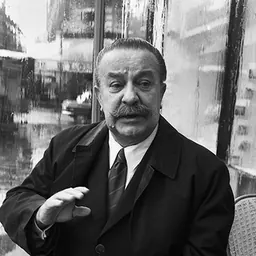

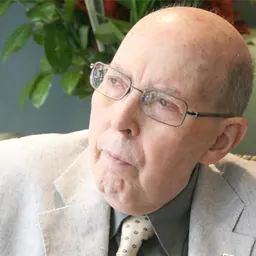
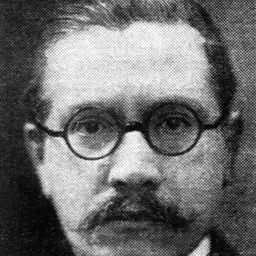
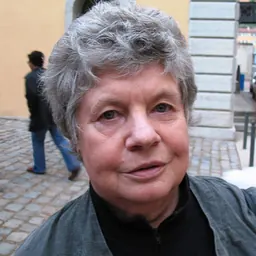
Contemporaries
People whose lives overlapped Anšlavs Eglītis's
Frequently asked questions
Who was Anšlavs Eglītis?
Latvian writer (1906–1993)
When was Anšlavs Eglītis born?
Anšlavs Eglītis was born on 14 October 1906 in Riga.
When did Anšlavs Eglītis die?
Anšlavs Eglītis died on 4 March 1993 in Los Angeles.
What was Anšlavs Eglītis's occupation?
Anšlavs Eglītis was a writer, journalist, painter and draftsperson.
What nationality was Anšlavs Eglītis?
Anšlavs Eglītis was Latvian.
Sources & further reading
Cite this page
APA: Biography.guide. (2026). Anšlavs Eglītis. https://biography.guide/anslavs-eglitis/
MLA: "Anšlavs Eglītis." Biography.guide, https://biography.guide/anslavs-eglitis/.
Chicago: "Anšlavs Eglītis." Biography.guide. https://biography.guide/anslavs-eglitis/.
Data last updated: 2026-09-20 · Spot an error? Report a correction.
Page generated 2026-09-27 05:22 UTC