
Annie Stein
Civil rights activist
About Annie Stein
Lived 1913 – 1981 (aged 68). Annie Stein was an American.
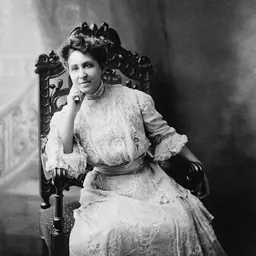
Annie Stein was a civil rights activist who focused on desegregating Washington, D.C. theaters, restaurants and department stores.
Background Annie Steckler was born in Brooklyn, New York. Her parents were Ukrainian immigrants; her father's name was Philip Steckler, born in (1875–1925) in Romny, Ukraine. She had two sisters, Frieda and Sylvia. Stein grew up in the midst of poverty, witnessing first hand her own parents' struggle to feed and support her. She earned a scholarship to Hunter College. In the mid-1930s, while attending Hunter, Stein left her studies for Washington to defend the Scottsboro Boys, nine African-American boys falsely accused of raping two white women. The protest became the first in a long career of activism that made Stein a noteworthy historical figure. After finishing her studies, Stein returned to Washington and dedicate her life's work to fighting the injustices perpetuated by discrimination in employment, public spaces and schools.
Career Stein's work in Washington, D.C. began with a governmental position at the Works Progress Administration. In the late 1930s, deciding that activism was more important, Stein left her career at the Administration to become the chair of the Women's Trade Union League. As chair, Stein devoted her time to labor organizing and protest. During her protests with the WCCP, Stein used progressive tactics such as boycotting and picketing in front of the stores that increased their price on meat and milk. Stein's picket signs featured the slogan: "Don't buy meat over six cents a pound".
In the mid-1940s, Stein and Terrell were both actively fighting the continued segregation in the District's restaurants, theaters, and shopping centers. Together they created the Coordinating Committee for the Enforcement of the D.C Anti-Discrimination Laws to formally address racial discrimination. In the Coordinating Committee, Stein served as secretary to Terrell who considered her, "the greatest secretary in the world". The "lost laws" effectively eliminated segregation in the city, but had been dropped from the District code. The Guild argued that laws were still valid. The owner rejected the party, stating: "We don't serve colored" according to witness Marvin Caplan, the chairman of the Coordinating Committee's Publicity Committee.
According to the "lost laws", a business should serve "any respectable, well-behaved person without regard to race, color or previous condition of servitude". The Coordinating Committee pursued legal action in the case of District of Columbia v. John R. Thompson Co., validate the "lost laws", but for more than two years, the courts refused to hear the case. The case was finally successfully reintroduced in 1953 with the support of President Dwight Eisenhower, a strong civil rights activist, and on June 8, 1953, the court unanimously made the anti-discrimination laws valid. These anti-discrimination laws, now known as the Civil Rights Act, formally put a legal end to discrimination in Washington, a major victory for the committee.
Trailway Bus Line's fountain counter incident Stein was not always successful. The Trailway Bus Line's fountain counter incident demonstrated one of Stein's protests that did not result in a positive racial change. The management of a six-stooled bus station bus fountain counter refused to serve blacks, prompting demands from the Coordination Committee to integrate the counter. The committee cited the now enforceable "lost laws" in their case. Grudgingly the fountain counter managers began accepting black customers, however in response, the stools were removed so that "white and black alike stand up for their cokes." Stein relates the ironic way in which "democracy was achieved" in a critique appearing in the Washington Post: "It seems to me that this incident is symbolic of the deprivations we whites endure to nourish our ugly prejudices." Stein continued to be an advocate for the disadvantaged until her death. In the 1970s Stein won a slot as the legislative aide to the Rev. Milton A. Galamison, vice chairman of the New York City Board of Education. Her work with revolutionary and forward thinking activists Mary Church Terrell and Ella Baker, who further developed her philosophy on social justice. Stein embraced radical politics and communism throughout her political career. Stein's daughter Eleanor upheld her mother's tradition of resistance in the 1960s leading the Weather Underground, a radical Anti-Vietnam War movement.
Don’t just read it —
keep it.
Full-length biographies made to live with: read them, listen on the way to work, watch them tonight.
- E-book
- Audio
- Video
Instant download · yours to keep · every purchase keeps this site free
Important facts
Family & relationships
People in Annie Stein's life
Named in this biography and alive at the same time

Contemporaries
People whose lives overlapped Annie Stein's






Frequently asked questions
Who was Annie Stein?
civil rights activist (1913-1981)
When was Annie Stein born?
Annie Stein was born on 3 March 1913 in Brooklyn.
When did Annie Stein die?
Annie Stein died on 13 May 1981.
What nationality was Annie Stein?
Annie Stein was American.
Sources & further reading
Cite this page
APA: Biography.guide. (2026). Annie Stein. https://biography.guide/annie-stein/
MLA: "Annie Stein." Biography.guide, https://biography.guide/annie-stein/.
Chicago: "Annie Stein." Biography.guide. https://biography.guide/annie-stein/.
Data last updated: 2026-09-20 · Spot an error? Report a correction.
Page generated 2026-09-27 05:27 UTC