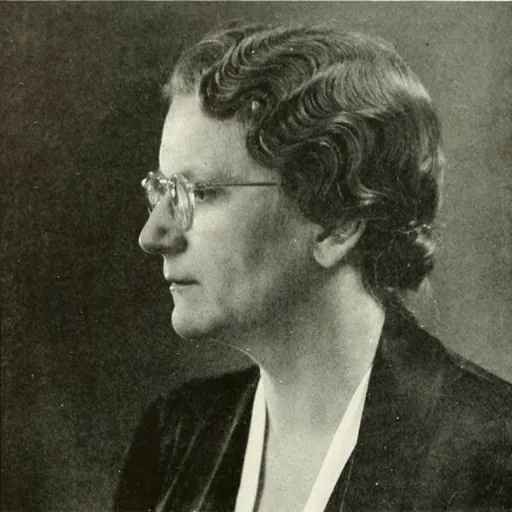
About Annie Dove Denmark
Lived 1887 – 1974 (aged 86). Annie Dove Denmark was an American academic and pedagogue.
Annie Dove Denmark (September 29, 1887 – January 16, 1974) was an American music educator and academic administrator who was the fifth president of Anderson College (now Anderson University) in Anderson, South Carolina, from 1928 to 1953.
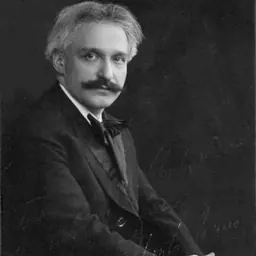
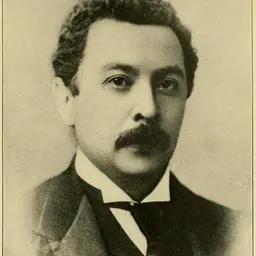
A talented musician in her youth, Denmark attended the Baptist University for Women (now Meredith College) and graduated with an artist's diploma in piano in 1908. She began her teaching career later the same year. For a period of eight years thereafter, she taught piano at Buies Creek Academy, the Tennessee College for Women, and Shorter College. She continued her studies as her career began; she spent the summer of 1909 in New York City studying under Rafael Joseffy, the 1916–1917 academic year studying under Alberto Jonás, and many successive summers during her time at Anderson attending the Chautauqua Institute. She began teaching at Anderson at the start of the 1917–1918 academic year. After the resignation of Anderson president John E. White in September 1927, her name was put forward as a potential successor and she had gained the full support of the trustees by December of that year.
Denmark took office as Anderson's fifth president in January 1928; she is commonly cited as the first woman president of a college or university in South Carolina, though this claim is incorrect. Taking on the school's substantial debt, she guided the school through the Great Depression and oversaw Anderson's transition from a four-year college to a two-year junior college, the first of its kind in the state. The remainder of the college's debt was paid off by the South Carolina Baptist Convention in May 1938, and attendance increased as World War II ended and the school enrolled more men than it ever had since becoming co-educational in 1931. She announced her resignation in April 1952 and ultimately left office in May 1953 following that year's commencement, concluding a 25-year presidency that remains the longest in Anderson's history. She was promptly elected president emeritus by the trustees and given an apartment on campus, though she instead retired to her hometown of Goldsboro, North Carolina, where she lived until her death in 1974.
She was the recipient of multiple honors during her life and following her death: Furman University awarded her an honorary degree in 1941, Anderson established the Denmark Society and the Annie Dove Denmark award in 1944 and 1976, respectively, she was made the namesake of a dormitory building on campus in 1966, and was inducted into the Anderson County Museum Hall of Fame in 2004.
Early life and education
Annie Denmark was born in Goldsboro, North Carolina, on September 29, 1887, the fourth of five children born to Sara Emma and Willis Arthur Denmark. Her family had lived in Goldsboro for some time before her birth; her father moved there several years prior to the Civil War and was the tax collector for Wayne County for 33 years. In addition to being an alderman in the town, he was co-founder of a church where he was superintendent of the Sunday school and a deacon. Sara was Willis's second wife; his first wife, Clarissa Boyette, was Sara's sister and had died about two years after the birth of their first and only child. Willis and Sara married eleven months following Clarissa's death. Annie was raised with close ties to the church; she was later described by the Anderson University historian Hubert Hester as a "gifted student" in music, even playing organ at her church between 1897, at the age of ten, until 1908. She received her high school diploma in 1904 from the Goldsboro public schools and enrolled at the Baptist University for Women (BUW) in Raleigh, North Carolina, later the same year.
While at BUW, which changed its name to Meredith College the year after Denmark graduated, she was the president of a literary society for a year and was a member of the student council. One of her instructors there was Grace Louise Cronkhite, who later became her close friend and was dean of music at Anderson, in addition to teaching piano, organ, and music theory, during her presidency. Denmark gave her graduating piano recital on April 22, 1908, and received an artist's diploma in piano a short time later. She continued to take instruction from Cronkhite for a year following her graduation. She also took graduate courses at Columbia University. While teaching at Anderson, she continued her own studies. For many summers she traveled to Chautauqua, New York, to attend the Chautauqua Institute, (Hester (1969) says that Denmark "attended Chatauqua Institute at Chatauqua, New York, for 12 summers altogether", though her obituary from The State says that she attended only from 1921–1927 and then again in 1933 though she was predated in this distinction by Euphemia McClintock some 26 years earlier.) Denmark was formally inaugurated as president just over a year later, on February 14, 1929. She marked the occasion of her inauguration by declaring that day to be the inaugural observation of the college's annual Founders Day, recognizing the anniversary of the granting of the college charter on February 14, 1911. in addition to the loss of two mills and several homes and farms in town. The college did, however, collect $20,000 as a result of their storm insurance policy, which went towards restoring the heating plant and other general refurbishments. The school administration won a significant victory two years later when, on May 23, 1938, the South Carolina Baptist Convention assisted in paying the remainder of Anderson's debt, bringing many of the school's financial woes to a close.
Enrollment climbed over the next few years and spiked noticeably after World War II; 42 of 53 men that enrolled at Anderson in 1946–1947 were veterans, largely a result of the G.I. Bill, and the school enrolled a record 409 students that academic year in total. Denmark helped to increase pay for Anderson faculty on multiple occasions: in May 1944, she recommended a "slight increase" in their salaries and introduced a salary bonus in March 1946. The college, still in some need of funds and a stable endowment, received $60,000 from the Baptist State Convention sometime between 1946 and 1947, which was used to modernize some of the campus's buildings. In 1944, she worked with school administration to implement an honor code for the college under which students would be tried by their classmates, though some infractions (such as alcohol possession) meant a student would be subject to expulsion with no debate. Throughout her presidency, she kept close the college's ties with the church, as chapel attendance remained a requirement for all students, five days a week, up to and through her resignation.
At a meeting of the Board of Trustees on April 23, 1952, Denmark announced her resignation as president of the college, saying,
This date represented the 25th anniversary, to the day, of the beginning of her term, though her successor was ultimately not found until several months later. In her letter, she referenced the school's freedom from debt and good prospects for future financial support as well as her desire to allow the new president enough time to prepare for the next academic year. The trustees were quite surprised by this request and did not accept her resignation until the conclusion of the meeting, when she insisted that they do so. She gave her final president's report on January 22, 1953; at the same meeting, president-elect Elmer Francis Haight was introduced to the trustees. "Denmark Day" was celebrated on Founders Day of that year—February 14, 1953—during which the retiring president was honored by many former students and other guests of the college. Her official duties as president came to a close following the commencement exercises of May 22, 1953. Haight began his duties as Anderson's sixth president the following month.
During her presidency, Denmark held a number of other positions within higher education: she led the Southern Association of Colleges for Women as its president from 1934 to 1935, was a member of the Board of Trustees of the Southern Baptist Women's Missionary Union Training School in Louisville, Kentucky, and was the first woman to hold an office in the Baptist State Convention when she was its vice president in 1950. While she accepted the position, she opted to return to her hometown of Goldsboro. After suffering declining health for several months, she died on the morning of January 16, 1974, at Wayne Memorial Hospital in Goldsboro, at the age of 86. She never married and left no immediate family. In 1944, during her presidency, the Denmark Society was established, which honored "outstanding graduates" of the college. and was established in 1976. She received a certificate of service at Anderson’s commencement in May 1961, along with her successor Elmer Francis Haight, as part of the school's fiftieth anniversary celebrations. West Dormitory, a dormitory building on Anderson's campus originally built in 1911 and in which Denmark resided during her tenure, after which it toured around the state during winter 2011. She was honored as an inductee into the Anderson County Museum's Hall of Fame in 2004, Due to her contributions to the life of the college and the city as a whole, she was sometimes referred to as "the first citizen of Anderson"; many letters written to her were addressed to "Dr. Anderson". Her 25-year presidency is the longest in the college's history.
Don’t just read it —
keep it.
Full-length biographies made to live with: read them, listen on the way to work, watch them tonight.
- E-book
- Audio
- Video
Instant download · yours to keep · every purchase keeps this site free
Important facts
People in Annie Dove Denmark's life
Named in this biography and alive at the same time

Related people
Same field, nearest in time


Contemporaries
People whose lives overlapped Annie Dove Denmark's




Frequently asked questions
Who was Annie Dove Denmark?
American educator
When was Annie Dove Denmark born?
Annie Dove Denmark was born on 29 September 1887 in Goldsboro.
When did Annie Dove Denmark die?
Annie Dove Denmark died on 16 January 1974.
What was Annie Dove Denmark's occupation?
Annie Dove Denmark was an academic and pedagogue.
What nationality was Annie Dove Denmark?
Annie Dove Denmark was American.
Sources & further reading
· Wikipedia: Annie Dove Denmark
Cite this page
APA: Biography.guide. (2026). Annie Dove Denmark. https://biography.guide/annie-dove-denmark/
MLA: "Annie Dove Denmark." Biography.guide, https://biography.guide/annie-dove-denmark/.
Chicago: "Annie Dove Denmark." Biography.guide. https://biography.guide/annie-dove-denmark/.
Data last updated: 2026-09-21 · Spot an error? Report a correction.
Portrait: Wikimedia Commons · author & licence
Page generated 2026-09-27 04:59 UTC