
About Anne-Lise Stern
Lived 1921 – 2013 (aged 91). Anne-Lise Stern was a French and German psychoanalyst and psychoanalysis.
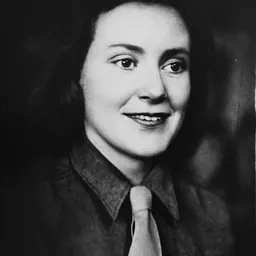
Anne-Lise Stern (born Anneliese Stern: 16 July 1921 - 6 May 2013) was a French psychoanalyst and Holocaust survivor.
Life Family provenance and early years Anneliese Stern was born in Berlin and then spent the first twelve years of her life growing up in Mannheim, to where her parents relocated soon after her birth.
Heinrich (later Henri) Stern (1893-1948), her father was a Freudian psychiatrist. He was also a passionate Marxist and secular Jew. Her mother, born Käthe Ruben (1893-1968), who worked as a nurse, also came from a politically committed Jewish family. Her maternal grandmother, Regina Ruben, was a militant feminist and Marxist, and a "companion in arms" to Clara Zetkin and Rosa Luxemburg. During her childhood both Anneliese's parents were members of the Social Democratic Party, while her grandmother Regina, to whom Anneliese later dedicated some of her written work, had joined the more recently established Communist Party.
Flight from Nazi Germany The Nazis took power in January 1933 and lost no time in transforming the country into a one-party dictatorship. Like populists through the ages, the Nazis had gained public support on the twin pillars of hope and hatred. The hatred, targeted on political opponents and Jews, became an underpinning of government policy very much more quickly than many had thought possible, and a few weeks after the Nazi takeover Heinrich Stern, by now serving on the local town council, was arrested. Three months later he was released without charge. On the day of his release the Sterns left Germany with their daughter, settling initially with relatives in Paris. Dr. Stern's secretary, Käthe Seitz, stayed in Germany and opposed the Nazis. She was killed by decapitation. Anne-Lise quickly mastered the language and passed her school leaving exams ("Baccalauréat"). Towards the end of 1938 she and her parents were granted French citizenship.
During the second half of 1942 a large German army was destroyed at Stalingrad and a massive Anglo-American army invaded North Africa. In France the German army reacted by taking over southern France from the Vichy government. In the streets it became progressively harder to avoid encountering Gestapo officers and their French collaborators. Anne-Lise Stern now lived under a false identity and, after the death of her friend Eva Freud, made her way at the start of 1944 to Paris. Here someone denounced her to the authorities as Jewish.
Concentration camps Anne-Lise Stern was deported to Auschwitz-Birkenau
She remained at Auschwitz-Birkenau till the autumn of 1944. Faced with the relentless advance of the Soviet army, the authorities now took the decision to evacuate concentration camps in the eastern part of Germany, which included Silesia. She was included in a convoy sent to Bergen-Belsen. From there, with the other women from her block, in February 1945 she was transferred to Raguhn, a labour camp attached to Buchenwald. In April 1945, she was sent in a convoy which took a week to reach Theresienstadt. Other family members had not. Her mother's sister Ilse was killed at Auschwitz.
Postwar years During the summer of 1945 Anne-Lise Stern, still aged only 24, wrote several substantial essays about her concentration camp experiences. These were subsequently grouped together and published in a single volume as "Textes du retour" (loosely "Essays on coming home"). Pierre Vidal-Naquet considered that the little compilation "matched the peaks of concentration camp literature, alongside francophone versions of works by Primo Levi, "Ravensbrück" by Germaine Tillion, together with "le Grand Voyage" and "Quel beau dimanche" by Jorge Semprún. Despite her sudden success as a writer, and not withstanding the ringside seat she had been forced to occupy in respect of Josef Mengele's savagely cruel medical experimentation at Auschwitz-Birkenau, Anne-Lise Stern never turned aside from her long standing ambition to follow her father into the medical profession. Henri Stern returned with some remarkable reports, but was not able to complete the task before he died of cancer in 1948, supported by his daughter and aged just 55. working initially at the Hôpital Bichat, and later at the Hospital for Sick Children in Paris.
Prompted by the "events" (major street unrest and strikes) of May 1968, in 1969 Stern, with a group of supporters including the analysts Pierre Alien et Renaude Gosset, set up the "Laboratoire de psychanalyse", a treatment facility for destitute patients. The initiative was a consciously political one. Treatment sessions were provided for very low prices. Stern used these seminars to study contemporary documents relating to the Holocaust. From 1992, on the initiative of Isac Chiva, the seminars were held for many years at the École des hautes études en sciences sociales ("School for Advanced Studies in the Social Sciences") in a left bank quarter of Paris.
In 2004 Anne-Lise Stern's book "Le savoir-déporté" (loosely "The Deported Knowledge") appeared. Together with her psychoanalytical essays published between 1963 and 2003, it constitutes a coherent report of her experiences in the concentration camps. The narratives are factual, without gratuitous attempts at commentary or explanation. In other chapters she describes her teenage years before the war, including her truncated period of study at Tours and the most significant encounters that she had before her deportation to the camps in Germany in 1944. The book allows the reader to share the author's vision of a "rebirth experience" resulting from the deportation and its aftermath, which provided the all-embracing context for her subsequent work as a psychoanalyst. She presents the Holocaust not as an ill-defined form of "big history" to be argued over by history scholars, but as a psychiatric reality.
Output (selection) Le savoir-déporté. Camps, histoire, psychanalyse, produced by Nadine Fresco and Martine Leibovici, Edition Seuil (Collection Librairie du XXIe siecle), Paris 2004. Ei Warum, Ei Darum: O Why. In: Stuart Liebman (Hrsg.): Claude Lanzmann's Shoah: Key Essays. Oxford University Press, 2007, , S. 95ff. (englisch) Früher mal ein deutsches Kind...passée du camp chez Lacan. Versuch einer Hinübersetzung. Berliner Brief Nr. 2, November 1999, Freud-Lacan-Gesellschaft Berlin Mending' Auschwitz, Through Psychoanalysis? In: Strategies. A Journal of Theory, Culture & Politics. Nr. 8, 1995/1996, S. 41–52. Point de suture (about the film Life Is Beautiful by R. Benigni). Carnets de l’Ecole de psychanalyse Sigmund Freud Nr. 21/22, 1999 Sois déportée... et témoigne! Psychanalyser, témoigner: double bind? in: La Shoah: témoignage savoirs, oeuvres. herausgegeben von Annette Wieviorka und Claude Mouchard, Cercil Press Universitaires de Vincennes, Orléans 1999. Le savoir-déporté. Entretien avec Martine Leibovici. in: Des expériences intérieures pour quelles modernité? herausgegeben vom Centre Roland-Barthes Paris (Essais), Éd. nouvelles Cécile Defaut, Nantes 2012.
Don’t just read it —
keep it.
Full-length biographies made to live with: read them, listen on the way to work, watch them tonight.
- E-book
- Audio
- Video
Instant download · yours to keep · every purchase keeps this site free
Important facts
People in Anne-Lise Stern's life
Named in this biography and alive at the same time


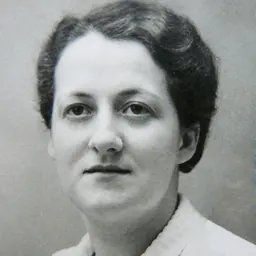
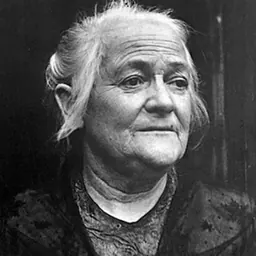

Related people
Same field, nearest in time




Contemporaries
People whose lives overlapped Anne-Lise Stern's




Frequently asked questions
Who was Anne-Lise Stern?
French psychoanalyst (1921–2013)
When was Anne-Lise Stern born?
Anne-Lise Stern was born on 16 July 1921 in Berlin.
When did Anne-Lise Stern die?
Anne-Lise Stern died on 6 May 2013 in 13th arrondissement of Paris.
What was Anne-Lise Stern's occupation?
Anne-Lise Stern was a psychoanalyst and psychoanalysis.
What nationality was Anne-Lise Stern?
Anne-Lise Stern was French and German.
Sources & further reading
Cite this page
APA: Biography.guide. (2026). Anne-Lise Stern. https://biography.guide/anne-lise-stern/
MLA: "Anne-Lise Stern." Biography.guide, https://biography.guide/anne-lise-stern/.
Chicago: "Anne-Lise Stern." Biography.guide. https://biography.guide/anne-lise-stern/.
Data last updated: 2026-09-22 · Spot an error? Report a correction.
Page generated 2026-09-27 05:24 UTC