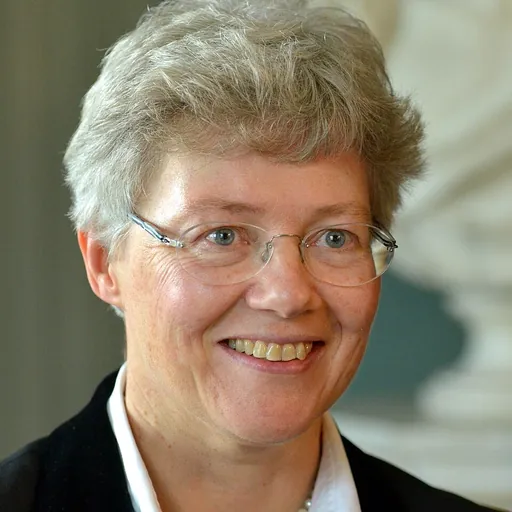
About Anne L'Huillier
Born 1958. Anne L'Huillier is a French and Swedish physicist, university teacher and nuclear physicist.
Anne Geneviève L'Huillier (; born 16 August 1958) is a French physicist. Her experimental and theoretical research are credited with laying the foundation for the field of attochemistry. In 2003 she and her group beat the world record for the shortest laser pulse, of 170 attoseconds.
Life
Education Anne L'Huillier was born in Paris in 1958. She was awarded a double master's degree in theoretical physics and mathematics, but switched for her doctorate degree to experimental physics at Pierre and Marie Curie University. Her dissertation was on multiple multiphoton ionization in laser fields of high intensity. She carried out her dissertation research at the Commissariat à l'énergie atomique et aux énergies alternatives (CEA), near Paris.
Career As a post-doctoral student, L'Huillier worked at the Chalmers Institute of Technology in Gothenburg, Sweden, and at the University of Southern California in Los Angeles, United States. She also serves as governing board member at the Institut d’optique, France.
Research L'Huillier's research involves experimental and theoretical aspects of high harmonic generation in gases, which corresponded to extremely short light pulses in the ultraviolet spectral range, lasting tens or hundreds of attoseconds. In 1987, L’Huillier first observed that gases like argon would react to a laser by becoming excited and emitting additional radiation or overtones, at various multiples of the frequency of laser. In 1994, Maciej Lewenstein, L’Huiller and Paul Corkum presented a full quantum theory of high harmonic generation. These attosecond sources are considered the world's fastest cameras, using extremely short pulses of light to measure electrons as they move or change in energy. L’Huillier's methods for studying and manipulating electrons using light have pioneered the field of attochemistry as they allow the study electronic processes during chemical reactions. In 2003, she received the . In 2011 she received a UNESCO L'Oréal Award. In 2013, she was awarded the , the and an Honorary Degree at Université Pierre et Marie Curie (UPMC), Paris.
In 2021 L'Huillier was awarded the Optical Society of America Max Born Award for "pioneering work in ultrafast laser science and attosecond physics, realizing and understanding high harmonic generation and applying it to time-resolved imaging of electron motion in atoms and molecules". In 2022 she received the Wolf Prize in Physics for "pioneering contributions to ultrafast laser science and attosecond physics" jointly with Ferenc Krausz and Paul Corkum. Also for 2022, the three were awarded the BBVA Foundation Frontiers of Knowledge Award in Basic Sciences. She also received the French Legion of Honour the same year.
In September 2023, she received the Berthold Leibinger Zukunftspreis for "high harmonic generation and attosecond physics." In October 2023, she was awarded the Nobel Prize in Physics, jointly with Krausz and Pierre Agostini "for experimental methods that generate attosecond pulses of light for the study of electron dynamics in matter". and in May from the University of Porto.
Distinctions
Personal life L'Huillier is married to who is also a professor at Lund University. They have two children.
Don’t just read it —
keep it.
Full-length biographies made to live with: read them, listen on the way to work, watch them tonight.
- E-book
- Audio
- Video
Instant download · yours to keep · every purchase keeps this site free
Important facts
People in Anne L'Huillier's life
Named in this biography and alive at the same time

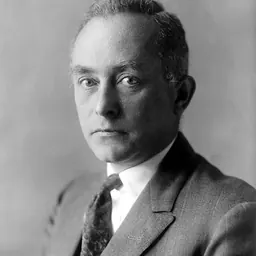



Related people
Same field, nearest in time


Contemporaries
People whose lives overlapped Anne L'Huillier's


Frequently asked questions
Who is Anne L'Huillier?
French physicist
When was Anne L'Huillier born?
Anne L'Huillier was born on 16 August 1958 in Paris.
What is Anne L'Huillier's occupation?
Anne L'Huillier is a physicist, university teacher and nuclear physicist.
What nationality is Anne L'Huillier?
Anne L'Huillier is French and Swedish.
Sources & further reading
Cite this page
APA: Biography.guide. (2026). Anne L'Huillier. https://biography.guide/anne-l-huillier/
MLA: "Anne L'Huillier." Biography.guide, https://biography.guide/anne-l-huillier/.
Chicago: "Anne L'Huillier." Biography.guide. https://biography.guide/anne-l-huillier/.
Data last updated: 2026-09-21 · Spot an error? Report a correction.
Portrait: Wikimedia Commons · author & licence
Page generated 2026-09-27 04:59 UTC