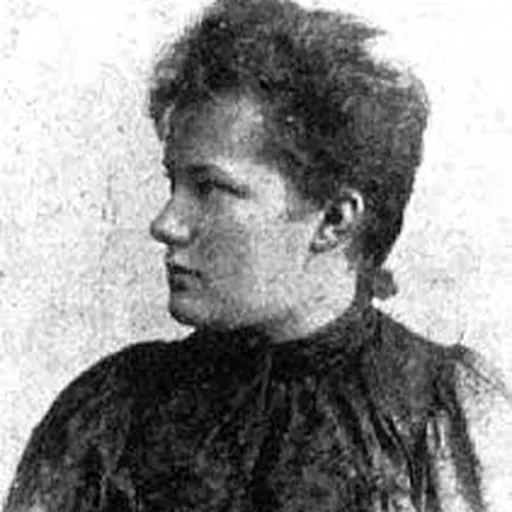
About Anna Rūmane-Ķeniņa
Lived 1877 – 1950 (aged 72). Anna Rūmane-Ķeniņa was a Latvian and Russian writer, teacher, political activist, diplomat and opinion journalist.
Anna Rūmane-Ķeniņa (1877–1950) was a Latvian teacher, writer, women's organization organizer and public figure who campaigned for Latvian independence.
Early life and education Anna Rūmane-Ķeniņa was born into an affluent family on 13 November 1877 in Jelgava in central Latvia. She studied at the girls' high school in Jelgava until 1896. This was a school where only a few Latvian girls studied, being mainly reserved for the daughters of German nobles and senior Russian officials, with courses being taught in German and Russian. In 1897 she became a teacher in the town of Biķernieki.
Teaching She married Ata Ķeniņš in 1898. Their first daughter was born a year later. From 1898 to 1900 she was head of the Zemīte Parish School, a private school. In 1900, Rūmane-Ķeniņa founded a four-year private girls' school in Āgenskalns in Riga, capital of Latvia. In 1907 she converted this school into a high school (gymnasium) and until 1912 she was the director of the school. Among those the school attracted as teachers were writers and artists such as Kārlis Skalbe and Emīls Dārziņš. Her home was also a prominent meeting place for Latvian intellectuals.
Travel and further education Rūmane-Ķeniņa was a keen traveller and had the resources to enable her to make many trips outside of Latvia. Between 1901 and 1907 she travelled to Austria, Switzerland, France and Italy, where she stayed in Ospedaletti in Liguria in the winter for reasons of health. After the First Russian Revolution in 1905, the family fled to Helsinki in Finland, returning in 1906. She attended lectures at the Sorbonne University in Paris from 1911 and studied at the University of Geneva from 1913 to 1916, graduating from the Jean-Jacques Rousseau Pedagogical Institute in Geneva. By this time, she was writing articles in the foreign press advocating independence for Latvia. In 1914 she sent an anonymous contribution to the Journal de Genève in reaction to a pacifist manifesto published by the writer and 1915 Nobel Prize for Literature winner Romain Rolland, in which she stressed the dilemma faced by Latvians when faced with being trapped between the threat of Pan-Germanism and Pan-Slavism.
By 1917, World War I was significantly affecting her income and she needed to find a job. Between 1917 and 1919 she was responsible for Baltic Affairs in the Press Department of the French Ministry of Foreign Affairs. In 1918 she participated in the founding of the French magazine Revue Baltique. She wrote newspaper and magazine articles in favour of independence for Latvia, a movement that gained impetus following the 1917 Russian Revolution. In 2018 she coordinated a large meeting in Geneva that drew attention to the public and journalists from Switzerland and elsewhere to the situation facing Latvia, particularly after the Treaty of Brest-Litovsk was signed in March 1918, between the new Bolshevik government of Russia and the Central Powers (German Empire, Austria-Hungary, Bulgaria, and the Ottoman Empire), which endorsed Germany's control of Latvia. In the autumn of 1919, Rūmane-Ķeniņa became the head of the press office of the Latvian Ministry of Foreign Affairs in Paris. In 1920, she founded the Franco-Latvian Convergence Committee.
In 1943, as a World War II refugee, she went to Germany, where she worked for the German magazine Signal a glossy magazine for distribution outside of Germany that was largely funded by the Wehrmacht Propaganda Troops. At the end of the war, she found herself in the Soviet occupation zone of Berlin, from where she made her way back to Latvia.
Literary activity Rūmane-Ķeniņa started writing in the press in 1896, with articles on political, pedagogical and women's issues and French literature, and about her travels. Under the pseudonyms of Rāmaviete, Aina Rasmer, and Aina Rasmere she published stories, portraits and plays in newspapers in Saint Petersburg and in Latvian newspapers such as the Baltic Journal, Druva and Tēvija. Her visits to Italy led to a series of seven articles entitled From the South. Her autobiographical story, Mother's Sorrow, (1912) is said to be one of the most emotional depictions of a mother's experience of losing a child in Latvian literature.
Personal life Rūmane-Ķeniņa and her husband had six children, three boys and three girls. One daughter died in her second year and another in 1918 as a result of contracting Spanish flu. From 1913 the couple were mainly living apart; she in Switzerland and he in Russia. They divorced in 1923.
Death Rūmane-Ķeniņa died on 9 November 1950 in Rīga. She was buried in the Great Cemetery of Riga.
Don’t just read it —
keep it.
Full-length biographies made to live with: read them, listen on the way to work, watch them tonight.
- E-book
- Audio
- Video
Instant download · yours to keep · every purchase keeps this site free
Important facts
People in Anna Rūmane-Ķeniņa's life
Named in this biography and alive at the same time




Related people
Same field, nearest in time


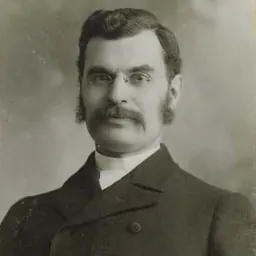
Contemporaries
People whose lives overlapped Anna Rūmane-Ķeniņa's



Frequently asked questions
Who was Anna Rūmane-Ķeniņa?
Latvian writer (1877-1950)
When was Anna Rūmane-Ķeniņa born?
Anna Rūmane-Ķeniņa was born on 13 November 1877 in Jelgava.
When did Anna Rūmane-Ķeniņa die?
Anna Rūmane-Ķeniņa died on 9 November 1950 in Riga.
What was Anna Rūmane-Ķeniņa's occupation?
Anna Rūmane-Ķeniņa was a writer, teacher, political activist, diplomat and opinion journalist.
What nationality was Anna Rūmane-Ķeniņa?
Anna Rūmane-Ķeniņa was Latvian and Russian.
Sources & further reading
· Wikipedia: Anna Rūmane-Ķeniņa
Cite this page
APA: Biography.guide. (2026). Anna Rūmane-Ķeniņa. https://biography.guide/anna-rumane-kenina/
MLA: "Anna Rūmane-Ķeniņa." Biography.guide, https://biography.guide/anna-rumane-kenina/.
Chicago: "Anna Rūmane-Ķeniņa." Biography.guide. https://biography.guide/anna-rumane-kenina/.
Data last updated: 2026-09-23 · Spot an error? Report a correction.
Portrait: Wikimedia Commons · author & licence
Page generated 2026-09-27 05:06 UTC