
About Anna Brackett
Lived 1836 – 1911 (aged 74). Anna Brackett was an American philosopher.
Anna Callender Brackett (May 21, 1836 – March 18, 1911) was an American philosopher, translator, feminist, and educator. She translated Karl Rosenkranz's Pedagogics as a System and wrote The Education of American Girls, a response to arguments against the coeducation of males and females.
Life Born to Samuel and Caroline Brackett, she was the oldest of five children. Her father was a dry goods merchant on Milk Street in Boston, Massachusetts, and the family lived in Somerville. Brackett attended private and public schools in Boston and Somerville and Abbot Academy. In 1856 she graduated from the state teaching school in Framingham, Massachusetts, now known as Framingham State University. Brackett served as a teacher in East Brookfield, Massachusetts, and then as an assistant principal in the teaching school in Framingham. In 1861, she became vice principal in Charleston, South Carolina. At the start of the Civil War, she was forced to leave for New Orleans and then St. Louis where she met with the St. Louis Hegelians and later published the first English translation of several philosophical works. After briefly returning to Cambridge, Massachusetts, and teaching at the high school there, she then went back to St. Louis.
In 1863 she was appointed principal of the St. Louis Normal School (Harris-Stowe State College), the first female principal of secondary school in the United States. During her tenure, Brackett worked to ensure female students had access to higher education and liberal studies as preparation for professional teaching. She made two proposals to the Board of Education that were eventually adopted. The first proposal was an age requirement for entrance to the school. Second, there should be an entrance exam for admission to the St. Louis Normal School. In 1872, Brackett resigned as principal after there were changes in the curriculum that went against her beliefs. She moved to New York City with her domestic partner, Ida M. Eliot, the daughter of Congressman Thomas D. Eliot. The pair adopted their first daughter, Hope, in 1873 and their second daughter, Bertha, in 1875. In New York, Brackett started the , located at 9 West 39th Street, and she hired female teachers such as Mary Mitchell Birchall, the first woman to receive a bachelor's degree from a New England college. Among Brackett's pupils was Ruth Sawyer, in whose Newbery Award-winning semi-autobiographical children's novel, Roller Skates. A biography of Brackett was published upon her death, entitled: Anna C. Brackett, in Memoriam, MDCCCXXXVI-MDCCCCXI: An Appreciation (1915).
Works In 1874, Brackett published The Education of American Girls, an essay that applied Rosenkranz's theory of education to girls. In this essay, Brackett observes that a young woman must be guided through two steps of the learning process, the "perceptive stage" and "conceptual stage." In her opinion, no girl could excel in life without attaining both of these steps. Her thoughts were that an education which merely stops at the conceptual stage is not adequate. If undereducated and untrained in abstract thinking, women were at risk to becoming arbitrary if they were to become active in public affairs. Brackett made the point that if women are confined only to the family circle and taking care of the home, they will not be able to fully develop morally and intellectually. This would cause girls to lose their chance at asserting their independence or compete with others and gain the confidence needed to be successful in the public realm. Men, however, automatically entered into the public realm where they become independent persons, separate from the family. Brackett made the argument that without being able to grow outside their homes, women faced two dangers. The first danger is they grow to be ineffective in the public realm and perpetuate the stereotype of the "incompetent woman." The second danger is to a woman's well-being, risking becoming vulnerable to exploitation by men. This essay was the foundation to Brackett's belief that coeducation is important and necessary in the American education system.
Brackett wrote regarding education and philosophy and published writings in Harper's Magazine and other publications. She also published The Education of American Girls and served as an editor of New England Journal of Education.
Don’t just read it —
keep it.
Full-length biographies made to live with: read them, listen on the way to work, watch them tonight.
- E-book
- Audio
- Video
Instant download · yours to keep · every purchase keeps this site free
Important facts
People in Anna Brackett's life
Named in this biography and alive at the same time
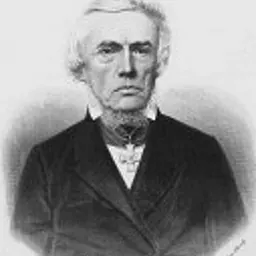

Related people
Same field, nearest in time

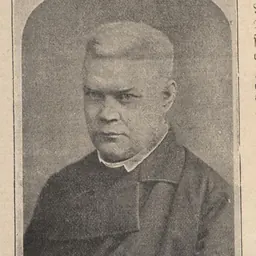
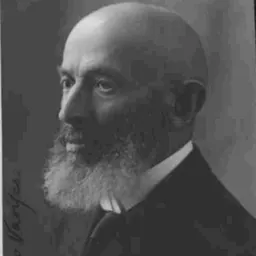
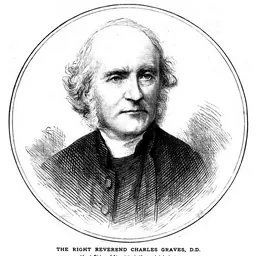


Contemporaries
People whose lives overlapped Anna Brackett's




Frequently asked questions
Who was Anna Brackett?
American philosopher
When was Anna Brackett born?
Anna Brackett was born on 21 May 1836 in Boston.
When did Anna Brackett die?
Anna Brackett died on 18 March 1911 in Summit.
What was Anna Brackett's occupation?
Anna Brackett was a philosopher.
What nationality was Anna Brackett?
Anna Brackett was American.
Sources & further reading
Cite this page
APA: Biography.guide. (2026). Anna Brackett. https://biography.guide/anna-brackett/
MLA: "Anna Brackett." Biography.guide, https://biography.guide/anna-brackett/.
Chicago: "Anna Brackett." Biography.guide. https://biography.guide/anna-brackett/.
Data last updated: 2026-09-22 · Spot an error? Report a correction.
Page generated 2026-09-27 05:32 UTC