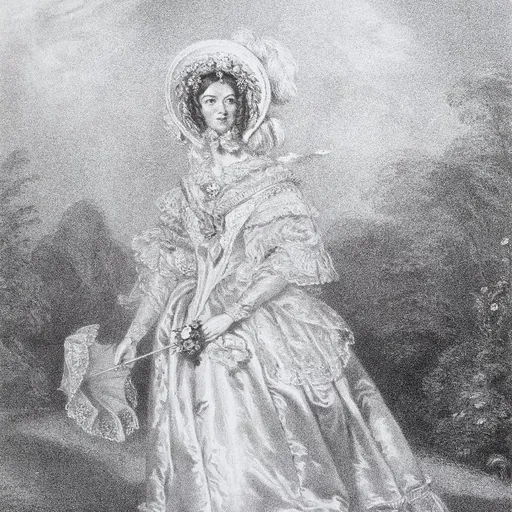
Ann Thwaytes
British philanthropist
About Ann Thwaytes
Lived 1789 – 1866 (aged 76). Ann Thwaytes was a British, known for Clock Tower, Herne Bay.
Ann Thwaytes (2 October 1789 – April 1866), known to contemporaries as Mrs Thwaytes, was the wealthy and eccentric English widow of grocer William Thwaytes, owner of Davison, Newman & Co. She became the benefactress to many causes and funded the construction of the Clock Tower, Herne Bay.
On 19 May 1816 Sarah Hook married Alfred Tebbitt, Thwaytes's chief clerk, at St Martin's in the Fields, Westminster. In 1817 at the age of 28 years Ann married William Thwaytes (1749–1834) who was aged 67. She recovered from the fever, but nevertheless declared that she was "immortal and part of the Trinity," and that she and the couple's family doctor John Simm Smith (1793–1877) had "important work to do." At Guy's Hospital Simm Smith had studied alongside John Keats and had known him well, and was to be the grandfather of Gerard Manley Hopkins.
Her town house, Paddington In 1840 she bought her town house, 17 Hyde Park Gardens, Paddington. The drawing room was furnished lavishly in preparation for the Second Coming which she believed would take place there. She divided her time between her town and country houses until 1866 when she died in her Paddington home.
Her country house, Broadwater, Sussex
In 1841 she acquired her country house and estate, Charmandean at Broadwater, West Sussex. She maintained Samuel Smith and his family at Charmandean, funding the education of his daughters until they left to marry. Meanwhile, Samuel managed her accounts. She added an iron-framed conservatory, and two pairs of wrought iron entrance-gates made as replicas of the former Buckingham Palace gates. The western gates were requisitioned in World War II. The eastern iron gates remained in Charmandean Lane for some years but are now gone, leaving only the carved gateposts. The house was demolished in 1963.
Family rifts During the 1840s, Ann offered to pay for a cadetship for one of Sarah's sons, but the offer was rejected. Sarah was called to Charmandean and told that Ann had been "advised by friends" to end their connection. A few years later, Ann was visited by one of Sarah's daughters who was received politely, but also told never to return. In 1850 Mrs Cook, another of Sarah's daughters, visited Ann and a friendship began. Ann bought this niece a house in Broadwater, but Mrs Cook too was rejected by Ann due to a financial disagreement, and cut off with a comfortable £450 per annum. Her estate was worth £400,000 . £45,000 was left to her nieces and nephews, but there was no legacy for her sister Sarah Tebbitt. She left £5,000 to Dr Collett who attended her last illness, and generous legacies to servants and acquaintances. One account says that she left the remainder of the estate, plus £30,000 and Charmandean her country house, to Simm Smith. His brother inherited the other half of the residue, and was to inherit Charmandean after Simm Smith's death.
From 26 April to May 1867, The Times reported the case of Smith and Others v Tebbitt and Others, in which Sarah Tebbitt and two nieces contested her Will "on the grounds of undue execution, incapacity and undue influence." At the hearing, the legatees declared Ann sane whereas those left out of the Will, led by Ann's nephew, recounted her religious delusions. It was during this case that the unmarried situation of Ann Thwaytes's mother came to light, because illegitimacy might put Sarah Tebbitt's position of rightful heir in doubt. She thought she was the Bride of Christ and that Judgement Day would occur in her lavishly-prepared Hyde Park drawing room. She would talk to her friend Louisa Little, her niece Mrs Cook who noted Ann's sayings in a diary, and to servants and tradesmen, about her religious beliefs, but would close the discussion if rebuffed. In other words, for a woman of known humble origins and at the same time a wealthy widow looking for a place in society, philanthropy would be in her best interests. However 19th-century British elite society was based in the popular imagination upon elegant culture, not money or good deeds, and Herne Bay Clock Tower's opening ceremony drew mockery from the Figaro in London of 6 October 1836, in which she was called a Cockney and her clock, celebration and philanthropy laughed at.
Herne Bay area
Between 1834 and 1840 she visited Herne Bay regularly with friends, staying at 30 Marine Terrace on Central Parade, and became an established town benefactor of Herne Bay.
In the address which was read to her when she laid the foundation stone, some of her good deeds were enumerated: The poorer inhabitants, the labourers and mechanics especially, will gratefully acknowledge that to your unexampled liberality they are indebted for many of their past comforts, for their present employment and for the education of their children. Mr George Rohrs, secretary to the Clock Tower trustees, 3 October 1836 On the opening day of the Clock Tower, 2 October 1837, there was a festival, followed by annual commemoration festivals which may also have been funded by Mrs Thwaytes. There is a blue plaque, recording that she funded the Clock Tower, at Central Parade, Herne Bay.
According to the late Herne Bay historian, Harold Gough, Mrs Thwaytes suddenly "took a huff" and left Herne Bay. After the Clock Tower had been opened, builder George Burge began work on the old St John's Church in Brunswick Square. Eventually the money ran out; Burge ran out of bricks and had to delay completion. Around 1839 to 1840, Burge informed Mrs Thwaytes that if the Clock Tower's bricks had been available for the building of the church, St John's would have been completed "long before." In response, Mrs Thwaytes left Herne Bay, never to return.
Broadwater area
One of Ann's first good works at Charmandean was to give coal to the poor. A Broadwater coal distribution society was formed; she supported this and continued to distribute coal regularly. She contributed generously to a subscription appeal for a new infirmary at Broadwater. This project was started by her friend and consulting surgeon Dr Frederick Dixon who had founded the local Worthing Dispensary in 1829 and treated poor patients for free. Dixon was an amateur geologist who died young, and Ann funded his book, The Geology of Sussex when it was published posthumously. She became financially involved in the 1853–1855 restoration of St. Mary's Church, Broadwater, contributing to chancel repairs, giving £100 towards a new organ and committing to the payment of £40 per year to the organist. She contributed towards one of the new stained glass windows which was dedicated to the late Reverends Peter Wood and William Davison.
Don’t just read it —
keep it.
Full-length biographies made to live with: read them, listen on the way to work, watch them tonight.
- E-book
- Audio
- Video
Instant download · yours to keep · every purchase keeps this site free
Important facts
People in Ann Thwaytes's life
Named in this biography and alive at the same time
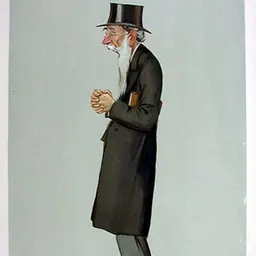
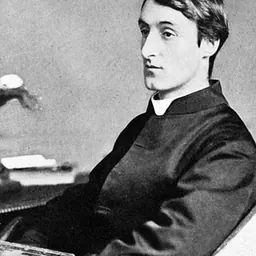


Contemporaries
People whose lives overlapped Ann Thwaytes's



Frequently asked questions
Who was Ann Thwaytes?
British philanthropist
When was Ann Thwaytes born?
Ann Thwaytes was born on 2 October 1789 in London.
When did Ann Thwaytes die?
Ann Thwaytes died on 1 April 1866 in Worthing.
What was Ann Thwaytes known for?
Ann Thwaytes was known for Clock Tower, Herne Bay.
What nationality was Ann Thwaytes?
Ann Thwaytes was British.
Sources & further reading
Cite this page
APA: Biography.guide. (2026). Ann Thwaytes. https://biography.guide/ann-thwaytes/
MLA: "Ann Thwaytes." Biography.guide, https://biography.guide/ann-thwaytes/.
Chicago: "Ann Thwaytes." Biography.guide. https://biography.guide/ann-thwaytes/.
Data last updated: 2026-09-23 · Spot an error? Report a correction.
Portrait: Wikimedia Commons · author & licence
Page generated 2026-09-27 05:05 UTC