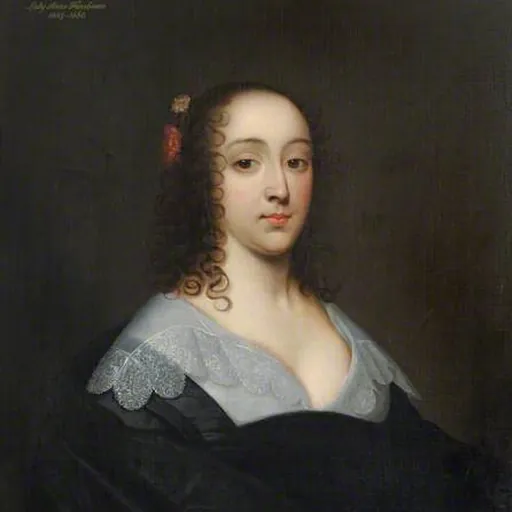
About Ann, Lady Fanshawe
Lived 1625 – 1680 (aged 54). Ann, Lady Fanshawe was a memoirist and writer.
Ann Fanshawe, Lady Fanshawe (25 March 1625 – 20 January 1680) was an English memoirist and author best known for her memoirs written during the English Civil War. A recipe for ice cream in her 1665 book is thought to be the earliest recorded in Europe.
Her recipe for "icy cream" is recorded as follows: "Take three pints of the best cream, boil it with a blade of Mace or else perfume it with orange flower water or Ambergreece, sweeten the Cream, with sugar let it stand till it is quite cold, then put it into Boxes, ether of Silver or tinn, then take, Ice chopped into small pieces and put it into a tub and set the Boxes in the Ice covering them all over, and let them stand in the Ice two hours, and the Cream Will come to be Ice in the Boxes, then turn them out into a salvar with some of the same seasoned Cream, so serve it up to the Table."
Her mother died in July 1640, when Fanshawe was fifteen years old. Following her death, Fanshawe was left capable of managing her father's household with discretion and economy. Her father remarried, and had a son and a daughter by his second wife.
Scholars have studied Ann Fanshawe's early life as a significant influence on her later writing. Fanshawe's upbringing in a Royalist household influenced her ideas on how she viewed family, politics, and personal responsibility during the English Civil War. Her education included household skills, literacy, and social behavior which was typical for women in her social class.
Career Ann's family was Royalist and they moved with the court to Oxford during the English Civil War. However, since her father was a fierce royalist the war brought hardships upon her family when the war broke out. They ultimately had to flee to Oxford where they resided. Her memoir she wrote provides great detail on the lifestyle and hardships her family endured during the time. In 1644, at the age of nineteen, she married at Wolvercote near Oxford, her second cousin, Richard (later Sir Richard) Fanshawe (1608–1666). He was also Royalist and was secretary of war to Prince Charles. They had 14 children, of whom four daughters and a son survived into adulthood.
In 1645, she accompanied Fanshawe to Spain, where he became Secretary to the British Embassy. Upon returning to England, her husband supported himself strenuously in the cause of Charles I of England. He was taken prisoner at the Battle of Worcester in 1651, and for a time closely confined. His wife, not being permitted to visit him, exposed herself to great hardships in order to alleviate his painful solitude by standing to converse with him outside his window in the middle of the night and in bad weather. On his release, they withdrew to Tankersley Park, in Yorkshire, where he occupied himself with poetry and literature, and his wife turned to writing as well. A book of cookery and medicaments was compiled by Lady Fanshawe, the earliest entries, by an amanuensis, dating from 1651. Her recipe for ice cream is thought to be the earliest recorded in Europe.
Fanshawe's memoir is considered an important example of early modern women's autobiographical writing. Her memoir also explains court life, customs, and political events in detail, which gives insight into the seventeenth century. These travel experiences exposed her to different political environments, and cultural traditions. Her observations of court life, clothing, and customs, show how women like her contributed to documenting and explaining political life around them. There is a modern edition of the Memoir.
Scholars often describe Fanshawe's writing as an example of the seventeenth century women's life writing, which were shaped by household responsibilities and political experiences.
Death and legacy She died on 20 January 1680, in Ware, Hertfordshire, where she was buried at St Mary's Church.
Modern scholars discuss Ann Fanshawe as an important figure in early English literature and women's history. Her memoirs are studied not only for their historical detail, but also for its contribution to understanding women's roles in early modern history.
Style and themes The following extract of her Memoir shows her character as well as her husband's:
Don’t just read it —
keep it.
Full-length biographies made to live with: read them, listen on the way to work, watch them tonight.
- E-book
- Audio
- Video
Instant download · yours to keep · every purchase keeps this site free
Important facts
Family & relationships
Related people
Same field, nearest in time



Contemporaries
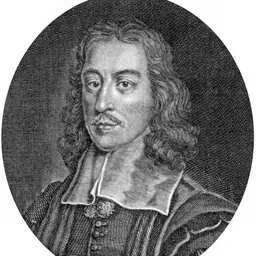
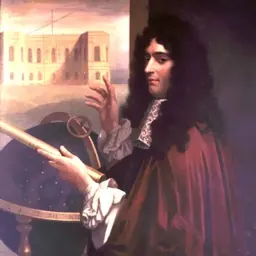
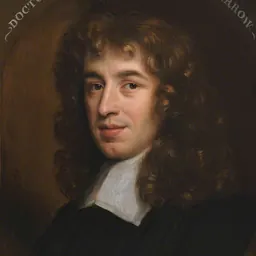
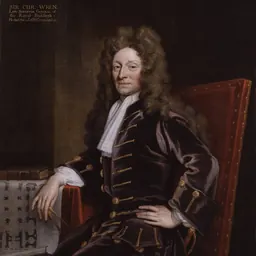
People whose lives overlapped Ann, Lady Fanshawe's


Frequently asked questions
Who was Ann, Lady Fanshawe?
English writer (1625-1680)
When was Ann, Lady Fanshawe born?
Ann, Lady Fanshawe was born on 25 March 1625 in London.
When did Ann, Lady Fanshawe die?
Ann, Lady Fanshawe died on 20 January 1680 in Ware, Hertfordshire.
What was Ann, Lady Fanshawe's occupation?
Ann, Lady Fanshawe was a memoirist and writer.
Sources & further reading
· Wikipedia: Ann, Lady Fanshawe
Cite this page
APA: Biography.guide. (2026). Ann, Lady Fanshawe. https://biography.guide/ann-lady-fanshawe/
MLA: "Ann, Lady Fanshawe." Biography.guide, https://biography.guide/ann-lady-fanshawe/.
Chicago: "Ann, Lady Fanshawe." Biography.guide. https://biography.guide/ann-lady-fanshawe/.
Data last updated: 2026-09-24 · Spot an error? Report a correction.
Portrait: Wikimedia Commons · author & licence
Page generated 2026-10-03 09:35 UTC