
About Anita Brenner
Lived 1905 – 1974 (aged 69). Anita Brenner was an American and Mexican anthropologist, journalist, literary critic, children's writer, novelist and historian.
external media float =
topic = Anita Brenner photographed by Tina Modotti caption = headerimage= title = image1 = mfa.org/693495 image2 = profile, suit, 1925 image3 = Portrait, 1925 (3/4 profile) caption = headerimage= title = image1 = Anita Brenner by Edward Weston image2 = Brenner, behind her desk image3 = Brenner, smoking who wrote extensively in English about the art, culture, and history of Mexico. She was born in Mexico, and raised and educated in the United States. She returned to Mexico in the 1920s following the Mexican Revolution. She coined the term 'Mexican Renaissance', "to describe the cultural florescence [that] emerged from the revolution." As a child of immigrants, Brenner's heritage caused her to experience both antisemitism and acceptance. Fleeing discrimination in Texas, she found mentors and colleagues among the European Jewish diaspora living in both Mexico and New York, and Paula Brenner. Her birth name was registered as Hanna.
In 1916, when Brenner was 11, " to escape the 1910 Mexican Revolution", the family settled in San Antonio, Texas, but Brenner's nanny influenced her enduring passion for Mexico. She graduated from Main Avenue High School, After her father had secured promises from Joseph Weinberger, of B'nai B'rith, a Jewish service organization, and his wife Frances Toor that they would look after her, Isador agreed to let Anita go. and settled in Mexico City. Frances Toor introduced Brenner to the community of international artists, refugees, and intellectuals then residing in the capital. Brenner became an important member of this cosmopolitan circle and was an important link among them. She was also an important voice for bringing the Mexican artistic florescence to the attention of readers in the U.S., effectively representing it north of the Mexican border. For the first time in her life, Brenner felt accepted and began to explore her Jewish roots. She worked for a brief period at B'nai B'rith, meeting recent Jewish immigrants at the port of Veracruz and helping them with their paperwork and resettlement.
Carleton Beals and Ernest Gruening were influential U.S. journalists whom Brenner met in this early period of her career. Beals helped her launch her publishing career. She was Gruening's research assistant for his book, In 1924, her first published article was "The Jew in Mexico," published by The Nation,
President Plutarco Elías Calles (1924–28) offered Brenner her a scholarship to participate in the cultural preservation program. In 1926, Brenner commissioned her friends Tina Modotti and Edward Weston to travel with her and take photographs for her upcoming book on Mexican decorative arts. The National Autonomous University of Mexico provided funding for a two-volume series in which Brenner planned to document artworks in Guanajuato, Jalisco, Michoacan, Oaxaca, Puebla and Querétaro. are devoid of human interest and a study of form. Modotti attempted to capture scenes and personality, and social context over form were emphasized. Her photographs of Brenner show her dressed in a man's suit and fedora. Though feminists of later decades saw these photographs as uninhibited gender expression, Brenner was discreet about her sexuality,
New York years In 1927, Brenner left Mexico for New York to attend Columbia University. She had served as translator and editor for Manuel Gamio, a leading Mexican anthropologist, and was encouraged to pursue a doctorate by Franz Boas, the "founding father of American anthropology". In 1929, she was finally able to publish her book on Mexican artwork, but instead of the two volumes originally planned, she published one volume entitled Idols Behind Altars, with the New York trade publisher, Harcourt, Brace. The main premise of the book was that behind the Spanish "altars", visible Hispanic, Catholic culture, lay the "idols", the invisible authentic culture of indigenous Mexico, which the "Mexican Renaissance" was rediscovering.
Although she never finished a bachelor's or master's degree, and did not conduct field research at the site, Brenner and Orozco later had a falling out. She wrote reviews and helped with the translation of Mariano Azuela's The Underdogs, which sold 3,000 copies. She promoted the work of Diego Rivera, though they at times had a contentious relationship, as well as Carlos Mérida and David Alfaro Siqueiros.
Politics Many of the Mexican artists of the post-Revolutionary decades accepted that the government endorsement of using art to educate the largely uneducated public was a tacit approval to produce art heavily reflecting communist ideology. Revolutionary themes and communism combined in many works of the period. But the 1930s were turbulent times, Mexican communists were sometimes embraced and sometimes not embraced by their US and Soviet counterparts. Brenner was a sympathizer, like others Mexican avant–garde artists, who were sometimes Communist Party members and sometimes not. In 1926 when the journal New Masses was launched, Brenner was classed as a fellow traveler, but not a party member. In 1934 Anita and 24 others signed an open letter on their anti-Stalin stance and received negative reviews from New Masses, which had become the leading Communist journal, branding her a Trotskyist. She responded in an individual letter stating that the role of the intellectual was to question and criticize. By stifling criticism, the Communist Party was refusing to allow intellectuals to do their jobs.
Brenner occasionally wrote under a pseudonym "Jean Mendez" for Troskyist newspapers.
Return to Mexico Brenner, with her husband and two children, emigrated to Mexico in 1940, to the farm in Aguascalientes her family had left when they moved to Texas. She re-established it for specialty agricultural produce and grew asparagus and garlic. In 1943 she published her fourth book, The Wind That Swept Mexico, for which she wrote the text, with George R. Leighton, publishing the vivid photos.
It was also the first telling in English that gave a Mexican perspective of the conflict. Many versions of the events of the war had been printed in the US, but mainly those were journalism pieces which negatively reported on events in Mexico. In particular, pieces by William Randolph Hearst's papers were designed to arouse anti-Mexican feeling to protect his own land holdings in Mexico. Brenner defended Mexico's right to determine its own path without foreign intervention. The book was widely acclaimed at the time, and was received well when it was reprinted in the 1970s.
In 1955, Brenner established a monthly tourist magazine, Mexico/This Month (1955-1971). Her familiarity with both Mexico and the U.S. gave her the expertise to make Mexico known to an English-speaking public. from whom she separated in 1951, ten years prior to his death in 1961. who taught at the Universidad Iberoamericana in Mexico City, and a son, Dr. Peter Glusker (1936–2020),
Legacy Two posthumous volumes were released after Brenner's death, by Susannah Joel Glusker, Brenner's daughter. Avant-Garde Art & Artists in Mexico, 2-Volume Set: Anita Brenner's Journals of the Roaring Twenties was prepared using diaries and notes Brenner had made and span the period from 1925 until her marriage in 1930 and photographs from Brenner's files. Some of the photographs were taken by Modotti and Weston for Idols behind Altars and also some images by Máximo Pacheco and Orozco that had not previously been published. Susannah Glusker wrote a biography of her mother entitled Anita Brenner: A Mind of Her Own.
Brenner remains an important figure in post-Revolutionary art and history in Mexico, an enthusiast for Mexican art and culture and an active advocate for its importance to a U.S. audience. A prolific scholar and journalist herself, she has been the subject of studies by Mexicanist scholars. The Skirball Cultural Center in Los Angeles hosted an exhibition focusing on Brenner in 2017-18, entitled "Another Promised Land: Anita Brenner's Mexico."
Selected works Reprinted: Doctoral dissertation: Reprinted:
Reprinted:
Brenner, Anita (2021). San José Vázquez, Eduardo (transl. and ed.). Hoy las barricadas. Crónicas de la Revolución Española, 1933-1937. Sevilla: Editorial Renacimiento. ISBN 9788418818844
Don’t just read it —
keep it.
Full-length biographies made to live with: read them, listen on the way to work, watch them tonight.
- E-book
- Audio
- Video
Instant download · yours to keep · every purchase keeps this site free
Important facts
People in Anita Brenner's life
Named in this biography and alive at the same time



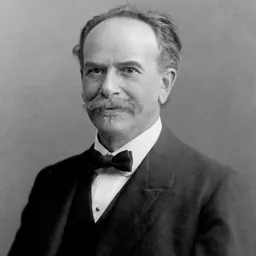
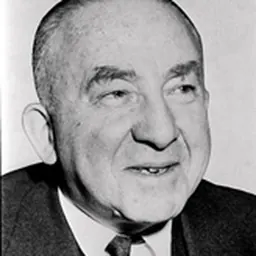


Related people
Same field, nearest in time


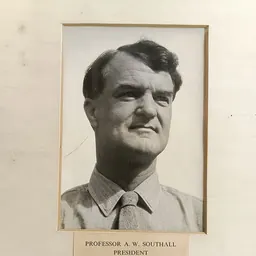
Contemporaries
People whose lives overlapped Anita Brenner's
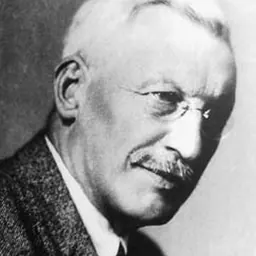


Frequently asked questions
Who was Anita Brenner?
Mexican writer (1905–1974)
When was Anita Brenner born?
Anita Brenner was born on 13 August 1905 in Aguascalientes City.
When did Anita Brenner die?
Anita Brenner died on 1 December 1974 in Ojuelos de Jalisco.
What was Anita Brenner's occupation?
Anita Brenner was an anthropologist, journalist, literary critic, children's writer, novelist and historian.
What nationality was Anita Brenner?
Anita Brenner was American and Mexican.
Sources & further reading
Cite this page
APA: Biography.guide. (2026). Anita Brenner. https://biography.guide/anita-brenner/
MLA: "Anita Brenner." Biography.guide, https://biography.guide/anita-brenner/.
Chicago: "Anita Brenner." Biography.guide. https://biography.guide/anita-brenner/.
Data last updated: 2026-09-20 · Spot an error? Report a correction.
Page generated 2026-09-27 05:18 UTC