
About Andy Russell
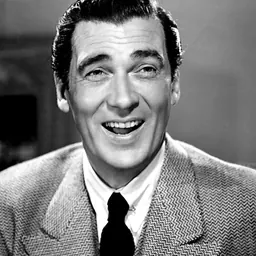
Lived 1919 – 1992 (aged 72). Andy Russell was an American singer, jazz musician, actor, television actor and drummer.
Andy Russell (born Andrés Rábago Pérez; wherein he sang bilingually in English and Spanish. In later years, Russell performed internationally, occasionally recorded new songs, and made television appearances. Although these were well received, he did not regain his previous level of success.
During his career, Russell received many international accolades and awards, most notably being recognized as the original Latino crossover artist who introduced American audiences to popular songs sung in English and Spanish, Through a fusion of musical styles, rhythms, and languages, he created music that appealed to diverse audiences, becoming one of the first cross-cultural, multinational musical artists.
Early life
Russell was born September 16, 1919, as Andrés Rábago Pérez in Boyle Heights, which, at the time, was an ethnically integrated, middle-class neighborhood in Eastside Los Angeles. who had emigrated to United States in 1902 from the Mexican states of Durango and Chihuahua, where each had been born, respectively. His father was employed as an extra by Hollywood studios, while his mother was a housewife. He went wild over popular music, knew all the hit tunes, and was the neighborhood authority on every name band leader in the country.
He grew up in a bilingual home, hearing and speaking Spanish with his parents, while speaking English with his siblings and people outside of the home.
In 1934, as a 15-year-old student in junior high school, he began his career by singing with a local swing band headed by don Ramón Cruz. He also sang with the Stan Kenton Orchestra, and other groups, until one day he was told that he also would have to play an instrument to stay with the band. Russell recalled how he dealt with this dilemma:
Bill Phillips, owner of Phillips Music Company, gave Russell drum lessons. Russell took drum lessons for 50 cents a lesson at the Phillips Music Company on Brooklyn Avenue (now Avenida César Chávez) in Boyle Heights. This neighborhood music store was owned by William Phillips, a Jewish-American Navy veteran, drummer, and musician. By practicing in the basement of his house and during breaks at his part-time job,
Russell attended Roosevelt High School in Boyle Heights, where he continued his musical education. He was a member of the ROTC marching band, the jazz band, and the high school symphony orchestra. He performed at high school football games, parades and dances. And under the instruction of Mr. Harry Gruppengetter, the music teacher, he learned to read music.
He recalled that his high school experience was positive, and that he did not feel discrimination: "In those days, I was just one of the guys. We had Russian people, we had Jewish kids, we had Mexican kids, we had the blacks, we never noticed things like that ... I'm a very cocky little Mexican kid from the East Side, and I never had those feelings. I always feel that it's up to the person." and Woody Herman. Russell auditioned for Arnheim and got the job not only as a drummer but vocalist, too. However, since he was underage and could not tour out of state, Arnheim adopted him and became his legal guardian.
In addition, since he thought it was a good gimmick that made good business sense, Arnheim suggested that Russell sing bilingually in English and Spanish. Russell was hesitant, stating "No, Gus, my Spanish is very bad; I'm embarrassed." Russell agreed.
Now on tour with the band, Russell noticed that when he played solo on the drums or sang bilingually, the couples in the audience would stop dancing and approach the bandstand to get a better look at the vocalist who was singing in a different language. It was at a show at the Peabody Hotel in Memphis, Tennessee, that Arnheim saw that he was getting known. But Arnheim realized that it would be necessary for Russell to change his name. He did not want to be discriminated against and stereotyped as only a Latin singer. Besides, he felt the public would know his ethnic background by his singing in Spanish
In contrast, the case has been made that Russell's light-skin and European features (like Vikki Carr) were the determining factors in opening the doors to the recording industry (Avant-Mier, 59; Macias, 125) that otherwise shut out Mexican-Americans whose appearance was dark-complexioned, like contemporary Chicano musician and singer Lalo Guerrero, who "wanted the success of an Andy Russell, whose appearance and name change were definite advantages." Loza notes: "in that particular era (and even today), name changing was common among performers, so that whether names have been changed for ethnic reasons cannot always be determined." During this period, he received offers from Paul Whiteman, Jimmy Dorsey, Glenn Miller, Charlie Spivak, the Orpheum Theater on Broadway, the Santa Monica Pier, and Joe Zucca's Show Case in Hermosa Beach.
However, the 1942–44 musicians' strike threatened to derail Russell's career before it had even begun. Union President James Petrillo had set the date of July 31 where no union musician could record for any record company. This caused record producers to scramble to get vocalists and musicians into recording studios to get the recordings done before the deadline. Russell was able to make a test record with the George Siravo orchestra under the deadline. Mercer paid him $150-$175 for both sides of his first record. with original music and Spanish lyric by Mexican composer Consuelo Velázquez, English lyric by American composer Sunny Skylar, and backing by the Al Sack Orchestra. He sang "Bésame Mucho" bilingually, the first vocalist to offer Spanish and English treatments to popular songs, often with a chorus in English followed by a chorus in Spanish, It sold over one million copies. effectively began with his rendition and recording of the song.
That same year he also had another huge hit, which became another signature tune: "Amor", music by Mexican composer Gabriel Ruiz, Spanish lyric by Mexican lyricist Ricardo López Méndez, English lyric by Sunny Skylar, and backed by the Al Sack Orchestra. It entered the charts on June 1, 1944, peaked at #5, and stayed on the charts for 10 weeks. The song was featured in the motion picture Broadway Rhythm. It entered the charts on October 21, 1944, peaked at #14, and stayed on the charts for 8 weeks. It entered the charts on December 30, 1944, peaked at #5, and stayed on the charts for 5 weeks.
Russell's 4 top-ten hits on the Billboard chart in 1944 sold millions of records, and opened the door later in the decade for touring around the country and appearances on radio programs, motion pictures, and television. By late 1944, he was declared by the Mutual Broadcasting System to be the "idol of the crew-cut and bobby-sox set, and one of the nation's top-ranking romantic balladeers".
In 1946, his next big hit was "I Can't Begin to Tell You" which reached #7, and was from the film The Dolly Sisters. The next big hit came later in 1946: a two-sided hit with "Laughing on the Outside" which reached #4, and "They Say It's Wonderful" which reached #10, (from the Broadway show Annie Get Your Gun). His next hit, "Pretending" which reached #10 was backed with "Who Do You Love?" His final chart-toppers of the 1940s were in 1947: "Anniversary Song" which reached #4, and "I'll Close My Eyes" which reached #15.
The sales of Russell's records enabled Capitol to build the "Stack o' Records" Building.
Russell had twelve records break into the charts between April 1944 and September 1948, eight of them in the top ten. which meant huge sales for Capitol and ever-growing popularity for Russell south of the border. The success of Russell, along with the stable of Capitol recording artists, permitted Capitol to construct the famous thirteen-story "Stack o' Records" Building in 1954. The following year, Capitol was sold for $8.5 million.
Golden Age of radio
By 1944, he had become a well enough regarded pop vocalist to be invited to perform on radio programs.
On November 9, he debuted on his own radio show on the "Blue" network, or NBC, called The Andy Russell Show, which broadcast out of Hollywood, California. He was the host and featured vocalist. In addition, he would invite guests to appear on his program, such as Dinah Shore and Johnny Mercer.
On Sunday nights over CBS radio, Russell was also a featured vocalist on the Old Gold Show, which was the name of the cigarette company that sponsored the program. Russell sings "Amor" on this audio clip from The Jackie Gleason – Les Treymane Show in 1944. Next up was an invitation to appear as a vocalist on The Jackie Gleason – Les Tremayne Show on NBC radio. Unlike his eponymous show which was broadcast from Los Angeles, California, it was necessary for Russell to take the train out to the East Coast, as this show originated from New York. It was reported that during the trip, he got sick because he had never been on a train before.
Also, in addition to duties as a vocalist, Russell played straight man to Jackie Gleason, the legendary comic and performer who would later be the star of the classic television program The Honeymooners. He would do this later in a motion picture with Groucho Marx, too.
With regard to his participation on the show, the Billboard 1944 Music Year Book stated that "the talented, handsome ... young singer's commercial appeal [was] tremendous. Starting with one song, audience response demanded his current three singing spots."
Later, from September 3, 1945, to May 27, 1946, Russell appeared on the CBS radio comedy show, The Joan Davis Show, which originated out of New York City. This program aired on Monday nights from 8:30 – 8:55 p.m. "Popular crooner Andy Russell served as both the variety anchor for The Joan Davis Show as well as Joanie's love interest in the situation comedy series ... [He] delivered as expected to the swoons and cheers of his millions of female fans of the era." In addition to singing, Russell also acted and played straight man to comedian Joan Davis. Paul Weston and his Orchestra provided the music.
Finally, and most notably, starting on April 26, 1946, Russell began to appear as featured vocalist on the pop music radio program Your Hit Parade. This popular program aired on Saturdays, 9:00–9:30 pm on NBC radio and was broadcast out of New York City. He replaced Lawrence Tibbett, an opera singer, who had previously replaced Frank Sinatra.
After five months in New York, he was so popular that Lucky Strike cigarettes, the sponsor of the show, agreed to pay for the show to be broadcast out of its Los Angeles studios in order to appease Russell who was homesick. The shows from Hollywood began on September 21, 1946. He stayed on the program for 2 seasons, which led to huge popularity for the singer.
Personal appearances
As he became more popular, Russell began making personal appearances in different venues in the country. His first personal appearance was on June 28, 1945, at the RKO Boston Theater in Newark, New Jersey, (Frank Sinatra's home town). A review of Russell's performance stated: "His way of sliding into a husky chorus in Spanishafter going through the English versionhas all the slick chicks swooning like crazy."
Hollywood Publicity photo for Make Mine Music (1946) with Russell, Walt Disney and Dinah Shore. Russell was then invited to Hollywood by Buddy DeSylva, co-founder of Capitol Records, to screen-test for motion pictures. He was contracted to appear in the film The Stork Club (1945). His movie career had an inauspicious start at Paramount Studios. The Mexican-American crooner was told by a security guard that it was a closed set and that he would have to leave. He waited outside the stage door, sitting in the sun until Hal Walker, the director, came looking for him and told him to get to work. Russell asked nervously, "Are you sure it's all right now?" In his motion picture debut, he played himself in everything but name, as he [was] cast as a dance band singer and swing drummer. He sang "If I had a Dozen Hearts" in a duet with Betty Hutton and a solo on "Love Me". He also displayed his percussionist skills on a drum solo of "China Boy".
In 1947, at the peak of his popularity, he appeared in the film Copacabana with Groucho Marx and Carmen Miranda. In this film, Russell good-naturedly plays his dumb-bell nightclub singer role with a mild manner, wide-eyes, and a toothy smile. About his performance, co-star, Gloria Jean said, "[He] was very bland, wishy-washy, but he had a lovely voice."
On March 13, 1947, he was a performer in the 19th Academy Awards at the Shrine Auditorium in Los Angeles, California, as he sang "You Keep Coming Back Like a Song" from the musical film Blue Skies, one of the songs nominated for the Oscar that year.
Television
Later, Russell began to appear in the new medium of television in the early 1950s on Your Show of Shows with Sid Caesar on NBC but continued to record, though less frequently. From December 1950 to June 1951, he appeared with his wife on the ABC-TV show Andy and Della Russell. "It was a brief but pleasant musical interlude, which originated live from New York [from 7:00 to 7:05] every weeknight." They also had an act that they would perform together in nightclubs. A review described their act as: "delightfully light, cleverly done and wholly entertaining." In addition to singing and dancing, Russell performed impressions of celebrities. Lastly, they appeared together in the musical short, House Party (1953).
End of big band era By 1952, Russell's hits had stopped coming, as the big band era had come to a close. Capitol Records lost interest in him as a hit-making pop star and began to look on with negative feeling.
At this point, Russell began to look elsewhere for a place to perform. On 16 October 1953, he made his debut in Mexico City at the Teatro Lírico alongside such legendary performers as Agustín Lara, Tin Tan, Toña la Negra, and others. He was billed as "the Mexican star of Hollywood and the greatest exponent of romantic Mexican song in the United States".
After that, his private life became fodder for the gossip columns as he experienced a public backlash and negative publicity due to the news of the couple's pending divorce. Many were angry and upset at this turn of events, as the Russells had been viewed as the "perfect Hollywood couple". They received hate-mail from irate fans, and Russell was pressured by the Hollywood community and Roman Catholic Church clergy not to proceed with the divorce because it would cause "a public scandal." His friend Charlie Skipsey, wealthy liquor distributor and later co-owner of the popular Mexican restaurant chains, Carlos'n Charlie's and Señor Frog's, advised Russell to go to Mexico. However, when he arrived in Mexico, he was astounded to find thousands of people greeting him at the airport.
Skipsey put him up in the swanky and historic Hotel Regis in Mexico City, where he found a confidante in actress Ariadne Welter, Skipsey's ex-wife and younger sister of actress Linda Christian.
In due time, Russell met Carcho Peralta, the owner of the hotel, and he talked to him about his unfortunate situation. In response, Peralta offered him the opportunity to sing at the hotel's nightclub, the Capri Room, backed by the orchestra of legendary composer, Agustín Lara. Russell accepted. His show had a great response from the audience, and he began touring other night club venues in Mexico with similar success. His version of this classic Cuban composition is considered one of the best.
Russell recalled this phase of his life:
Yet, one thing that he found embarrassing was the fact that his Spanish did not match the fluency of a native speaker because, according to him, it was "east-side." The civil ceremony took place at the bride's parents' home, and the reception and banquet was held at the Paolo, the ballroom at the Hotel Regis.
During this period, he was a Latin-American star of films, television, radio, and nightclubs. He not only made personal appearances in Mexico, but he traveled abroad to perform in other countries, including Canada and the United States. By November 1956, he was earning $7,000 a week (a far cry from the $2,500 a year he earned in 1940, beating the skins as a drummer in a hotel orchestra). All this good fortune led Russell to exclaim that "Mexico has been wonderful to [me]" Around this time, Russell and Elizondo made a live appearance at the historic Million Dollar Theater to promote the film for the United States Latino public in Los Angeles, California.
In his commentary, Mexican film historian Emilio García Riera begins his film review by introducing Russell:
Andy Russell (Andrés Rábago), Chicano of Los Angeles, who made a modest career as a crooner and appeared in 4 films in Hollywood, entered the national cinema transformed into an extravagant type of 'pocho' playboy, complete with a pipe and captain's hat, owner of a yacht, with a particularly obnoxious American accent and a languid way of intoning songs, a-la-Bing Crosby. His character declares, of course, much love for Mexico, but he only manages to disrupt the typical tropical setting, where the women defend their honor against the attraction caused by their own sensuality ... Russell's character is not a threat to these heroines; one could say he only wishes to flirt with them in the style of a Hollywood B-grade musical-comedy. However, the response to frighten the 'pocho' from defiling the honor of a woman is wholly disproportionate, and he is dismissed with dishonor.
The following year in 1956, Russell starred in three movies, the first being Mi canción eres tú (You Are My Song), directed again by Roberto Rodríguez and co-starring Mexican actress and singer Evangelina Elizondo. Filming began on April 1, 1955, in the Churubusco Studios, and the premiere was March 28, 1956, at Cinema Orfeón, where it played for two weeks.
García Riera starts off his film review by noting that previously he, like many others, viewed Russell as the epitome of conceitedness and extremely stuck-up. In this Hermanos Rodríguez production, Russell represented a threat of hybridization. His character, called "Danny" more often than "Daniel", at 15-years-old beat it out of Mexico to go to the United States, and he returned with bilingual crooning abilities. His family members called him "bracero" (farm laborer), so as to not call him "pocho", He has future possibilities of entering the "gringo" middle-class due to his success on television, singing in high-priced cabarets, and the sale of records ...
¡Viva la juventud! (Hurrah for the Young People!), a musical-comedy directed by Fernando Cortés, was his most popular film. Filming began on 31 October 1955 in the Tepeyac Studios, and the premiere was on 15 May 1956 at Cinema Orfeón, where it played for 8 weeks.
According to García Riera, this film was a watershed in that its new formula of combining diverse genres, current events, several performing artists, and different styles of music and dance numbers was a hit with audiences and would influence how Mexican films were produced later in the decade of the 1960s. García Riera noted that the "gringo", middle- and upper-class element in the film, for example, the student body dancing cha-cha-chá and wearing sweaters with big letters with the Ciudad Universitaria (the campus of the National Autonomous University of Mexico) as a backdrop, was reinforced by "the 'pocho' singer Andy Russell, who covered his jalopy with expressions, such as 'Mercedes ven,' in the manner of American college-boys, and heard Michigan instead of Michoacán."
Primavera en el corazón (Springtime in the Heart) was his last collaboration with director Roberto Rodríguez co-starring Italian actress Irasema Dilián and Spanish actor Enrique Rambal. Filming on this musical-comedy began on 23 June 1955 in the Churubusco Studios, and the premiere was on 20 September 1956 at Cinema Alameda, where it played for 2 weeks.
This film was noteworthy for being the first Mexican film in color (Eastmancolor) and in Cinemascope, done in the classic Hollywood style.
His fifth and last Mexican film was Vístete, Cristina (Get dressed, Cristina), a musical-comedy directed by Miguel Morayta with Mexican actress Rosita Arenas. Filming began on 5 May 1958 in Azteca studios, and the premiere was held on 23 April 1959 at the Cinema Olimpia, where it played for two weeks.
In his film review, García Riera labels Russell's character "el pocho Carlos." In Spanish and in this context, "lata" means to "pester, bug, or be a pain, a nuissance." He also refers to Russell as the "Hollywood crooner with the smoky voice ... who sings 'Amor'" and sums up his review in one sentence: "The movie is an illogical mess and very inconsistent, but not obnoxious, a quality which the 'pocho' Russell was famous for having."
Criticism In Mexico, Russell was criticized for modifying the lyrics, tempo and/or melody of traditional Latin American standards, for example, his jazzy, up-tempo renditions of "Perfidia" and "Cuando vuelva a tu lado" of the mid-1950s. He had already felt somewhat constrained when performing before Mexican audiences, as they often did not appreciate the changes or updates he would make to traditional songs. In general, Mexicans, and Latin Americans, preferred that Russell sing in Spanish and respect the traditional forms of music. If he were performing before a Mexican audience, he could not use special material because they might mock him by saying, "He's getting fancy."
In 1958, the name of the show was changed to El Show de IKA (sometimes billed as Desfile de Éxitos IKA) when Argentina's largest automaker, Industrias Kaiser Argentina (IKA) it was the most expensive television show produced in that country, and the first to use cameras mounted high above the stage to capture exceptional visual effects.
The unprecedented scale of the show became apparent as a Jeep was driven onto the stage during every performance, along with the ballet troupe of Eber and Nélida Lobato, a 50-piece orchestra conducted by Angel "Pocho" Gatti, and the Fanny Day choir, all in support of Russell.
In compensation for his hosting and singing duties, Russell, for his part, received an unspecified, but princely sum. and his acceptance and popularity was such that "Andy Russell" became a household name in Latin America. He felt so welcomed that he stated: "When I am in Argentina, I am Argentine. When I am in Nicaragua, I am Nicaraguan."
Spain Russell sang the theme song from the Spanish film Bahia de Palma on Belter Records 1962. In 1962, Russell was signed to a recording contract by Belter Records of Spain. The deal was that he would record the songs in Orfeon of Mexico, and the discs would be manufactured and released in Spain. He recorded several albums, which were primarily ballads and up-tempo jazz numbers backed up by a full orchestra band conducted by Chico O'Farrell. He also recorded the two title songs for the soundtracks of popular Spanish movies of the time: Bahía de Palma (1962) and Sol de Verano (1963). The former featured sex symbol Elke Sommer wearing a bikini, the first time a woman was shown wearing a bikini in a Spanish movie. Lastly, in 1966, he sang "Soñarás" ("You Shall Dream") on the soundtrack of the Spanish animated movie El mago de los sueños (The Dream Wizard).
Russell performed frequently in Spain, and even sang for Spanish dictator Francisco Franco several times, who honored him with awards. occasionally alongside Tony Curbelo. He was present when Fidel Castro overthrew the government of Fulgencio Batista. Since he believed Castro was about to bring freedom to the Cubans, he celebrated with everyone in the streets. But he looked back with regret, as he said: "A country that had the greatest music in the history of Latin music from Cuba, you know? Now they're just closed in completely."
He returned to the United States in 1966 and to Capitol Records. His comeback album in the United States was "More Amor!" (1967), a collection of English and bilingual English/Spanish songs, most notably the singles "Longin'" and "Enamorado" ("In Love"). Capitol dubbed a version of "Longin'" in Spanish for release to its Latin American affiliates, while it produced a promotional music video for "Enamorado." No song from this album entered the Billboard charts. His comeback show took place at the Sahara Hotel and Casino in Las Vegas, Nevada, to rave reviews.
In 1973, he recorded the "International/Internacional" LP for the Discos Latin International label, which included his Spanish cover version of Albert Hammond's "It Never Rains in Southern California", "Nunca llueve en el Sur de California". In addition to the United States, this album was sold in South America and Europe. In Spain, the album received a rave review, and Russell was described as "The Latino Sinatra" and his singing style as "timeless, universal, and as valid today as when he began." Lastly, during this period, he appeared on various television programs, such as "The Tonight Show with Johnny Carson", "The Today Show" and "The Merv Griffin Show". He performed on big band television specials for PBS to raise funds for public television. He was interviewed on Spanish radio programs and heard on radio commercials in the Los Angeles area.
Russell continued to appear and perform around the world, in major American clubs, Las Vegas, Lake Tahoe, the Chateau Madrid in New York, the View o' the World supper club at Disney World in Orlando, Florida, Disneyland, the Hollywood Palladium, La Fiesta Supper Club in Juarez, Mexico, and in concerts before nostalgic swing audiences. Other stars who participated were crooners Dick Haymes, Nat King Cole, and Mel Tormé; bandleader Harry James; dancer and actor Gene Kelly; and comedians Bob Hope and Mickey Rooney. Actress Jane Russell and Lois Andrews also participated as "Russell Sprouts" bat girls, while Virginia Mayo was a "Frank Sinatra Swooners" bat girl.
Friendships Russell sang in a quartet with Bing Crosby, Dick Haymes, and Jack Benny on the last's radio show.
Della and he were close, long-time friends of tenor Mario Lanza and his family. The couples vacationed together at a ranch near Lake Mead, Nevada. In 1950, Russell and his wife Della were asked to be godparents to Lanza's second daughter, Ellisa. Lanza subsequently developed an infatuation with Della, which inspired him to record his own romanticand according to him, betterversion of "Bésame Mucho" for her.
Romances Russell was romantically linked with different women in his life, such as actress Ariadna Skipsey (née Welter) (1954), the Countess Joaquina de Navas of Madrid (1964), Houston oil heiress Susan Smithford (1966), and Spanish dancer Maria Rosa Marcos (1967).
Marriages Russell was married five times:
His first wife was Evelyn Marie Morse (1919–1993). Date of marriage was June 30, 1940, in Los Angeles, CA. Their divorce was finalized in 1945.
His second wife was Della Norrell (née Adelina Naccarelli) (1921–2006), a New York nightclub singer. They wed at the Little Church of the West, Las Vegas, Nevada, on October 23, 1945. "During the ceremony, Della was crying when the minister asked, 'Do you?' So, Russell just upped and said, 'Yes, she do.'" They would later marry in a Catholic church ceremony because Della felt that they were not really married. Afterwards, she became his singing partner, and they sang together on records, nightclubs, the ABC-TV show Andy and Della Russell (1950–1951), and the musical short House Party (1953). They were considered the ideal, Hollywood couple, and their fans and the public at large were shocked when they divorced on February 3, 1954.
His third wife was Velia Sánchez Belmont (1929–2002), the daughter of Eduardo Sánchez Torres, former Mexican ambassador to the Netherlands. They wed in Mexico City on July 10, 1954, and had a son, Andy Russell, Jr., the following year. They divorced in 1961.
His fourth wife was Virginia "Ginny" Pace Russell (1931-2019), a talk-show hostess and former Mrs. Houston. According to a 1962 newspaper article, Pace was married with five children. In 1967, she divorced her husband and married Russell that same year. Russell considered himself a "real family man" and was dedicated to his six children and grandchildren. The couple divorced in 1987.
His fifth wife, to whom he was married to the time of his death in 1992, was Doris E. Russell. A public memorial service was held at St. Juliana's Catholic Church in Fullerton, California, on April 22, 1992. He was interred in Loma Vista Memorial Park in Fullerton, California. On his gravestone, there is inscribed the title of one of his hits, "Amor".
About love, Russell said: "I fall in love wherever I go. I think being in love [is] the most exciting thing there is."
His thoughts on enthusiasm were: "Enthusiasm is the greatest word in the world. It's seeing a scenic sunset and stopping to watch it. It's telling my wife she's beautiful. It's taking my sons to dinner and coming back to watch the football or baseball game on television. We're so blasé I can't stand it (he said of people in general). If I lose my enthusiasm, I'm dead. In fact, if I die before my wife, I've asked her to put a smile on my face before they bury me."
Awards and legacy
Awards The Pioneer of Argentine Television Mayorquín Honorario (Spain) El Águila de América (The Eagle of the Americas) (1972 Award of Appreciation (1978) – for being the American who has done the most for Mexican music. Nosotros Golden Eagle Award (1979)
Legacy Russell started a new way of singing that combined English and Spanish, plus Latin and American rhythms, From his peers in the music industry, he gained not only their professional respect, but their love and admiration, as well.
In his short story Zona Rosa, 1965 (2004), Vicente Leñero envisions this fashionable neighborhood in Mexico City as a female energy "who is well versed in literature; she's chatted with Carlos Fuentes at Café Tirol; she's become a bullfighting buff after seeing Paco Camino leaving Hotel Presidente. She lives at Génova 20 to be neighbors with Emily Cranz and Andy Russell, or at the Londres Residential to be on first-name terms with Gloria Lasso.
A couple of his songs have been part of the soundtracks of motion pictures: "Soy un Extraño" ("I am a Stranger") in the 1990 Spanish movie Boom-Boom and "Amor" in the American movie Lolita (1997) directed by Adrian Lyne.
Controversy about racial and ethnic identity
What's in a name? In his book Rock the Nation: Latin/o Identities and the Latin Rock Diaspora (2010), Professor Roberto Avant-Mier points out on pp. 58–59 that Russell did not embrace his Mexican heritage and Spanish language as a youngster. He also indicates that at the urging of bandleader Gus Arnheim, Russell accepted to change his original name of "Andrés Rábago" to the anglicized "Andy Russell". He seems to imply, then, that Russell simply gave up his name and cultural identity in exchange for musical and economic opportunities otherwise reserved for Anglo-American musicians. Furthermore, Avant-Mier contends, Russell acquiesced because, from an early age, he seemed to be more comfortable with his American rather than Mexican culture.
However, Avant-Mier does not take into consideration (as explained earlier) the context of the place and period that Russell had been born and reared in the United States during the first half of the 20th century and its influence on one's self-identity. The country experienced two World Wars, a Great Depression, and a wave of nationalism and patriotism that fostered a common and united national identity, rather than ethnic pride. Yet, although Russell spoke and understood more English than Spanish, and was exposed more to American than Mexican culture during the initial stage of his career, however, in no way did this signify a rejection of his Mexican culture. It was solely a temporary accommodation, as Russell stated: "Part of the reason I changed my name – as did many Jewish entertainers – was that I did not want to be stereotyped [as just a Latin singer]. But now I'm hard to sell in my own country – except to those who already know me."
Thus, neither seem to lend credence to Russell's claim that his Mexican-American ethnicity was clearly evidenced by his singing in Spanish and his continual affirmation of being of Mexican descent. Specifically, once he had a huge hit with "Bésame Mucho", Russell's trademark was his bilingual singing ability, which would not only be a feature of many of his songs, but a reflection of his cultural upbringing. As Loza states: "Because he was singing bilingually, Andy felt that the public would know his background by the Spanish songs in his repertoire" Russell's distinct racial characteristics apparently were classified as being "Anglo", although they fall within the diversity of Mexican racial identity with its three main components being Spanish, Indian, and Negro ancestry (in varying degrees). In Russell's case, his preponderance of European stock was a reaffirmation, and an extension, of his Mexican identity. There was no need for him to "perform whiteness" or "pass as white", as it was already a part of his racial heritage and identitybut as a Mexican, not European-American.
Russell's nationality was American, but, at the same time, he never denied his Mexican ethnicity. The name change was simply a means to an end. The explanation could be as simple as Arnheim did not like the sound, wanted something easier to pronounce, and chose "Russell" because it reminded him of Russ Columbo (a vocalist and violin player associated with Arnheim and his Orchestra who had already gained popularity before his untimely death). "Russ Columbo" was a stage name, as his birth name was "Ruggiero Eugenio di Rodolpho Colombo".
Another adherent who claimed that Russell's success was due to his "whiteness" was Lalo Guerrero, Mexican-American composer, singer, and musician. He stated that he might have had mainstream success, if he, too, were "güero" (light-skinned), like Russell or Vikki Carr. In addition, according to Guerrero, they were the only Mexican-Americans who were accepted and successful in Mexico.
As stated previously, one must take note that there were also examples of other Mexican-Americans and Mexicans who were successful and who did not anglicize their names: actors Anthony Quinn, Ricardo Montalbán, Katy Jurado, Pedro Gonzalez Gonzalez, etc. Other dark-complexioned recording artists who were known during the period were Mexican singer Toña la Negra and Cuban singers Celia Cruz and Benny Moré and musician Pérez Prado. In addition, Germán Valdés, Tin Tan, a Mexican comic, actor, and singer who grew up in the border area of Ciudad Juárez, Chihuahua, south of El Paso, Texas, was exposed to Mexican-American pachucos and caló. He used this knowledge to create his comical version of a pachuco, using bilingual dialogue to hilarious effect and enormous popularity.
Surely, Guerrero must have appreciated and understood the fact that, despite the shade of a Mexican's skin tone, starting and maintaining a successful career in the entertainment industry mainly took a lot of hard work, dedication, talent, networking, and luck.
But, the assessment of Avant-Mier that Russell's success was mainly due to the fact that he "Anglicized" his name and used his "European" features to bypass American society racist structure and perform "whiteness" is short-sighted. In contrast, for Russell, the "name-change" was not that important in the big picture, since he would always claim, sometimes emphatically so, that he was ethnically Mexican. Some newspaper articles, books, and liner notes support this statement (see section What's in a Name? II).
As such, this whole construct needs to be reframed: Russell as a Mexican was involved in a give-and-take, push-and-pull dynamic where, at times, he was on the forefront singing bilingually and declaring his Mexican ethnicity; and, at other times, conforming to American society's stereotypical notions of Mexicans performers in order to have the opportunity to perform and earn a living.
Furthermore, to describe Russell as performing "whiteness" brings up images of performing "blackface" which would be a misnomer, as this term is applied within the context of the racial discrimination exhibited by Anglo-Americans against African-Americans, so it seems out of place when referring to Mexicans or Mexican-Americans who not only have a distinct racial, ethnic, and cultural heritage, but a different history in the United States, as well.
Moreover, Russell's ability to sing in Spanish would prove to be a double-edged sword: it gave him popularity and acceptance at the onset, but it also typecast him as a Latin singer, leaving him out of work when the popular wave of Latin music passed. But what bothered Russell the most was that his identity as an American singer could be called into question.
This same ability to sing in Spanish, however, then opened up a whole new market for him in Mexico, Latin America and Europe, where his brand of music was not only accepted but celebrated. Unfortunately, here, Russell was subject to the Mexican brand of discrimination which tended to label him a "pocho". (see "Mexican Films" section above)
One must question if Guerrero's assertion regarding skin color and success in the music industry (and validation of this by later Latino scholars) is correct and universal: that light-skin and European features allowed for upward mobility, while tan or dark-skinned performers were penalized. One cannot deny the preponderance of light-skinned musical stars, but the dark-complexioned stars were also present in United States (and Mexico).
Most important, the expression of Chicano artistic and musical creations were finding an outlet within and outside of the mainstream, for reasons that go beyond just skin color and discrimination. In Russell's case, he was gifted with an incredible voice, had a flair for showmanship, along with charisma and good looks.
On a personal level, just like in the United States, his need to sing and perform were validated in Mexico and Latin America; moreover, he must have surely felt more ethnically Mexican than ever before, when in 1956, he married the daughter of a Mexican diplomat, who gave birth to his only son ...
But after 11 years of living and performing in Mexico and Latin America, Russell once again felt the blade of the double-edged sword when he said he "felt that he was losing his professional identity and also being subtly pressured into becoming a citizen of Mexico,"
In another newspaper article from 1944, he was described as: "...a fellow of Spanish extraction..."
In a 1945 article, he was described as a 'Los Angeles-born Mexican lad'.
In a 1946 article, he was called: "an American Spaniard".
On the back cover of his album "The Magic of Andy Russell" (1958), RCA described his singing style, "...which stems from his Mexican-American upbringing..."
Among many names, he has also been labeled as: "Hispano", "Latin", "Spanish-Mexican", "of Mexican parentage", "Mexican of Spanish descent", "a Californian of Mexican descent", "Mexican-Spanish", "mexicano-norteamericano", "norteamericano" and "Chicano". His television show in Argentina ended in 1964. His waning popularity was also evidenced by the popularity of a new wave of younger singers in Mexico, such as César Costa, Enrique Guzmán, and Alberto Vásquez, who in many ways, were his musical heirs. They took up the mantle that he had initially carried into Mexico, and these young singers performed Spanish covers of American and British Invasion hit songs of the 1960s to an enthusiastic, young female fan base, as Russell had once done as a crooner in the 1940s. Furthermore, and most tellingly, these younger singers were Mexican nationals, unlike Russell who was an American of Mexican ancestry.
Russell probably saw the writing on the wall. He had now become passé. All these reasons most likely played a factor in Russell looking toward the United States for a fresh start.
In any case, this time around, the visions of grandeur turned out to be a mirage, as none of the songs on "More Amor!" charted on Billboard. The album followed the same Russell formula: a nice balance of songs, some in English and some in his "bilingual style", which had proven so successful in the decade of the 1940s and in Latin America.
Needless to say, regardless of what was written on the back cover and his situation in Mexico, Russell did not have the same success in 1967 in the United States as he had had in 1944 for a plethora of reasons, many dealing with issues other than identityhe was older, musical tastes had changed, he had been effectively gone for 11 years, the milieu was certainly different, as the country was caught up in the social and political turmoil of the 1960s, etc. Yet, the notes on the back cover are a fascinating testament to where Russell believed he was in terms of his public persona in 1967, after having been out of the country for 11 years.
Notwithstanding, Russell continued working. His comeback appearance at the Chauteau Madrid nightclub in New York was a phenomenal success. He also performed in Las Vegas, at other nightclubs, and was a frequent guest on television programs. Plus, he continued to make periodic trips to perform in Mexico and Latin America. Apparently, he continued being a captivating and charismatic performer during his live appearances.
That same year another album followed: "...Such a Pretty World Today" (Capitol, 1967), this time with all songs sung in English, except for "Lady", the last chorus of which he sings in his "flawless Spanish". This was followed by a single, "I'm Not Through Missing You". (Capitol 45 rpm, 1967). This approach seemed to work better as both songs charted in the top ten of Billboard's Easy Listening Chart.
At this point, it may seem that Russell was nudging towards being the American singer who sang in English, while not totally abandoning the Latin singer persona, in order to gain a modicum of success in the American recording industry. Less was being said about his name change at this point, as many people already knew that he was the Latin or Mexican singer with the American-sounding name.
Russell considered his nationality to be, first and foremost, American but ethnically he was Mexican-American. He corrected people who said he was Spanish based on his appearance (tall, light-skinned, and hazel eyes) by stating that he was Mexican.
He found the term Mexican-American to be acceptable, but he had a difficult time accepting the term "Chicano".
He stated: "My parents were born in Mexico, but I hate the word 'Chicano'. I am an American." Date recorded Date entered Billboard Hot 100 Record Chart Highest position Weeks on chart Catalog number
Don’t just read it —
keep it.
Full-length biographies made to live with: read them, listen on the way to work, watch them tonight.
- E-book
- Audio
- Video
Instant download · yours to keep · every purchase keeps this site free
Important facts
People in Andy Russell's life
Named in this biography and alive at the same time




Related people
Same field, nearest in time




Contemporaries
People whose lives overlapped Andy Russell's




Frequently asked questions
Who was Andy Russell?
American singer (1919-1992)
When was Andy Russell born?
Andy Russell was born on 16 September 1919 in Boyle Heights.
When did Andy Russell die?
Andy Russell died on 16 April 1992 in Sun City.
What was Andy Russell's occupation?
Andy Russell was a singer, jazz musician, actor, television actor and drummer.
What nationality was Andy Russell?
Andy Russell was American.
Sources & further reading
· DBpedia: Andy Russell (singer)
Cite this page
APA: Biography.guide. (2026). Andy Russell. https://biography.guide/andy-russell/
MLA: "Andy Russell." Biography.guide, https://biography.guide/andy-russell/.
Chicago: "Andy Russell." Biography.guide. https://biography.guide/andy-russell/.
Data last updated: 2026-09-22 · Spot an error? Report a correction.
Page generated 2026-09-27 05:19 UTC