
Andrew Vinius
Russian statesman; friend of Peter the Great
About Andrew Vinius
Lived 1641 – 1717 (aged 75–76). Andrew Vinius was a Russian civil servant, translator, politician, diplomat, art collector and writer.
Andrew Vinius (; 1641–1717) was a Russian statesman of Dutch descent. He was a friend of Peter the Great and taught him European languages. He was a member of Peter's close-knit group of friends who organized themselves into the Jolly Company and The All-Joking, All-Drunken Synod of Fools and Jesters.
Life Vinius was the son of Dutch merchant , who in 1627, associated with Isaac Massa and went to Russia as a grain trader. In 1628, he married Geertruid van Rijn. In 1632, during the time of Michael of Russia, he settled in Russia to found a water-powered ironworks in Tula, and in Serpukhov. Then he seems to have forced his wife to become either Greek Orthodox, or Russian Orthodox. Their son Andrew was raised to speak, besides Dutch, also Russian and German; he knew French, Polish and Latin too, which he later taught to Peter the Great. Vinius was also the one who, after the Azov campaigns, arranged the parade into Moscow under a pagan arch that bewildered many Muscovites.
During the Great Northern War, after the Battle of Narva, Russian artillery was reduced to almost nothing. Peter appointed Vinius to the post of Inspector of Artillery and ordered him to produce more cannons. Upon the Tsar's order and against the wishes of many Russians, Vinius melted down many of the church bells of Russia, and even ordered beating-by-knout of the iron founders who were working too slowly. By melting a quarter of the church bells in Russia, eight months after the end of the Battle of Narva, Vinius managed to produce hundreds of cannons to send to the Russian army. Despite his old age, on Peter's command, he also went into Siberia to look for potential new mines, and ended up establishing several ironworks beyond the Ural Mountains. In 1700 and in 1706, he came to the Dutch Republic. Vinius had lost all of his land and goods, because of a conflict with Alexander Danilovich Menshikov. Vinius tried to connect the Greek- or Russian Orthodox and Dutch Reformed church. In 1709, Vinius was back in Moscow and received back his property. In 1712, his house burned down; his wife died in the fire.
Don’t just read it —
keep it.
Full-length biographies made to live with: read them, listen on the way to work, watch them tonight.
- E-book
- Audio
- Video
Instant download · yours to keep · every purchase keeps this site free
Important facts
People in Andrew Vinius's life
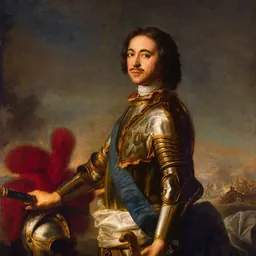
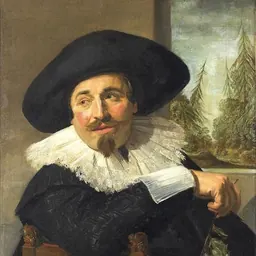
Named in this biography and alive at the same time
Related people
Same field, nearest in time


Contemporaries
People whose lives overlapped Andrew Vinius's





Frequently asked questions
Who was Andrew Vinius?
Russian statesman; friend of Peter the Great
When was Andrew Vinius born?
Andrew Vinius was born on 4 June 1641 in Moscow.
When did Andrew Vinius die?
Andrew Vinius died in 1717 in Moscow.
What was Andrew Vinius's occupation?
Andrew Vinius was a civil servant, translator, politician, diplomat, art collector and writer.
What nationality was Andrew Vinius?
Andrew Vinius was Russian.
Sources & further reading
Cite this page
APA: Biography.guide. (2026). Andrew Vinius. https://biography.guide/andrew-vinius/
MLA: "Andrew Vinius." Biography.guide, https://biography.guide/andrew-vinius/.
Chicago: "Andrew Vinius." Biography.guide. https://biography.guide/andrew-vinius/.
Data last updated: 2026-09-24 · Spot an error? Report a correction.
Page generated 2026-09-27 05:04 UTC