
Andrew Sinclair
British surgeon, botanist, New Zealand Colonial Secretary and scientific collector
About Andrew Sinclair
Lived 1794 – 1861 (aged 66). Andrew Sinclair was a British botanist, scientific collector, surgeon, botanical collector and civil servant.
Andrew Sinclair (13 April 1794 – 26 March 1861) was a British surgeon who was notable for his botanical collections. He served as New Zealand's second Colonial Secretary.
Early life Sinclair was born in Paisley, Renfrewshire, Scotland on 13 April 1794, son of John Sinclair, a weaver, and of Agnes Renfrew. He studied medicine at Glasgow University College from 1814 to 1816 and then trained as a surgeon for a year at Hôpital de la Charité in Paris. He completed his tertiary education at the University of Edinburgh, from where he graduated as Doctor of Medicine (M.D.) in 1818.
Royal Navy Sinclair entered the navy as an assistant surgeon in 1822 and became a surgeon in 1829. Between 1823 and 1833, he served on , stationed mainly at the Cape of Good Hope and in the Mediterranean Sea. Much of his spare time was taken up with collecting botanical and zoological samples, many of which he sent to the British Museum.
FitzRoy did not want to appoint anybody connected to any political faction to the position of Colonial Secretary and urged Sinclair to take on that role, who at first declined quoting his inexperience in administrative matters, but eventually agreed to save the Governor from an embarrassing situation. Sinclair was appointed as Colonial Secretary on 6 January 1844, and was called to the Legislative Council on 8 January. During his term, he struggled with the tension between settlers and the Governor. He is credited with training staff who formed the core of an effective civil service for New Zealand. Sinclair was regarded as 'honest, upright, scrupulous and laborious'. His political career is described as unremarkable. Sinclair had never married. His plants were mainly described in Hooker and Arnott's Botany of Beechey's Voyage and Bentham's Botany of the Voyage of the Sulphur. 16 New Zealand plants were named to commemorate Sinclair including Meryta sinclairii, which is a popular street tree in coastal areas.
He contributed Remarks on Physalia pelagica to the Tasmanian Journal of Natural Science, Vol. i (1842), and a letter On the Vegetation of Auckland to Hooker's Journal of Botany, Vol. iii (1851).
Don’t just read it —
keep it.
Full-length biographies made to live with: read them, listen on the way to work, watch them tonight.
- E-book
- Audio
- Video
Instant download · yours to keep · every purchase keeps this site free
Important facts
People in Andrew Sinclair's life
Named in this biography and alive at the same time

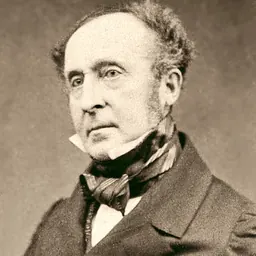
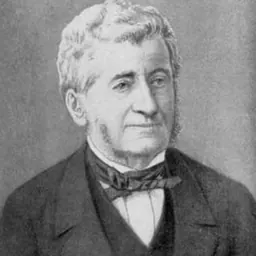
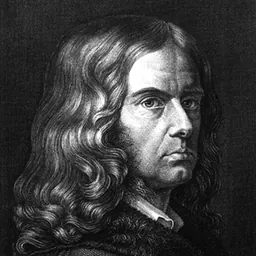
Related people
Same field, nearest in time


Contemporaries
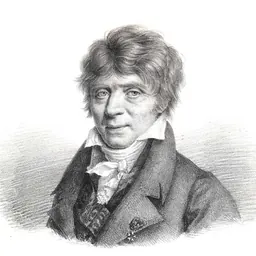
People whose lives overlapped Andrew Sinclair's





Frequently asked questions
Who was Andrew Sinclair?
British surgeon, botanist, New Zealand Colonial Secretary and scientific collector (1794–1861)
When was Andrew Sinclair born?
Andrew Sinclair was born on 13 April 1794 in Paisley.
When did Andrew Sinclair die?
Andrew Sinclair died on 26 March 1861 in Rangitata River.
What was Andrew Sinclair's occupation?
Andrew Sinclair was a botanist, scientific collector, surgeon, botanical collector and civil servant.
What nationality was Andrew Sinclair?
Andrew Sinclair was British.
Sources & further reading
· DBpedia: Andrew Sinclair (botanist)
Cite this page
APA: Biography.guide. (2026). Andrew Sinclair. https://biography.guide/andrew-sinclair-botanist/
MLA: "Andrew Sinclair." Biography.guide, https://biography.guide/andrew-sinclair-botanist/.
Chicago: "Andrew Sinclair." Biography.guide. https://biography.guide/andrew-sinclair-botanist/.
Data last updated: 2026-09-25 · Spot an error? Report a correction.
Page generated 2026-09-27 05:11 UTC