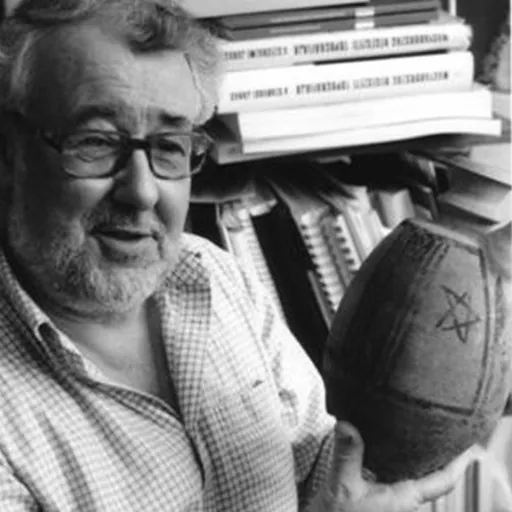
About Andrew Sherratt
Lived 1946 – 2006 (aged 59). Andrew Sherratt was a British anthropologist, archaeologist, prehistorian and university teacher.
Andrew George Sherratt (8 May 1946 – 24 February 2006) was an English archaeologist, one of the most influential of his generation. He was best known for his theory of the secondary products revolution.
Early life and education Sherratt was born in Oldham, Lancashire on 8 May 1946. From 1965, he studied archaeology and anthropology at Peterhouse, Cambridge, completing his degree in 1968. He received his PhD from Cambridge in 1976, writing his thesis on The Beginning of the Bronze Age in south-east Europe.
Academic career He moved to Oxford, having been appointed Assistant Keeper of Antiquities at the Ashmolean Museum in 1973. His ability to work at a continental, even global, scale of analysis has invited comparisons with V. Gordon Childe.
Analysis at the continental scale led him into adaptation of world-systems theory to questions of change on the large scale in archaeology, notably in the first volume of the Journal of European Archaeology ( 'What would a Bronze Age world system look like? Relations between temperate Europe and the Mediterranean in later prehistory' ) and in his 1995 David Clarke Memorial Lecture, also published in JEA: 'Reviving the grand narrative: Archaeology and long-term change' . Such interests in linking across continents meant that Andrew maintained an interest in all the major shifts in humanity from global colonisation, through the spread of agriculture to the development of metallurgy and urbanism, including the Indo-European question and the development of new forms of consumption. A collection of his most significant publications in many of these areas appeared in 1997 as Economy and Society in Prehistoric Europe: changing perspectives.
Sherratt's interest in broad scale patterns in history attracted perhaps his most prestigious accolades, such as when the University of Chicago's historian William McNeill conferred a portion of the prestigious Erasmus Prize he won in 1996 upon Sherratt. The Erasmus Prize, awarded annually by the Dutch Praemium Erasmianum Foundation 'for exceptionally important contributions to European culture', requires the winner to pass on his prize-money to chosen nominees.
Sherratt recognised the importance of psychoactive drugs and medicine to early culture, and he was co-editor of Consuming Habits, Drugs in History and Anthropology. Sherratt was invited to present the four part television series, Sacred Weeds, which aired to critical acclaim in 1998.
Sherratt was always a stimulating and inspirational teacher. He had a significant hand in designing Oxford's undergraduate course in archaeology and anthropology, playing a key role as an interlocutor in the development of a new generation of archaeologists who drew from social anthropology as well as archaeology. However, presenting his ideas at the appropriate scale has been a constant challenge, as is reflected in an early edited work, the Cambridge Encyclopedia of Archaeology, published in 1980 and subsequently translated into German, French, Italian, Dutch and Swedish.
Shortly before his death of a heart attack in Witney (near Oxford), Andrew had initiated a project, ArchAtlas, that uses modern remote sensing technology, combined with image and text, to graphically communicate complex patterns of change and interaction across time and space.
Personal life Sherratt married Susan Sherratt in 1974; they had three children and also co-authored several academic articles.
Don’t just read it —
keep it.
Full-length biographies made to live with: read them, listen on the way to work, watch them tonight.
- E-book
- Audio
- Video
Instant download · yours to keep · every purchase keeps this site free
Important facts
Family & relationships
People in Andrew Sherratt's life
Named in this biography and alive at the same time

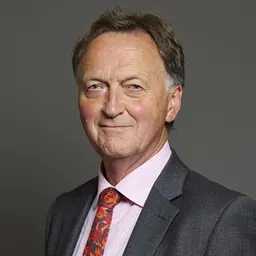

Related people
Same field, nearest in time



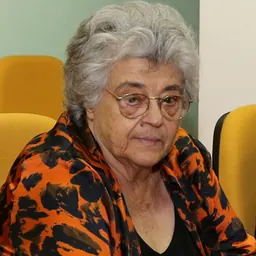
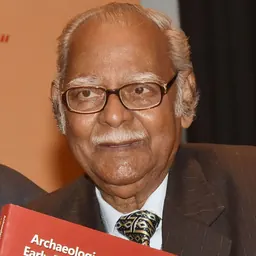

Contemporaries
People whose lives overlapped Andrew Sherratt's


Frequently asked questions
Who was Andrew Sherratt?
British archaeologist (1946–2006)
When was Andrew Sherratt born?
Andrew Sherratt was born on 8 May 1946 in Oldham.
When did Andrew Sherratt die?
Andrew Sherratt died on 24 February 2006 in Witney.
What was Andrew Sherratt's occupation?
Andrew Sherratt was an anthropologist, archaeologist, prehistorian and university teacher.
What nationality was Andrew Sherratt?
Andrew Sherratt was British.
Sources & further reading
Cite this page
APA: Biography.guide. (2026). Andrew Sherratt. https://biography.guide/andrew-sherratt/
MLA: "Andrew Sherratt." Biography.guide, https://biography.guide/andrew-sherratt/.
Chicago: "Andrew Sherratt." Biography.guide. https://biography.guide/andrew-sherratt/.
Data last updated: 2026-09-20 · Spot an error? Report a correction.
Page generated 2026-09-27 05:09 UTC