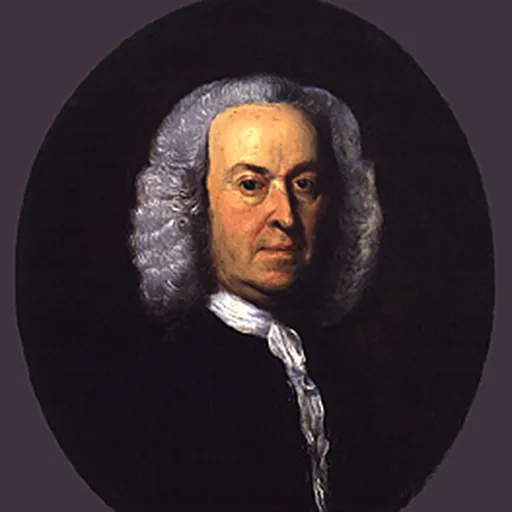
About Andrew Oliver
Lived 1706 – 1774 (aged 67). Andrew Oliver was a politician.
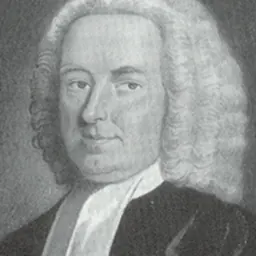
Andrew Oliver (March 28, 1706 – March 3, 1774) was an American-born merchant and colonial administrator in the Province of Massachusetts Bay. Born into a wealthy and politically powerful merchant family, he is best known as the official responsible for implementing the provisions of the Stamp Act, for which he was hanged in effigy. He never actually carried out those duties and was later commissioned as the province's lieutenant governor.
Early life
Andrew Oliver was born in Boston, capital of the British Province of Massachusetts Bay, on March 28, 1706. His father, Daniel Oliver, was a wealthy and politically active merchant, and his mother, Elizabeth Belcher Oliver, was the sister of Jonathan Belcher, son of another wealthy merchant and governor of the province in the 1730s. Andrew had two brothers: Daniel Oliver (1704–1727) and Peter Oliver (1713–1791). Characterized as "sober and pious", Andrew was sent to Harvard College, where he graduated in 1724. On December 19, 1734, he married Mary Sanford of Newport, Rhode Island, the sister-in-law of Thomas Hutchinson. The couple had fourteen children.
In 1765, Oliver was commissioned to administer the unpopular Stamp Act in Massachusetts. He was privately against the act but told people that he was in favor of it, which led colonists to rise against him. On August 14, he was hanged in effigy from Boston's Liberty Tree in a protest organized by the Loyal Nine, a precursor to the Sons of Liberty. That night, his house and offices were ransacked by an angry crowd. On August 17, he was compelled to publicly resign his commission. On December 17, the Sons of Liberty again forced him to swear publicly that he would never act as stamp distributor.
Later career
He was commissioned lieutenant governor of the colony when his brother-in-law Thomas Hutchinson became governor in 1771. Letters that he and Hutchinson had written in the late 1760s during the protests surrounding the Townshend Acts were published in 1773 and ignited a storm of protest against both men. The business took a serious toll on Oliver's health, which suffered further after his wife had died.
Oliver died on March 3, 1774, after he had suffered from an "apoplectick fit." His death was greeted with glee by the Sons of Liberty, and his burial was marred by acts of protest and violence. Because of the charged political climate, few friends and relatives attended.
Most of Oliver's family joined the Loyalists during the American Revolution and its success caused them to resettle to other parts of the British Empire.
Don’t just read it —
keep it.
Full-length biographies made to live with: read them, listen on the way to work, watch them tonight.
- E-book
- Audio
- Video
Instant download · yours to keep · every purchase keeps this site free
Important facts
People in Andrew Oliver's life
Named in this biography and alive at the same time


Related people
Same field, nearest in time



Contemporaries
People whose lives overlapped Andrew Oliver's



Frequently asked questions
Who was Andrew Oliver?
American merchant and public official
When was Andrew Oliver born?
Andrew Oliver was born on 28 March 1706 in Boston.
When did Andrew Oliver die?
Andrew Oliver died on 3 March 1774 in Boston.
What was Andrew Oliver's occupation?
Andrew Oliver was a politician.
What nationality was Andrew Oliver?
Andrew Oliver's recorded nationality: Province of Massachusetts Bay.
Sources & further reading
Cite this page
APA: Biography.guide. (2026). Andrew Oliver. https://biography.guide/andrew-oliver-politician/
MLA: "Andrew Oliver." Biography.guide, https://biography.guide/andrew-oliver-politician/.
Chicago: "Andrew Oliver." Biography.guide. https://biography.guide/andrew-oliver-politician/.
Data last updated: 2026-09-22 · Spot an error? Report a correction.
Portrait: Wikimedia Commons · author & licence
Page generated 2026-09-27 05:04 UTC