
Andrew Nelson Lytle
Novelist, playwright, essayist, academic
About Andrew Nelson Lytle
Lived 1902 – 1995 (aged 92). Andrew Nelson Lytle was an American novelist, biographer and journalist.
Andrew Nelson Lytle (December 26, 1902 – December 12, 1995) was an American novelist, dramatist, essayist and professor of literature. He is known for his early associations with the Southern Agrarians as well as his novel The Velvet Horn, which was nominated for the National Book Award. He was editor of The Sewanee Review 1961–1973 while a professor at Sewanee University.
Early life Andrew Nelson Lytle was born on December 26, 1902, in Murfreesboro, Tennessee, part of a farming family. He was valedictorian of his class at Sewanee Military Academy, and he graduated from Vanderbilt University in 1925.
While Lytle was at Vanderbilt he wrote and acted in The Gold Tooth, a play that The Tennessean newspaper called "Vanderbilt's initial contribution ... to the Little Theatre Movement in Nashville." Another play he wrote while he was at Vanderbilt, The Lost Sheep, won a newspaper-sponsored contest. Critics considered it to be moved by nostalgia.
In 1948, Lytle helped start the Master of Fine Arts program at the University of Florida. He was the novelist in residence there from 1948 to 1958, and he taught aspiring writers in a creative writing class.
Lytle first published a biography of Nathan Bedford Forrest, the Confederate general of the American Civil War: Bedford Forrest and his Critter Company (1931). Lytle went on to write more than a dozen books, including novels, collected short stories, and collections of essays on literary and cultural topics. He was awarded a Guggenheim Fellowship for his work in fiction in 1940, and then another in 1959.
Most critics consider The Velvet Horn (1957) to be Lytle's best work. It was nominated for the National Book Award for Fiction. His 1973 memoir, A Wake for the Living, is a tour-de-force in Southern storytelling, combining a deep religious sensibility, an expansive view of history that links events across decades and even centuries, and—sometimes—bawdy family tales.
Lytle served as editor of the Sewanee Review from 1961 to 1973 while he was a professor at the University of the South. During Lytle's tenure, the Review became one of the nation's most prestigious literary magazines. Lytle was an early champion of Flannery O'Connor's work. Lytle encouraged many writers, including Allen Tate and Robert Penn Warren, but also Elizabeth Bishop, Caroline Gordon, and Robert Lowell. His insightful criticism often improved their work.
Lytle taught literature and creative writing at the University of Florida, where he had Merrill Joan Gerber, Madison Jones and Harry Crews as students.
Though Lytle retired from the University of the South in 1973, he never fully retired from either writing or teaching. In the last years of his life, he had what he called the "great pleasure" of seeing most of his earlier books come back into print. Several university presses published collections of his stories and essays.
Personal life and death Lytle was married to the former Edna Barker for 25 years; she died in 1963. He was the owner of Cornsilk, a historic house in Cross Plains, Tennessee, in the 1940s. He died on December 13, 1995, in Monteagle, Tennessee.
Lytle Street in Murfreesboro, Tennessee is named after his ancestor William Lytle, of Hillsboro, North Carolina, who served in the Sixth, First, and Fourth regiments of the North Carolina Line during the American Revolutionary War. He moved to Tennessee in about 1790.
Works Bedford Forrest and His Critter Company (1931) The Long Night (1936) At the Moon's Inn (1941) A Name for Evil (1947) The Velvet Horn (1957) A Novel, a Novella, and Four Stories (1958) The Hero with the Private Parts: Essays (1966) Craft and Vision: The Best Fiction from the Sewanee Review (1971) (edited) A Wake for the Living: A Family Chronicle (1975) The Lytle-Tate Letters: The Correspondence of Andrew Lytle and Allen Tate (1987) (edited by Thomas Daniel Young and Elizabeth Sarcone) Southerners and Europeans: Essays in a Time of Disorder (1988) From Eden to Babylon: The Social and Political Essays of Andrew Nelson Lytle (1990) (edited by M. E. Bradford) Kristin: A Reading (1992)
Don’t just read it —
keep it.
Full-length biographies made to live with: read them, listen on the way to work, watch them tonight.
- E-book
- Audio
- Video
Instant download · yours to keep · every purchase keeps this site free
Important facts
People in Andrew Nelson Lytle's life
Named in this biography and alive at the same time

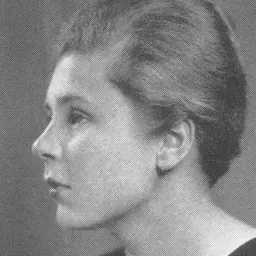

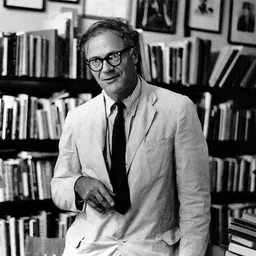
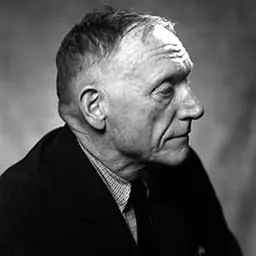


Related people
Same field, nearest in time
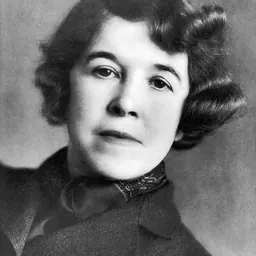




Contemporaries
People whose lives overlapped Andrew Nelson Lytle's



Frequently asked questions
Who was Andrew Nelson Lytle?
Novelist, playwright, essayist, academic (1902-1995)
When was Andrew Nelson Lytle born?
Andrew Nelson Lytle was born on 26 December 1902 in Murfreesboro.
When did Andrew Nelson Lytle die?
Andrew Nelson Lytle died on 12 December 1995 in Monteagle.
What was Andrew Nelson Lytle's occupation?
Andrew Nelson Lytle was a novelist, biographer and journalist.
What nationality was Andrew Nelson Lytle?
Andrew Nelson Lytle was American.
Sources & further reading
· Wikipedia: Andrew Nelson Lytle
· DBpedia: Andrew Nelson Lytle
Cite this page
APA: Biography.guide. (2026). Andrew Nelson Lytle. https://biography.guide/andrew-nelson-lytle/
MLA: "Andrew Nelson Lytle." Biography.guide, https://biography.guide/andrew-nelson-lytle/.
Chicago: "Andrew Nelson Lytle." Biography.guide. https://biography.guide/andrew-nelson-lytle/.
Data last updated: 2026-09-20 · Spot an error? Report a correction.
Page generated 2026-09-27 05:15 UTC