
About Andrew Geller
Lived 1924 – 2011 (aged 87). Andrew Geller was an American architect.
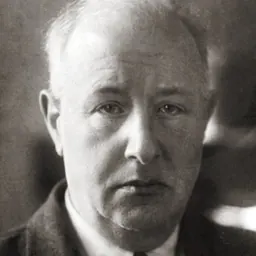
Andrew Michael Geller (April 17, 1924 – December 25, 2011) was an American architect, painter, and graphic designer. He is widely known for his uninhibited, sculptural beach houses in the coastal regions of New York, New Jersey, and Connecticut during the 1950s and '60s, as well as for his indirect role in the 1959 Kitchen Debate between Richard Nixon (then Vice President) and Soviet Premier Nikita Khrushchev, which began at an exhibit Geller had helped design for the American National Exhibition in Moscow.
Geller worked with the prominent firm of American industrial and graphic designer Raymond Loewy where his projects ranged widely—from the design of shopping centers and department stores across the United States, to the Windows on the World restaurant atop the World Trade Center
After designing a beach house for Loewy's director of public relations, Geller produced a series of modest but distinctive vacation homes, many published in popular magazines including Life, Sports Illustrated, and Esquire.
On his death in 2011, The New York Times said Geller "helped bring modernism to the masses."
Geller was born in Brooklyn on April 17, 1924, to Olga and Joseph Geller, an artist and sign painter who had emigrated from Hungary in 1905. and a daughter, Jamie Geller Dutra
Prior to his death in December 2011 in Syracuse, Geller lived in Spencer, New York.
Career with Loewy
After reading in Life magazine of Raymond Loewy's diverse and comprehensive career, years) at Raymond Loewy Associates — later known as Raymond Loewy/William Snaith Inc. or simply Loewy/Snaith.
Geller went on to carry various titles at Loewy/Snaith, including 'head of the New York City architecture department', 'vice president' and 'director of design,' and Daytons — as well as work for Bell Telephone, and the Worlds Fair Beirut U.S. Pavilion (year unknown).
Geller left Loewy/Snaith in 1976. It has been reported that at some point in his career, Geller designed the Quiet House for a Dallas, Texas, consortium, the all-aluminum Easy Care Home for the Aluminum Association of America, and the Vacation House System. Geller had designed the three-story building in 1969 while with Loewy/Snaith. Richard Longstreth, director of the Graduate Program in Historic Preservation at George Washington University, said the store's case for preservation was “quite straightforward, based on the significance of the company it has housed, the nature of its siting, the firm that designed the building, and as a now rare survivor of its type."
Kitchen Debate and Leisurama
In 1959, as vice president of the Housing and Home Components department at Loewy/Snaith, Geller was the design supervisor for the exhibition, the "Typical American House," built at the American National Exhibition in Moscow. The exhibition home largely replicated a home previously built at 398 Townline Road in Commack, New York, which had been originally designed by Stanley H. Klein for a Long Island-based firm, All-State Properties (later known as Sadkin enterprises), headed by developer Herbert Sadkin. To accommodate visitors to the exhibition, Sadkin hired Loewy's office to modify Klein's floor plan.
Subsequently, Richard Nixon (then Vice President) and Soviet Premier Nikita Khrushchev on July 24, 1959, began what became known as the Kitchen Debate — a debate over the merits of capitalism vs. socialism, with Khrushchev saying Americans could not afford the luxury represented by the "Typical American House". Another article called the homes "ingenious wooden spacecraft." Geller himself gave the houses nicknames such as the Butterfly, the Box Kite, Milk Carton and Grasshopper. His 1966 design for the Elkin House in Sagaponack, New York, which he called Reclining Picasso was described as "an angular mess" in a 2001 The New York Times book review.
Examples of Geller's idiosyncratic home designs include the 1955 Reese House for Elizabeth Reese in Sagaponack, New York When the 600 square foot Pearlroth home was slated for demolition in 2006, it was called an "icon of Modernism." The house — which featured two boxes rotated 45 degrees in a distinctive shape — was eventually relocated to be restored as a public museum.
Publicity
Geller's architectural designs on Long Island were featured in a 1999 exhibition called Weekend Utopia: The Modern Beach House on Eastern Long Island, 1960–1973, at the Guild Hall Museum in East Hampton, New York — and in 2005 at an exhibit entitled Imagination: The Art and Architecture of Andrew Geller at New York's Municipal Art Society.
Geller's grandson, Jake Gorst, wrote, produced and directed a 2005 documentary about his grandfather's work on the Leisurama homes. Since 2011, Gorst has actively sought to preserve the archives of Geller's works, including drawings, models and film recordings — having used Kickstarter to help finance the archival work.
Geller's Long Island Homes were subject of the 2003 book Beach Houses: Andrew Geller. The Macy's homes were the subject of the 2008 book Leisurama Now: The Beach House for Everyone, by Paul Sahre. In 2001, his Pearlroth house was named one of the "10 Best Houses in the Hamptons."
Don’t just read it —
keep it.
Full-length biographies made to live with: read them, listen on the way to work, watch them tonight.
- E-book
- Audio
- Video
Instant download · yours to keep · every purchase keeps this site free
Important facts
People in Andrew Geller's life
Named in this biography and alive at the same time






Related people
Same field, nearest in time



Contemporaries
People whose lives overlapped Andrew Geller's


Frequently asked questions
Who was Andrew Geller?
American architect (1924-2011)
When was Andrew Geller born?
Andrew Geller was born on 17 April 1924 in Brooklyn.
When did Andrew Geller die?
Andrew Geller died on 25 December 2011 in Syracuse.
What was Andrew Geller's occupation?
Andrew Geller was an architect.
What nationality was Andrew Geller?
Andrew Geller was American.
Sources & further reading
Cite this page
APA: Biography.guide. (2026). Andrew Geller. https://biography.guide/andrew-geller/
MLA: "Andrew Geller." Biography.guide, https://biography.guide/andrew-geller/.
Chicago: "Andrew Geller." Biography.guide. https://biography.guide/andrew-geller/.
Data last updated: 2026-09-20 · Spot an error? Report a correction.
Page generated 2026-09-27 05:31 UTC