
About Andrei Kirilenko
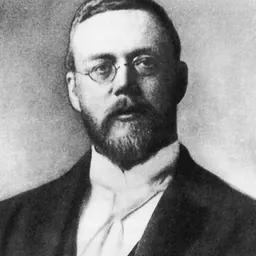
Lived 1906 – 1990 (aged 83). Andrei Kirilenko was a Russian statesperson, politician and engineer.
Later career and resignation As with Kosygin, Kirilenko's leading position in the Soviet leadership was in "limbo" due to his support for economic reform to countenance the country's stagnating economy. Kirilenko grew increasingly estranged with Brezhnev in 1977, some believe that it was due to the growing economic hardship that faced the Soviet Union. It is said that the two argued over resource allocation and on how to modernise the ailing economy. However, the most common explanation is that Kirilenko grew estranged due to his weakened position within the Collective leadership.
Kirilenko led the Soviet delegation to the December 1977 MPLA Party Congress. At this congress, MPLA officially subscribed to the doctrine of Marxist-Leninism. This congress was important to the Soviet Union, and Kirilenko compared Angola's development with that of Vietnam. Kirilenko, along with Premier Kosygin, had been one of the most vocal opponents to a Soviet intervention in Afghanistan. He blamed the Afghan Party leadership for the rebellion against them, claiming that the Soviets "gave them everything." He also disliked it when the Afghan leadership tried to justify their murderous actions on the grounds that Vladimir Lenin also did it.
Kirilenko was seen as a possible candidate for the post of First Deputy Chairman of the Presidium of the Supreme Soviet in 1977, however, First World observers tended to overrate the significance of the office, and because of it, their observation was completely off the mark. Vasily Kuznetsov, first deputy minister of foreign affairs, was chosen to the office of First Deputy Chairman instead. During Brezhnev's later rule, KGB chairman Yuri Andropov gradually took over the functions and, eventually, Kirilenko's position within the Soviet leadership. In 1979, Kirilenko lost his unofficial office as supervisor of the defence industry over to Pavel Finogenov, a protégé of Dmitriy Ustinov. Kirilenko was seen as a key candidate by the West to replace Brezhnev as Soviet leader in 1982. After Brezhnev's death, Kirilenko was removed from the ruling Politburo by the new General Secretary Andropov. With his deteriorating health, having a disease known as arteriosclerosis, Kirilenko was disabled from ensuing active politics or protecting himself from Andropov's attacks. After Brezhnev's death and funeral, Kirilenko's mental condition deteriorated to where he could not remember the names of several leading Politburo members. He was unable to write properly during his later life; when asked by Andropov to write a letter of resignation in 1982, he was unable to do so. The decision to remove Kirilenko was taken before Andropov rose to power, so in the event Brezhnev had died later, Kirilenko would still have been forced to resign. The reason for the decision was that Kirilenko's son had tried to defect to the United Kingdom.
Later life, death, and recognition When compared to other Soviet politicians who shared the same fate, Kirilenko's downfall was, in the words of historian R. Judson Mitchell, a "relatively easy" fall from power. At Brezhnev's lying-in-state and subsequent funeral, he was allowed to stand besides Brezhnev's family even though he was not a member of the Soviet leadership at the time. Kirilenko made his last public appearance in 1983, and was given an honorary retirement the same year. Mitchell believes that Andropov gave Kirilenko the honorary retirement so that he could win over Kirilenko's "organisational tail", literally Kirilenko's appointees to top-ranking offices during his years in service. He lived the rest of his life in Moscow and died on 12 May 1990 at age 83 and was buried at the Troyekurovskoye Cemetery.
Awards and honors During his lifetime, he was awarded the Hero of Socialist Labour twice, and he received seven Orders of Lenin and one Order of the October Revolution.
USSR Medal "For the Victory over Germany in the Great Patriotic War 1941–1945" (1945)60px Medal "For Valiant Labour in the Great Patriotic War 1941–1945" (1945) 60px Medal "For Labour Valour"
Foreign
Don’t just read it —
keep it.
Full-length biographies made to live with: read them, listen on the way to work, watch them tonight.
- E-book
- Audio
- Video
Instant download · yours to keep · every purchase keeps this site free
Important facts
People in Andrei Kirilenko's life
Named in this biography and alive at the same time
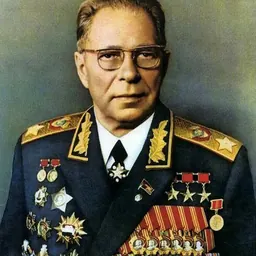
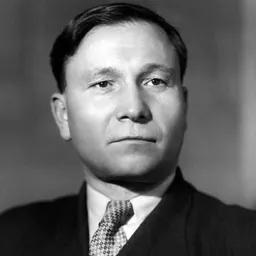
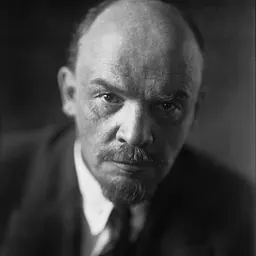

Related people
Same field, nearest in time

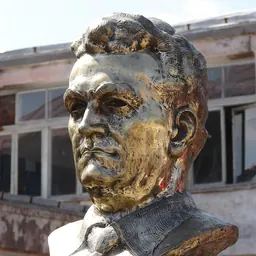

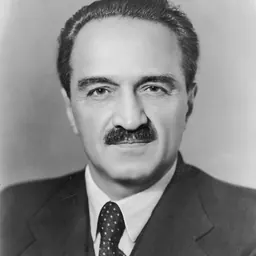


Contemporaries
People whose lives overlapped Andrei Kirilenko's


Frequently asked questions
Who was Andrei Kirilenko?
Soviet politician (1906-1990)
When was Andrei Kirilenko born?
Andrei Kirilenko was born on 26 August 1906 in Alexeyevka.
When did Andrei Kirilenko die?
Andrei Kirilenko died on 12 May 1990 in Moscow.
What was Andrei Kirilenko's occupation?
Andrei Kirilenko was a statesperson, politician and engineer.
What nationality was Andrei Kirilenko?
Andrei Kirilenko was Russian.
Sources & further reading
· DBpedia: Andrei Kirilenko (politician)
Cite this page
APA: Biography.guide. (2026). Andrei Kirilenko. https://biography.guide/andrei-kirilenko/
MLA: "Andrei Kirilenko." Biography.guide, https://biography.guide/andrei-kirilenko/.
Chicago: "Andrei Kirilenko." Biography.guide. https://biography.guide/andrei-kirilenko/.
Data last updated: 2026-09-20 · Spot an error? Report a correction.
Page generated 2026-09-27 05:30 UTC