
About Andrée Grandjean
Lived 1910 – 1999 (aged 89). Andrée Grandjean was a Belgian lawyer and politician.
Andrée Grandjean (; pseudonym Françoise Bontemps) (29 June 1910 – 29 November 1999) was a Belgian lawyer and a member of the Belgian Resistance during the Second World War. She was a leader in the Front de l'indépendance, a co-organiser of the Faux Soir newspaper act of resistance and a communist activist.
Early life and education Andrée Elvire Jeanne Grandjean was born on 29 June 1910 in Schaerbeek, into a liberal family. Her mother, Berthe Marie Constance Springael, born in Ghent, was a teacher and active feminist and her father, Arthur Marie Grandjean, was a senior civil servant with the Belgian National Railway Company (SNCB).
Grandjean studied law at the Université libre de Bruxelles, where she graduated in 1933 and joined l'Ordre des avocats (the Belgian Bar Association) on 21 December 1936.
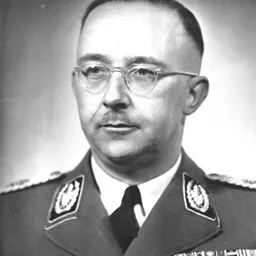
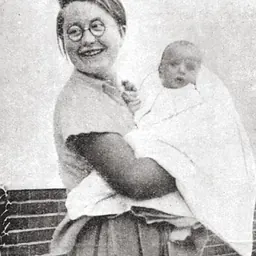
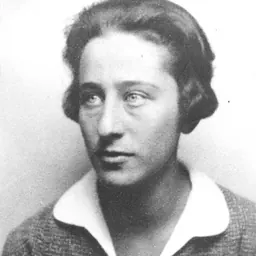
Career She then joined the office of minister Eugène Soudan, a member of the Parti ouvrier belge (Belgian Labour Party). There Grandjean met the communist lawyer Robert Lejour, who was in charge of Secours rouge international, and she became involved in the organisation. In 1937/8, she accompanied Antonina Grégoire, her close friend from university, to Berlin on a mission for Secours rouge international. They hoped to make a case for leniency for Olga Benário Prestes, a German-Brazilian communist militant and partner of the Brazilian communist leader, Luis Carlos Prestes, who was then incarcerated as a political prisoner in the Moabit prison with her child Anita Leocádia Prestes. They tried in vain to meet Heinrich Himmler to present their case and Prestes was later parted from her child and executed. They also visited other political prisoners, including Liselotte Herrmann, a German anti-Nazi activist sentenced to death.
Personal life Grandjean married a Polish man named Kowalski, but the couple separated in 1940. She later married Max Cosyns (1906–1998), a nuclear physicist and speleologist.
Her house in Walloon Brabant served as a clandestine meeting place for the Resistance couple Antonina Grégoire and her lawyer husband Jean Bastien.
In 1942, Grandjean escaped from German police officers who had come to arrest her at her home in rue Coghen in Uccle. She had compromising papers hidden in her country house destroyed by the lawyer general Adrien van den Branden de Reeth. Until this attempted arrest, she had been distributing the clandestine newspaper Justice libre au Palais. In June 1942, she was asked to find a new printer for the newspaper and went into hiding for a few months in Antwerp. As she no longer had any financial resources, she returned to her home, broke the police seal and recovered the savings she had hidden there.
On her return to Brussels, she remained in hiding, but joined the Communist Party of Belgium. She was still responsible for printing the Justice libre paper, which at this point was printed on a roneo mimeograph duplicating machine.
In July 1943, the German police intensified their hunt for Communists, and many arrests were made. Andrée Grandjean joined the Walloon Brabant regional leadership of the Front de l'Indépendance, along with Paul Libois, René Noël and Adrien van den Branden de Reeth, and used the pseudonym Françoise Bontemps. In charge of organisation, she was particularly involved with intellectuals, the Palais and civil servants, and provided assistance to individuals avoiding being drafted into the military. Andrée Grandjean obtained 50,000 Belgian francs to cover the printing costs from businessman Alfred Fourcroy, who was also in charge of an escape network for Allied pilots.
The newspapers were distributed on 9 November 1943 across a series of busy newsagents. The pastiche embodied zwanze (self-deprecating humour associated with Brussels) and was very successful, being easily mistaken for the original. The hoax drew a lot of amusement in Belgium, some articles were translated by the English press and it inspired similar action in France. However, the backlash was severe and several people involved in the project were arrested: Ferdinand Wellens, the printer, Jean Plas, who made the fake strips, and Théo Mullier, the employee of Le Soir who provided the imprint for the title, did not survive their deportation.
Post war After the war, because of ill health, Grandjean didn't immediately resume her work as a lawyer. However, she did plead certain cases. She obtained a death sentence for the person who had denounced Jean Hansen, a student member of the Resistance who had been shot by the occupying forces, from the Liège Conseil de guerre. She resumed her practice at the end of the 1940s, working on the Marcinelle mining disaster trial.
In 1951, when the Front de l'indépendance was in turmoil, she agreed to join the National Secretariat as part of the compromise team elected at the Xth Congress of the organisation.
Life in the Basque Country In 1970, she retired to Licq-Athérey, a small village commune in Basque Country, with her second husband Max Cosyns who owned a farm there and had spent a lot of time there since 1954.
Later years In her old age, she returned to Belgium with her husband. Max Cosyns died on 30 March 1998 and Andrée Grandjean on 29 November 1999. On 25 September 2025, a street in Ixelles was named in her honour.
The Centre des archives communistes de Belgique holds biographical documents relating to Andrée Grandjean in the Jean Fonteyne collection.
Awards
Chevalier de l'ordre de la Couronne Croix de Guerre 1940-1945 avec palmes 1971: Capitaine de la Résistance par les Milices patriotiques.
She also received several other awards in Belgium and England.
Don’t just read it —
keep it.
Full-length biographies made to live with: read them, listen on the way to work, watch them tonight.
- E-book
- Audio
- Video
Instant download · yours to keep · every purchase keeps this site free
Important facts
People in Andrée Grandjean's life
Named in this biography and alive at the same time




Related people
Same field, nearest in time


Contemporaries
People whose lives overlapped Andrée Grandjean's






Frequently asked questions
Who was Andrée Grandjean?
Lawyer and Belgium resistance member (1910-1999)
When was Andrée Grandjean born?
Andrée Grandjean was born on 29 June 1910.
When did Andrée Grandjean die?
Andrée Grandjean died on 29 November 1999 in Uccle.
What was Andrée Grandjean's occupation?
Andrée Grandjean was a lawyer and politician.
What nationality was Andrée Grandjean?
Andrée Grandjean was Belgian.
Sources & further reading
Cite this page
APA: Biography.guide. (2026). Andrée Grandjean. https://biography.guide/andree-grandjean/
MLA: "Andrée Grandjean." Biography.guide, https://biography.guide/andree-grandjean/.
Chicago: "Andrée Grandjean." Biography.guide. https://biography.guide/andree-grandjean/.
Data last updated: 2026-09-20 · Spot an error? Report a correction.
Page generated 2026-09-27 05:17 UTC