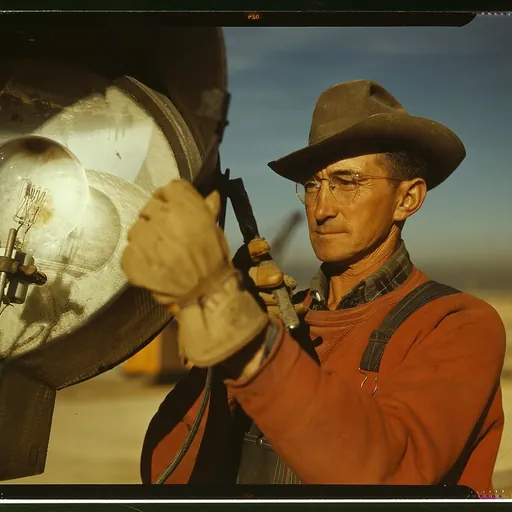
About Andreas Feininger
Lived 1906 – 1999 (aged 92). Andreas Feininger was a French and American photographer, architect and painter.
The Photojournalist, showing the photojournalist Dennis Stock, may be Feininger's best-known photograph; he took it for Life in 1951.
Andreas Bernhard Lyonel Feininger (December 27, 1906 – February 18, 1999) was an American photographer and a writer on photographic technique. He was noted for his dynamic black-and-white scenes of Manhattan and for studies of the structures of natural objects.
Biography Feininger was born in Paris, France, the eldest son of German Jewish artist Julia Feininger ( Lilienfeld) and the American painter and art educator Lyonel Feininger (1871-1956). His paternal grandparents were the German violinist Karl Feininger (1844-1922) and the American singer Elizabeth Feininger (née Lutz), who was also of German descent. His younger brother was the painter and photographer T. Lux Feininger (1910-2011).
In 1908 the Feininger family moved to Berlin, and in 1919 to Weimar, where Lyonel Feininger took up the post of Master of the Printing Workshop at the newly formed Bauhaus art school.
Andreas left school at 16, in 1922, to study at the Bauhaus; he graduated as a cabinetmaker in April 1925. Afterwards he studied architecture, initially at the Staatliche Bauschule Weimar (State Architectural College, Weimar) and later at the Staatliche Bauschule Zerbst. (Zerbst is a city in the German state of Saxony-Anhalt, about 20 km from Dessau, where the Bauhaus moved to in 1926.) The Feininger family moved to Dessau with the Bauhaus. In addition to continuing his architectural studies in Zerbst, Andreas developed an interest in photography and was given guidance by neighbour and Bauhaus teacher László Moholy-Nagy.
In 1936, he gave up architecture and moved to Sweden, where he focused on photography. In advance of World War II, in 1939, Feininger immigrated to the U.S., where he established himself as a freelance photographer. In 1943, he joined the staff of Life magazine, an association that lasted until 1962.
Feininger became famous for his photographs of New York. Other frequent subjects among his works were science and nature, as seen in bones, shells, plants, and minerals in the images of which he often stressed their structure. Rarely did he photograph people or make portraits.
Feininger wrote comprehensive manuals about photography, of which the best known is The Complete Photographer. In the introduction to one of Feininger's books of photographs, Ralph Hattersley, the editor of the photography journal Infinity, described him as "one of the great architects who helped create photography as we know it today." In 1966, the American Society of Media Photographers (ASMP) awarded Feininger its highest distinction, the Robert Leavitt Award. In 1991, the International Center of Photography awarded Feininger the Infinity Lifetime Achievement Award.
Today, Feininger's photographs are in the permanent collections of the Center for Creative Photography at the University of Arizona, the J. Paul Getty Museum, the International Center of Photography, the Museum of Modern Art, the Metropolitan Museum of Art, the National Gallery of Art, Whitney Museum of American Art, London's Victoria and Albert Museum, and the George Eastman Museum in Rochester, New York, among others.
Feininger’s work has been exhibited at the Museu Fundación Juan March, Palma (Andreas Feininger (1906-1999), 16 January - 3 May 2008, traveled to Museo de Arte Abstracto Español, Cuenca (23 May - 31 August 2008)); Zeppelin Museum (Andreas Feininger. That's Photography, 24 September 2010 - 9 January 2011, and Andreas Feininger. Industrial photography in America, 23 November 2012 - 24 February 2013); the Santa Barbara Museum of Art (Lyonel Feininger/Andreas Feininger: The Modern Sea, The Modern City, 29 January - 18 June 2023); and the Bröhan Museum (Andreas Feininger. New York In The Forties, 3 March - 30 July 2023).
Don’t just read it —
keep it.
Full-length biographies made to live with: read them, listen on the way to work, watch them tonight.
- E-book
- Audio
- Video
Instant download · yours to keep · every purchase keeps this site free
Important facts
People in Andreas Feininger's life
Named in this biography and alive at the same time

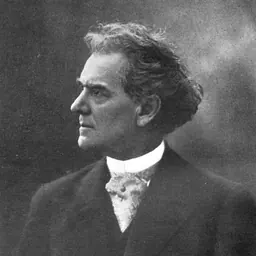
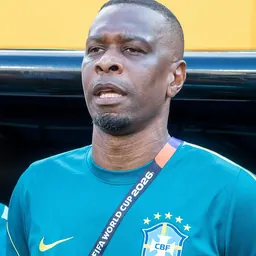


Related people
Same field, nearest in time


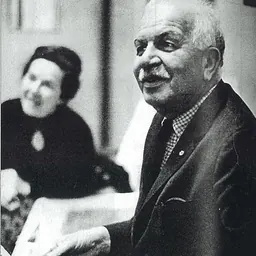
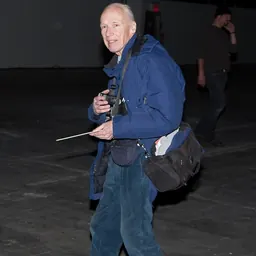
Contemporaries
People whose lives overlapped Andreas Feininger's
Frequently asked questions
Who was Andreas Feininger?
American photographer (1906–1999)
When was Andreas Feininger born?
Andreas Feininger was born on 27 December 1906 in Paris.
When did Andreas Feininger die?
Andreas Feininger died on 18 February 1999 in New York City.
What was Andreas Feininger's occupation?
Andreas Feininger was a photographer, architect and painter.
What nationality was Andreas Feininger?
Andreas Feininger was French and American.
Sources & further reading
· Wikipedia: Andreas Feininger
Cite this page
APA: Biography.guide. (2026). Andreas Feininger. https://biography.guide/andreas-feininger/
MLA: "Andreas Feininger." Biography.guide, https://biography.guide/andreas-feininger/.
Chicago: "Andreas Feininger." Biography.guide. https://biography.guide/andreas-feininger/.
Data last updated: 2026-09-20 · Spot an error? Report a correction.
Portrait: Wikimedia Commons · author & licence
Page generated 2026-09-27 04:57 UTC