
About Andrea Caffi
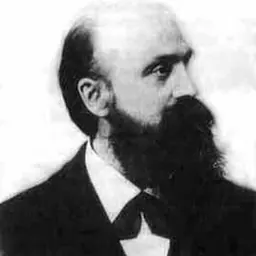
Lived 1887 – 1955 (aged 68). Andrea Caffi was an Italian philosopher and politician.
Andrea Caffi (1 May 1887 – 22 July 1955) was an Italian philosopher, political theorist, journalist, and anti-fascist activist whose nomadic life spanned the Russian Empire, revolutionary Russia, Fascist Italy, and France under Nazi occupation. A libertarian socialist, he developed an original and influential critique of political violence and the modern state, arguing that genuine human emancipation depended not on organised force but on the cultivation of spontaneous social bonds, which he called "sociability." Although he published largely in obscurity and under pseudonyms, his writing deeply influenced the New York intellectual left of the 1940s, particularly through the journal politics and its editor Dwight Macdonald. His work was posthumously collected in English as A Critique of Violence.
Early life and education Caffi was born on 1 May 1887 in Saint Petersburg, then the capital of the Russian Empire, into an Italian family. His father, Giovanni Caffi, had emigrated from Belluno in northeast Italy to work as a costume designer at the Imperial Theatres. His mother, Emilia Carlini, is believed by biographers to have been born in France to Italian emigrants. Growing up in Saint Petersburg, Caffi attended the city's International School, where he was already drawn to socialist ideas and began acquainting himself with the conditions of workers and peasants in Tsarist Russia.
He subsequently studied in Berlin, where he undertook university courses in philosophy, before moving first to Florence and then to Paris. His formative years brought him into contact with the European artistic and intellectual avant-garde in Paris in the period immediately before the First World War.
Italy, exile, and anti-fascism Back in Italy, Caffi contributed to journals in the socialist sphere and engaged with the Italian intellectual world, forming friendships with figures including Alberto Moravia and Giuseppe Ungaretti. As early as 1924 he was analysing the nature of Fascism: in "Cronaca di dieci giornate," published in the journal Volontà, he traced Mussolini's success to the despair and disorientation that the war had generated among the masses, particularly among déclassé veterans who had embraced the regime's crude demagogy.
The consolidation of the Fascist dictatorship forced Caffi to flee Italy in 1926. He settled in France, initially at Versailles and then Paris, where he earned a modest living as a translator and editor for publishing houses. In Paris he deepened his involvement with Italian anti-fascism in exile, in particular the movement Giustizia e Libertà (Justice and Liberty), led by Carlo Rosselli. Although he participated in internal debates within the movement and contributed essays to its journal Quaderni di Giustizia e Libertà, he quickly came into conflict with its political practice, insisting that anti-fascism could not rely on political violence and had to work at the deeper level of moral and social transformation.
Sociability and "society" At the heart of Caffi's alternative vision was the concept of "sociability", by which he meant the web of spontaneous, voluntary, pleasurable human relations conducted in at least the appearance of freedom and without coercion. He defined "society" as the ensemble of such relations, characterised by the rejection in principle of constraint and especially of violence. For Caffi, the strength of any emancipatory movement could be directly measured by the depth and vitality of its social life.
Since the 1990s there has been a substantial Italian scholarly rediscovery of Caffi. Marco Bresciani's biography, La rivoluzione perduta: Andrea Caffi nell'Europa del Novecento (2009), remains the most comprehensive account of his life and thought. His manuscript on fascist doctrine, La dottrina fascista, was published for the first time in a critical edition edited by Alberto Castelli in 2022. The essays that he published between 1945 and 1948 in New York were collected and edited by Mike Tyldesley, with an afterword by Castelli, and published as Andrea Caffi: The New York Essays (2026) by Little Big Eye Publishing.
Selected works
Published in his lifetime "The Automatization of European People" (as "European"), politics, No. 10, November 1945 "Towards a Socialist Program" (as "European"), politics, No. 12, December 1945 "Is a Revolutionary War a Contradiction in Terms?" (as "European"), politics, No. 27, April 1946 "Notes on Mass Culture" (as "European"), politics, No. 33, November 1946 "Violence and Sociability" (as "European"), politics, No. 36, January 1947 "The French Condition" (as "European"), politics, No. 38, July/August 1947 "On Mythology," possibilities, No. 1, Winter 1947/48 "A Glance at Marx's Horizons," Instead, No. 1, early 1948 "Machine and Myth," Instead, No. 3, possibly March 1948 "The Myth and Politics" (with Nicola Chiaromonte), Instead, No. 7, late 1948/early 1949 "In Today's Newspaper," Instead, No. 7, late 1948/early 1949 "Mass Politics and the Pax Americana," in Dwight Macdonald, The Root is Man, Alhambra (CA): The Cunningham Press, 1953
Posthumous collections A Critique of Violence, Indianapolis: Bobbs-Merrill, 1970 (ed. Nicola Chiaromonte) Scritti politici, Florence: La Nuova Italia, 1970 La dottrina fascista, o il fascismo nella storia superiore del pensiero, Milan: Biblion, 2022 (ed. Alberto Castelli) The New York Essays, Charlotte: Little Big Eye Publishing, 2026, (ed. Mike Tyldesley, afterword by Alberto Castelli)
Don’t just read it —
keep it.
Full-length biographies made to live with: read them, listen on the way to work, watch them tonight.
- E-book
- Audio
- Video
Instant download · yours to keep · every purchase keeps this site free
Important facts
People in Andrea Caffi's life
Named in this biography and alive at the same time



Related people
Same field, nearest in time




Contemporaries
People whose lives overlapped Andrea Caffi's



Frequently asked questions
Who was Andrea Caffi?
Italian philosopher and politician (1887-1955)
When was Andrea Caffi born?
Andrea Caffi was born on 1 May 1887 in Saint Petersburg.
When did Andrea Caffi die?
Andrea Caffi died on 22 July 1955 in Paris.
What was Andrea Caffi's occupation?
Andrea Caffi was a philosopher and politician.
What nationality was Andrea Caffi?
Andrea Caffi was Italian.
Sources & further reading
Cite this page
APA: Biography.guide. (2026). Andrea Caffi. https://biography.guide/andrea-caffi/
MLA: "Andrea Caffi." Biography.guide, https://biography.guide/andrea-caffi/.
Chicago: "Andrea Caffi." Biography.guide. https://biography.guide/andrea-caffi/.
Data last updated: 2026-09-20 · Spot an error? Report a correction.
Page generated 2026-09-27 05:30 UTC