
Andrea Brenta
Italian Renaissance humanist, professor and Greek–Latin translator
About Andrea Brenta
Lived 1454 – 1484 (aged 29–30). Andrea Brenta was a philosopher, translator, humanist and teacher.
Andrea Brenta ( – 11 February 1484), also known as Andreas Brentius, was an Italian Renaissance humanist, professor and Greek–Latin translator.
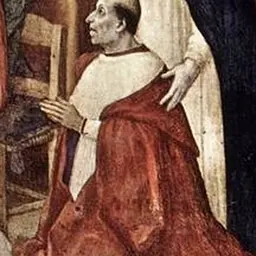
Life Brenta was born in Padua around 1454. He attended the lectures of Demetrios Chalkokondyles in 1463. He also credits Theodorus Gaza as one of his teachers. He joined Cardinal Oliviero Carafa as a secretary and was living in Rome by 1475. He taught Greek and Latin at the University of Rome. He came to hold a highly negative opinion of the schools, regarding them as breeding grounds of ignorance and arrogance.
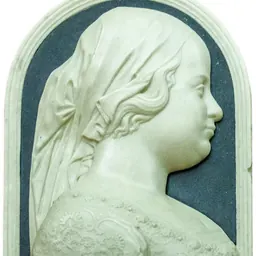
In 1476, Brenta accompanied Oliviero Carafa to Naples to attend the coronation of Beatrice of Naples and to escape an outbreak of plague in Rome. The earliest surviving register of the Vatican Library—which was open to the public at the time—shows that Brenta borrowed the Anabasis on 10 October 1477 and a copy of Hippocrates on 21 June 1479. At Pentecost on 18 May 1483, he gave a public sermon in the presence of Pope Sixtus IV in Saint Peter's Basilica on the nature of the Holy Spirit.
Brenta died from the plague on 11 February 1484, the date and cause of death being known from a letter of his colleague to . At his funeral, the eulogy was delivered by Paolo Marsi. It was recorded by Paolo Cortesi. Several others wrote poems lamenting his early death, including and Francesco Matarazzo.
Works
The inaugural lectures of three courses taught by Brenta are preserved:
In disciplinas et bonas artes oratio Romae initio gymnasii habita, an introduction to the trivium and quadrivium, including praise of Pope Sixtus for his patronage of the Roman gymnasia In principio lectionis Aristophanis praeludia, an introduction to Aristophanes In historiam Caesaremque Caesarisque Commentarios, a lecture on Julius Caesar's Commentarii de Bello Gallico, probably delivered around 1480
Brenta wrote a short piece in praise of Oliviero Carafa, Oratio in convivii laudem habita apud Cardinalem Oliverium Neapolitanum, dedicated to Carafa's nephew, Alessandro Carafa. He predicted that Carafa would one day be pope.
Brenta was prolific as a translator of Greek works into Latin. Shortly after 1475, he published a Latin translation Caesar's speech in Vesontio from Dio Cassius, based on a manuscript belonging to Sixtus IV, to whom the translation was dedicated. His is a composite text, pieced together from Dio, Caesar's Commentarii and other Greek sources. Entitled Caesaris oratio Vesontione habita, this work was printed at Rome first by Bartholomaeus Guldinbeck in 1481 and then a second time by before 1484.
Brenta's translation of the De regno of Dio Chrysostom was also dedicated to Sixtus. During his time in Naples, Brenta completed translations of the Oratio funebris of Lysias and John Chrysostom's sermon In proditionem Iudae, both dedicated to Oliviero Carafa. He also translated several works from the Hippocratic corpus, including:
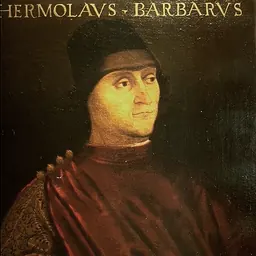
De insomniis, translated in 1479–1480, survives in both a manuscript presentation copy for Sixtus IV and a printed edition by Oliviero Servio (1490). It has a dual dedication to Sixtus and Nicola Gupalatino and a prefatory letter addressed to Zaccaria Barbaro.
The Roman printer published Brenta's 1483 sermon, Oratio in die Pentecostes (caption title: In Pentecosten oratio).
Don’t just read it —
keep it.
Full-length biographies made to live with: read them, listen on the way to work, watch them tonight.
- E-book
- Audio
- Video
Instant download · yours to keep · every purchase keeps this site free
Important facts
People in Andrea Brenta's life
Named in this biography and alive at the same time


Related people
Same field, nearest in time



Contemporaries
People whose lives overlapped Andrea Brenta's


Frequently asked questions
Who was Andrea Brenta?
Italian Renaissance humanist, professor and Greek–Latin translator
When was Andrea Brenta born?
Andrea Brenta was born in 1454 in Padua.
When did Andrea Brenta die?
Andrea Brenta died on 11 February 1484 in Rome.
What was Andrea Brenta's occupation?
Andrea Brenta was a philosopher, translator, humanist and teacher.
Sources & further reading
Cite this page
APA: Biography.guide. (2026). Andrea Brenta. https://biography.guide/andrea-brenta/
MLA: "Andrea Brenta." Biography.guide, https://biography.guide/andrea-brenta/.
Chicago: "Andrea Brenta." Biography.guide. https://biography.guide/andrea-brenta/.
Data last updated: 2026-09-20 · Spot an error? Report a correction.
Page generated 2026-09-27 05:02 UTC