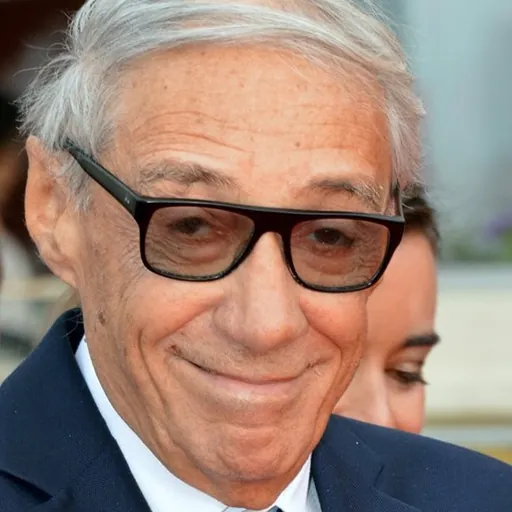
About André Téchiné
Born 1943. André Téchiné is a French screenwriter, film director, film critic, actor and director.
André Téchiné (; born 13 March 1943) is a French screenwriter and film director. He has a long and distinguished career that places him among the most accomplished post-New Wave French film directors.
Téchiné belongs to a second generation of French film critics associated with Cahiers du cinéma who followed François Truffaut, Claude Chabrol, Jean-Luc Godard and others from criticism into filmmaking. He is noted for his elegant and emotionally charged films that often delve into the complexities of emotions and the human condition. One of Téchiné's trademarks is the examination of human relations in a sensitive but unsentimental way, as can be seen in his most acclaimed films: My Favorite Season (1993) and Wild Reeds (1994).
In his films he addresses various themes related to morality and the development of modern society, such as homosexuality, divorce, adultery, family breakdown, prostitution, crime, drug addiction or AIDS.
Life André Téchiné was born on 13 March 1943 at Valence-d'Agen, a small town in the Midi-Pyrénées region, department of Tarn-et-Garonne, France. His family, of Spanish ancestry, owned a small agricultural equipment business. Téchiné has said. "They were my only possibility of escaping my family environment and my boarding school. It was probably dangerous because, through movies, I learned how the world works and how human relations work. But it was magical, and I was determined to follow the thread of that magic." but started to write reviews for Cahiers du cinéma, where he worked for four years (1964–1967). He went on to become assistant director for Marc'O in Les Idoles (1967), a film version of an experimental play. Téchiné was also assistant director to Jacques Rivette (his editor at Cahiers du Cinéma) on L'amour fou (1969).
Téchiné is noted for his elegant and emotionally charged films that often delve into the complexities of human condition and emotions. One of Téchiné's trademarks is the examination of human relations in a sensitive but unsentimental way. Influenced by Roland Barthes, Bertolt Brecht, Ingmar Bergman, William Faulkner, and the cinematic French New Wave, Téchiné's style lies in his exploration of sexuality and national identity, as he challenges expectations in his depictions of gay relations, the North African dimensions of contemporary French culture, or the center-periphery relationship between Paris and his native Southwest. Fear of flying prevents him from attending most film openings or festivals more than a train ride from his Paris apartment overlooking the Luxembourg Garden. Téchiné first came to prominence with his second film, Souvenirs d'en France (French Provincial) (1974), a mix of black comedy, romantic drama and nostalgia with a distinct tone. The film was inspired by Orson Welles' The Magnificent Ambersons and filmed in Téchiné's native village. It is a highly compressed history of a small-town family from early in the century through the Resistance and on to May 1968. Téchiné explored the relationship between the grand scope of life and more personal histories. The film stars Jeanne Moreau.
Barocco (1976)
Téchiné demonstrated his penchant for atmospheric storytelling with his next film, the thriller Barocco (1976), a crime drama. A boxer who accepted and then turned down a huge bribe from a politician to tell a lie that would influence an election is killed by a hired assassin. The boxer's girlfriend eventually falls in love with the killer while trying to remake him into the image of her slain lover. The film elicited critical plaudits for its elegant look. This film also started a long productive collaboration with Catherine Deneuve. "There are some directors who are more feminine than others, like Téchiné, like Truffaut. They are an exceptional gift to actresses," Deneuve has said.
Rendez-vous (1985) After making the television production La Matiouette ou l'arrière-pays (1983), Téchiné returned to critical attention with Rendez-vous (1985), a noir melodrama replete with the seductive surface of the era.
Wild Reeds (1994) The following year, Téchiné had his greatest success to date with Wild Reeds (Les roseaux sauvages) (1994). The film was commissioned by French television as one of part of a series of eight films entitled Tous les garçons et les filles de leur âge, although it was shown first at cinemas. This is a tale of teenage self-discovery centered on the inner turmoil of four teenagers staying at a boarding school in Aquitaine in 1962, their political and sexual awakening with the effect of the Algerian War as backdrop. Téchiné works with certain sets of themes including family bonds, homosexuality, and exile. Wild Reeds is his most autobiographical movie; like the teen-age Téchiné, the main character, François, attends an all-male boarding school. It also won the Prix Delluc in 1994. This was Téchiné's sixth film released in the US (in 1995—following French Provincial (Souvenirs d'en France), Barocco, Hôtel des Amériques, Rendez-vous and Scene of the Crime) and his most autobiographical film to date. Wild Reeds won the New York Film Critics Award and National Society of Film Critics Award for Best Foreign Language Film.
Les voleurs (1996) Further acclaim greeted the director in 1996 with Les voleurs (Thieves) (1996), an ambitious and complex crime drama. The film jumps through time and switches narrative perspectives in a Rashomon-style exploring family and amorous ties. It postulates a fatalistic world bound by family origins and romantic longings in which every character is trapped into becoming a thief of one kind or another, emotionally as well as existentially. This film earned Téchiné nominations for the César and Golden Palme at Cannes, as well as a host of other honors.
Alice et Martin (1998) Téchiné followed this success with Alice et Martin (Alice and Martin) (1998), a haunting love story between two emotionally damaged outsiders that marked his reunion with Juliette Binoche.
In February 2024 Francis Renaud accused Téchiné of having sexually harassed him.
Filmography
Year English title Original title Notes 1969 Paulina is Leaving Paulina s'en va Original script 1975 French Provincial Souvenirs d'en France Original script 1976 Barocco Barocco César Award: Best Cinematography César Award: Best Music Written for a Film César Award: Best Supporting Actress (Marie-France Pisier) 1979 The Bronte Sisters Les sœurs Brontë 1981 Hotel America Hôtel des Amériques 1983 La matiouette ou l'arrière-pays La matiouette 1985 Rendez-vous Rendez-vousCannes Film Festival: Award for Best Director César Award: Most Promising Actor (Wadeck Stanczak) 1986 The Scene of the Crime Le lieu du crime 1987 The Innocents Les Innocents César Award: Best Supporting Actor (Jean-Claude Brialy) 1991 I Don't Kiss Nominated—César Award for Best Director César Award: Most Promising Actor (Manuel Blanc) 1993 My Favorite Season Ma saison préférée Original script Boston Society of Film Critics Awards : Best Foreign Language Film 1994 Wild Reeds Les roseaux sauvages Original script César Award: Best Film César Award: Best Director César Award: Best Original Screenplay or Adaptation César Award: Most Promising Actress (Élodie Bouchez) Los Angeles Film Critics Association: Best Foreign Language Film National Society of Film Critics (US): Best Foreign Language Film New York Film Critics : Best Foreign Language Film 1996 Thieves Les voleurs Original script 1998 Alice and Martin Alice et Martin Original script 2001 Far Loin Original script 2003 Strayed Les égarés Loosely based on Gilles Perrault's novel The Boy With Grey Eyes 2004 Changing Times Les temps qui changent Original script 2007 The Witnesses Les Témoins Original script Nominated—César Award for Best Director César Award: Best Supporting Actor (Sami Bouajila) 2009 The Girl on the Train La fille du RER Loosely based on Jean-Marie Besset's 2006 play RER 2011 Impardonnables Unforgivable Based on Philippe Djian's novel Unforgivable 2014 In the Name of My Daughter L'Homme que l'on aimait trop 2016 Being 17 Quand on a 17 ans Nominated—Berlin International Film Festival - Golden Bear 2017 Golden Years Nos années folles 2019 Farewell to the Night L'Adieu à la nuit 2023 Soul Mates Les Âmes sœurs 2024 My New Friends Les gens d’à côté World premiere at the 74th Berlin International Film Festival
Frequent casting Actor Paulina is Leaving(1969) French Provincial(1975) Barocco(1976) The Bronte Sisters(1979) Hotel America(1981) Rendez-vous(1985) The Scene of the Crime(1986) The Innocents(1987) I Don't Kiss(1991) My Favorite Season(1993) Wild Reeds(1994) Thieves(1996) Alice and Martin(1998) Far(2001) Strayed(2003) Changing Times(2004) The Witnesses(2007) The Girl on the Train(2009) Impardonnables(2011) In the Name of My Daughter(2014)Emmanuelle Béart
Catherine Deneuve
Jacques Nolot
Marie-France Pisier
Marthe Villalonga
Don’t just read it —
keep it.
Full-length biographies made to live with: read them, listen on the way to work, watch them tonight.
- E-book
- Audio
- Video
Instant download · yours to keep · every purchase keeps this site free
Important facts
People in André Téchiné's life
Named in this biography and alive at the same time



Related people
Same field, nearest in time


Contemporaries
People whose lives overlapped André Téchiné's

Frequently asked questions
Who is André Téchiné?
French filmmaker (born 1943)
When was André Téchiné born?
André Téchiné was born on 13 March 1943 in Valence.
What is André Téchiné's occupation?
André Téchiné is a screenwriter, film director, film critic, actor and director.
What nationality is André Téchiné?
André Téchiné is French.
Sources & further reading
Cite this page
APA: Biography.guide. (2026). André Téchiné. https://biography.guide/andre-techine/
MLA: "André Téchiné." Biography.guide, https://biography.guide/andre-techine/.
Chicago: "André Téchiné." Biography.guide. https://biography.guide/andre-techine/.
Data last updated: 2026-09-23 · Spot an error? Report a correction.
Portrait: Wikimedia Commons · author & licence
Page generated 2026-09-27 05:07 UTC