
André Jagendorf
American plant physiologist
About André Jagendorf
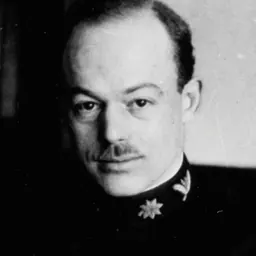
Lived 1926 – 2017 (aged 90). André Jagendorf was an American plant physiologist, known for Chemiosmosis, Plant Biochemistry and Plant Physiology.
André Tridon Jagendorf (October 21, 1926 – March 13, 2017) was an American Liberty Hyde Bailey Professor Emeritus in the Section of Plant Biology at Cornell University who is notable for providing direct evidence that chloroplasts synthesize adenosine triphosphate (ATP) using the chemiosmotic mechanism proposed by Peter Mitchell.
Personal life Jagendorf was born on October 21, 1926, in New York City to Moritz Adolph Jagendorf and Sophie Sheba (Sokolsky) Jagendorf. He married Jean Elizabeth Whitenack on June 12, 1952. They had three children Suzanne, Judith and Daniel (deceased January 2014); 8 grandchildren; and 9 great grandchildren. André Jagendorf died on March 13, 2017.
University life
André Jagendorf graduated from Cornell University, where he was strongly influenced by Loren Petry, who taught General Botany. He earned his PhD in 1951 at Yale University under David M. Bonner. André then went to UCLA, where he was awarded a Merck Postdoctoral fellowship and spent what he called "the happiest years of my life" working with Sam Wildman. Jagendorf became an assistant professor at Johns Hopkins University in 1953, as associate professor in 1958, and a full professor in 1966. Jagendorf then returned to Cornell University as professor of plant physiology, and in 1981 became the Liberty Hyde Baily Professor. Since 1997 Jagendorf has been the Liberty Hyde Bailey Professor Emeritus in the Department of Plant Biology and was actively doing research and mentoring young scientists until days before his death.
Research
Jagendorf heard Peter Mitchell give a talk about chemiosmosis at a bioenergetics meeting in Sweden. According to Jagendorf, "His words went into one of my ears and out the other, leaving me feeling annoyed they had allowed such a ridiculous and incomprehensible speaker in. But – Geoffrey [Hind] read Nature. Geoffrey was from England, both better trained and more intelligent than I was. He read Peter Mitchell’s paper, came to me, and said ‘André, could this possibly explain XE [something that preceded ATP formation]?’"
As a result of this conversation, Jagendorf began to communicate with Peter Mitchell who invited him to visit his lab so that he could learn about the chemiosmotic hypothesis. Later that summer Jagendorf did the experimentum crucis that showed that the synthesis of adenosine trisphosphate by chloroplasts depended on the magnitude of the pH difference.
The experiment consisted of creating a pH gradient across the thylakoid membrane of chloroplasts in the dark. Jagendorf and Uribe created the transient pH gradient by incubating chloroplasts in a pH 4 buffer for 15 seconds. They then placed the chloroplasts in a pH 8 buffer that contained ADP and Pi. Under these conditions, the pH of the stroma increased to 8, whereas the pH of the thylakoid lumen remained at 4. An immediate increase in ATP synthesis accompanied the dissipation of the pH gradient across the thylakoid membrane. According to Berg et al. "This incisive experiment was one of the first to unequivocally support the hypothesis put forth by Peter Mitchell that ATP synthesis is driven by proton-motive force." Following Jagendorf's results, Mitchell wrote a letter to Edward C. Slater on November 2, 1965, stating: "experiments have been steadily pushing me towards accepting the chemiosmotic hypothesis and I think I shall feel inclined presently to regard it as a theory."
Jagendorf was also a pioneer in many aspects of chloroplast molecular biology, including DNA repair mechanisms.
Honors and awards
Jagendorf became the President of the American Society of Plant Physiologists in 1967. He received the Charles F. Kettering Award of the American Society of Plant Physiologists in 1978. Jagendorf was elected to the National Academy of Sciences in 1980. Jagendorf received the Charles Reid Barnes Life Membership Award of the American Society of Plant Physiologists in 1989 and received the 2012 Rebeiz Foundation for Basic Research Life Time Achievement Award for his contributions to the understanding of ATP Biosynthesis. At the award presentation, Govindjee, Tom Sharkey and Richard McCarthy gave testimonials. According to Tom Sharkey,
Jagendorf has been recognized as a Pioneer Member of the American Society of Plant Biologists.
Podcasts On September 8, 2016, André discussed his life journey with colleague, Robert Turgeon, a professor in the Plant Biology Section.
Jokes Jagendorf is famous for his jokes and gave a stellar performance at the retirement party for Peter J. Davies on June 18, 2016.
Don’t just read it —
keep it.
Full-length biographies made to live with: read them, listen on the way to work, watch them tonight.
- E-book
- Audio
- Video
Instant download · yours to keep · every purchase keeps this site free
Important facts
People in André Jagendorf's life
Named in this biography and alive at the same time






Related people
Same field, nearest in time



Contemporaries
People whose lives overlapped André Jagendorf's



Frequently asked questions
Who was André Jagendorf?
American plant physiologist (1926–2017)
When was André Jagendorf born?
André Jagendorf was born on 21 October 1926 in New York City.
When did André Jagendorf die?
André Jagendorf died on 13 March 2017 in Ithaca.
What was André Jagendorf's occupation?
André Jagendorf was a plant physiologist.
What was André Jagendorf known for?
André Jagendorf was known for Chemiosmosis, Plant Biochemistry and Plant Physiology.
What nationality was André Jagendorf?
André Jagendorf was American.
Sources & further reading
Cite this page
APA: Biography.guide. (2026). André Jagendorf. https://biography.guide/andre-jagendorf/
MLA: "André Jagendorf." Biography.guide, https://biography.guide/andre-jagendorf/.
Chicago: "André Jagendorf." Biography.guide. https://biography.guide/andre-jagendorf/.
Data last updated: 2026-09-20 · Spot an error? Report a correction.
Page generated 2026-09-27 05:27 UTC