
About André Delvaux
Lived 1926 – 2002 (aged 76). André Delvaux was a Belgian film director, screenwriter, film editor, television director, film screenwriter and director.
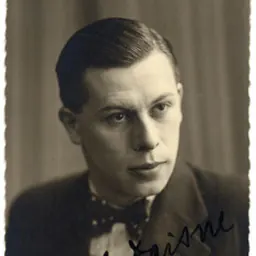
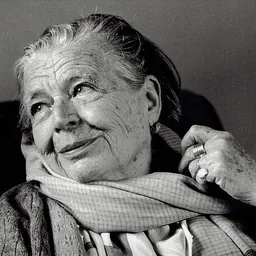
André Albert Auguste Delvaux (; 21 March 1926 – 4 October 2002) was a Belgian film director. He co-founded the film school INSAS in 1962 and is regarded as the founder of the Belgian national cinema. Adapting works by writers such as Johan Daisne, Julien Gracq and Marguerite Yourcenar, he received international attention for directing magic realist films.
Delvaux received the Louis Delluc Prize for Rendezvous at Bray (1971) and the André Cavens Award for Woman Between Wolf and Dog (1979) and The Abyss (1988). The king of Belgium made him a baron in 1996. The Académie André Delvaux is named after him and he posthumously received the first Honorary Magritte Award in 2011.
Early life and education André Albert Auguste Delvaux was born in Heverlee, Belgium, on 21 March 1926. He studied piano at the Royal Conservatory of Brussels and worked as a silent film pianist at the Belgian cinématheque in his early 20s. He studied law and took a degree in German philology at the Free University of Brussels, after which he worked as a teacher.
Filmmaking career Delvaux's filmmaking career started in 1954 when he began to make television documentaries about film directors for the broadcaster RTB. Notably, he made a four-part series about Federico Fellini in 1960.
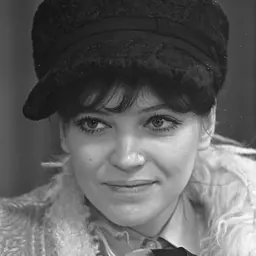
Delvaux's first two feature films were based on books by Johan Daisne. Delvaux received international attention for his first feature film, The Man Who Had His Hair Cut Short (1965), which is based on Johan Daisne's novel with the same title. Rendezvous at Bray (1971), loosely based Julien Gracq's novella King Cophetua, is set during World War I and places great emphasis on atmosphere. The film stars Mathieu Carrière, Roger Van Hool, Bulle Ogier and Anna Karina, and became a turning point in Delvaux's career, because its critical success allowed him to choose his subjects more freely.
Cinematic style From the release of The Man Who Had His Hair Cut Short, Delvaux was associated with magic realism and known for his portrayals of dreams and reality. Delvaux's assertion of a distinctive Belgian identity, separate from French cinema, gave him status as the founder of the country's national film industry. The visuals in some of his films have tendencies of surrealism, which is distinct from the deliberately constructed magic realism by being based on Freudian fetishism and automatism. In his application of these tendencies, Delvaux was closer to Magritte and Gracq than to André Breton or Luis Buñuel.
Selected filmography 1959: La Planète fauve 1960: 1965: The Man Who Had His Hair Cut Short (De man die zijn haar kort liet knippe) 1968: One Night... A Train (Un soir, un train) 1971: Rendezvous at Bray (Rendez-vous à Bray) 1973: Belle 1979: Woman Between Wolf and Dog (Een vrouw tussen hond en wolf) 1983: Benvenuta 1985: 1988: The Abyss (L'Œuvre au noir) 1989: 1001 films
Awards and honours The Man Who Had His Hair Cut Short received the British Film Institute's Sutherland Trophy in 1966 for being "the most original and imaginative film premiered at the National Film Theatre during the year". Rendezvous at Bray was awarded the Louis Delluc Prize in 1971.
Delvaux received the Plateau Life Achievement Award at the 1991 Film Fest Ghent. In 1996 he was knighted by King Albert II of Belgium and given the personal title of baron. Delvaux received a posthumous Honorary Magritte Award at the 1st Magritte Awards in 2011.
Don’t just read it —
keep it.
Full-length biographies made to live with: read them, listen on the way to work, watch them tonight.
- E-book
- Audio
- Video
Instant download · yours to keep · every purchase keeps this site free
Important facts
People in André Delvaux's life
Named in this biography and alive at the same time




Related people
Same field, nearest in time

Contemporaries
People whose lives overlapped André Delvaux's

Frequently asked questions
Who was André Delvaux?
Belgian film director (1926–2002)
When was André Delvaux born?
André Delvaux was born on 21 March 1926 in Heverlee, Oud-Heverlee.
When did André Delvaux die?
André Delvaux died on 4 October 2002 in Valencia.
What was André Delvaux's occupation?
André Delvaux was a film director, screenwriter, film editor, television director, film screenwriter and director.
What nationality was André Delvaux?
André Delvaux was Belgian.
Sources & further reading
Cite this page
APA: Biography.guide. (2026). André Delvaux. https://biography.guide/andre-delvaux/
MLA: "André Delvaux." Biography.guide, https://biography.guide/andre-delvaux/.
Chicago: "André Delvaux." Biography.guide. https://biography.guide/andre-delvaux/.
Data last updated: 2026-09-20 · Spot an error? Report a correction.
Page generated 2026-09-27 05:15 UTC