
About Andimba Toivo ya Toivo
Lived 1924 – 2017 (aged 92). Andimba Toivo ya Toivo was a Namibian politician and minister.
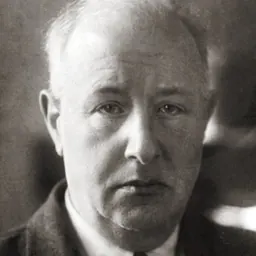
Herman Andimba Toivo ya Toivo (22 August 1924 – 9 June 2017) was a Namibian anti-apartheid activist, politician and political prisoner. He co-founded the Ovamboland People's Organization (OPO) in 1959 and the South West Africa People's Organisation (SWAPO) in 1960, and was among the first Namibians to petition the United Nations for independence.
Tried in 1967–68 in The State v. Tuhadeleni and 36 Others under South Africa's Terrorism Act, 1967, he was sentenced to 20 years and served 16 years on Robben Island, in the same section as Nelson Mandela. Released in 1984, he rejoined SWAPO in exile in Lusaka as secretary-general. He returned in 1989, sat in the Constituent Assembly and the National Assembly, and held three cabinet portfolios under President Sam Nujoma. He retired from elective office after 2005 and was declared a national hero of Namibia. He was buried at Heroes' Acre on 24 June 2017.
Early years Ya Toivo was born on 22 August 1924, the second of seven children, at Omangundu in Ovamboland, northern South West Africa. He attended the church school at Onayena but often herded cattle, as was usual for boys in the area. He trained as a carpenter at Ongwediva Industrial School from 1939 to 1942.
In 1942, during World War II, he volunteered for the Native Military Corps of the Union of South Africa and served with the Allies, reaching the rank of corporal. At his later terrorism trial he recalled that service:
My lord, you found it necessary to brand me a coward. During the Second World War, when it became evident that both my country and your country were threatened by the dark clouds of Nazism, I risked my life to defend both of them, wearing a uniform with orange bands on it. But some of your countrymen, when called to battle to defend civilisation, resorted to sabotage against their own fatherland. I volunteered to face German bullets, and as a guard of military installations, both in South West Africa and the Republic, was prepared to be the victim of their sabotage. Today, they are our masters and are considered the heroes, and I am called the coward.
After the war he worked on a farm near Kalkfeld, then returned to Odibo and attended St Mary's Mission School to learn English, changing from the Lutheran to the Anglican church in order to be admitted.
Political career Cape Town, OPC and OPO In Cape Town he worked as a railway police officer from 1952 to 1953. He joined the Modern Youth Society (MYS), met Denis Goldberg, and became deputy chairman of the MYS. He joined the African National Congress in 1957 and that year co-founded the Ovamboland People's Congress (OPC), forerunner of the OPO, with other contract workers including Eliaser Tuhadeleni. The OPC campaigned for migrant workers' rights and against the incorporation of South West Africa into South Africa. He also kept contact with the Congress of Democrats and the Liberal Party.
In December 1958, with Goldberg's help, he sent a tape to Mburumba Kerina and Michael Scott documenting human rights abuses after Hosea Kutako was refused permission to appear at the United Nations. The recording was used in a UN petition. He was deported from Cape Town to Keetmanshoop and Windhoek, then placed under house arrest at Okaloko in Ovamboland.
He remained close to Leonard Auala of the Evangelical Lutheran Ovambo-Kavango Church (ELOC). Because OPO was rooted among Ovambo congregations, the church gave the movement support. On 19 April 1960 OPO reconstituted itself as SWAPO in New York, with Sam Nujoma confirmed as president. SWAPO formed the South West Africa Liberation Army (SWALA) in 1962. The first clash of the South African Border War came on 26 August 1966 at Omugulugwombashe.
Trial and incarceration Ya Toivo was arrested in 1966. In August 1967 he appeared as Accused No. 21 in The State v. Tuhadeleni and 36 Others, the first trial under the Terrorism Act of 21 June 1967, which was applied retroactively. Co-accused included Eliaser Tuhadeleni (Accused No. 1), Immanuel Shifidi and Nathaniel Maxuilili. Ephraim Kapolo died during the trial in Pretoria.
His speech from the dock, denying South Africa's right to try South West Africans or to rule the territory, was widely circulated:
He spent more than a year in solitary confinement in Pretoria before sentence. On 26 January 1968 the Pretoria Supreme Court sentenced him to 20 years. On Robben Island he was often isolated from other Namibians and clashed with warders. Fellow inmate Mike Dingake wrote that when warders tried to push him around, he struck a young warder, who cried Die kaffer het my geslaan.
He was released on 1 March 1984 after 16 years, the longest term among the Namibian group on the island. He did not want to leave while comrades remained inside and had to be persuaded out of his cell. and then in the National Assembly. Minister of Labour from 26 March 1999 to 27 August 2002, and Minister of Prisons and Correctional Services from 27 August 2002, exchanging posts with Marco Hausiku. He did not stand in the 2004 election, saying he had "done enough".
At SWAPO's August 2002 congress he received the eleventh-most votes (358) for the central committee. At the November 2007 congress he failed, for the first time, to win a politburo seat, a result linked in press reports to alleged ties to the breakaway Rally for Democracy and Progress, which he denied. On 2 December 2012 he was elected a permanent member of the central committee.
Personal life After leaving office he lived in Windhoek with his wife, Vicki Erenstein, an American labour lawyer, and their daughters Mutaleni and Nashikoto, and ran private businesses.
Death and funeral Ya Toivo died at home in Windhoek on the evening of 9 June 2017, aged 92.
Awards and honours He was declared a national hero of Namibia. Other honours include:
Grand Companion of OR Tambo in Silver, 2009, "for his courageous contribution to the fight for independence and freedom in South Africa and Namibia" Honorary doctorate in civil law, International University of Management, 2014
Places and institutions named after him include:
Andimba Toivo ya Toivo Airport (formerly Ondangwa Airport) the mining vessel MV Ya Toivo Andimba Toivo ya Toivo Senior Secondary School the dining hall at St Mary's Mission School, Odibo
Don’t just read it —
keep it.
Full-length biographies made to live with: read them, listen on the way to work, watch them tonight.
- E-book
- Audio
- Video
Instant download · yours to keep · every purchase keeps this site free
Important facts
People in Andimba Toivo ya Toivo's life
Named in this biography and alive at the same time
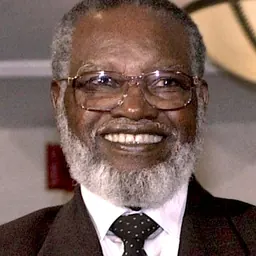

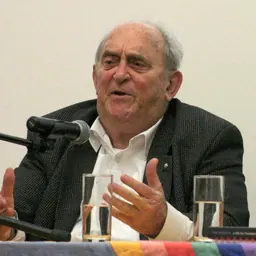



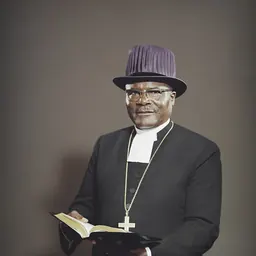
Related people
Same field, nearest in time




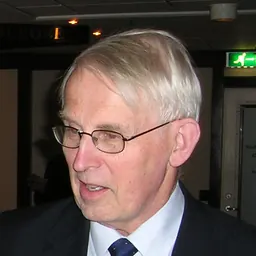

Contemporaries
People whose lives overlapped Andimba Toivo ya Toivo's



Frequently asked questions
Who was Andimba Toivo ya Toivo?
Namibian politician (1924-2017)
When was Andimba Toivo ya Toivo born?
Andimba Toivo ya Toivo was born on 22 August 1924 in Oshikoto Region, Ovamboland, South West Africa.
When did Andimba Toivo ya Toivo die?
Andimba Toivo ya Toivo died on 9 June 2017 in Windhoek.
What was Andimba Toivo ya Toivo's occupation?
Andimba Toivo ya Toivo was a politician and minister.
What nationality was Andimba Toivo ya Toivo?
Andimba Toivo ya Toivo was Namibian.
Sources & further reading
· Wikipedia: Andimba Toivo ya Toivo
· DBpedia: Andimba Toivo ya Toivo
Cite this page
APA: Biography.guide. (2026). Andimba Toivo ya Toivo. https://biography.guide/andimba-toivo-ya-toivo/
MLA: "Andimba Toivo ya Toivo." Biography.guide, https://biography.guide/andimba-toivo-ya-toivo/.
Chicago: "Andimba Toivo ya Toivo." Biography.guide. https://biography.guide/andimba-toivo-ya-toivo/.
Data last updated: 2026-09-20 · Spot an error? Report a correction.
Page generated 2026-09-27 05:23 UTC