
About Anders Fryxell
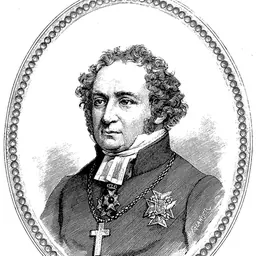
Lived 1795 – 1881 (aged 86). Anders Fryxell was a Swedish historian, priest, philosopher, lyricist, writer and pedagogue.
Anders Fryxell (7 February 179521 March 1881) was a Swedish historian.
Life Fryxell was born at Edsleskog, Dalsland, (now part of Åmål Municipality, Västra Götaland County) on 7 February 1795. He was educated at Uppsala University, took holy orders in 1820, was made a Doctor of Philosophy in 1821, and in 1823 began to publish the great work of his life, the Stories from Swedish History. He did not bring this labor to a close until, fifty-six years later, he published the forty-sixth and crowning volume of his vast enterprise.
Fryxell, as a historian, appealed to every class by the picturesqueness of his style and the breadth of his research; he had the gift of awakening to an extraordinary degree the national sense in his readers. In 1824 he published his Swedish Grammar, which was long without a rival. In 1833 he received the title of professor, and in 1835 he was appointed to the incumbency of Sunne, in the diocese of Karlstad, where he resided for the remainder of his life. In 1840 he was elected to the Swedish Academy in succession to the poet Johan Olof Wallin (1779–1839). In 1847 Fryxell received from his bishop permission to withdraw from all the services of the church, that he might devote himself without interruption to historical investigation.
Among his numerous minor writings are prominent his Characteristics of Sweden between 1592 and 1600 (1830), his Origins of the Inaccuracy with which the History of Sweden in Catholic Times has been Treated (1847), and his Contributions to the Literary History of Sweden.
It is now beginning to be seen that the abundant labors of Fryxell were rather of a popular than of a scientific order, and although their influence during his lifetime was unbounded, it is only fair to later and exacter historians to admit that they threaten to become obsolete in more than one direction.
Fryxell was the founder of the progressive pioneer school Wallinska skolan, the first serious secondary education girl school in Stockholm, and was its principal in 1831–1834.
He was a member of Pro Fide et Christianismo, a Christian education society.
On 21 March 1881 Anders Fryxell died in Stockholm, and in 1884 his daughter Eva Fryxell (born 1829) published from his MS. an interesting History of My History, which was really a literary autobiography and displays the persistence and tirelessness of his industry.
He was elected a member of the Royal Swedish Academy of Sciences in 1847.
Don’t just read it —
keep it.
Full-length biographies made to live with: read them, listen on the way to work, watch them tonight.
- E-book
- Audio
- Video
Instant download · yours to keep · every purchase keeps this site free
Important facts
People in Anders Fryxell's life
Named in this biography and alive at the same time
Related people
Same field, nearest in time




Contemporaries
People whose lives overlapped Anders Fryxell's





Frequently asked questions
Who was Anders Fryxell?
Swedish historian (1795-1881)
When was Anders Fryxell born?
Anders Fryxell was born on 7 February 1795 in Edsleskogs parish.
When did Anders Fryxell die?
Anders Fryxell died on 21 March 1881 in Stockholm.
What was Anders Fryxell's occupation?
Anders Fryxell was a historian, priest, philosopher, lyricist, writer and pedagogue.
What nationality was Anders Fryxell?
Anders Fryxell was Swedish.
Sources & further reading
Cite this page
APA: Biography.guide. (2026). Anders Fryxell. https://biography.guide/anders-fryxell/
MLA: "Anders Fryxell." Biography.guide, https://biography.guide/anders-fryxell/.
Chicago: "Anders Fryxell." Biography.guide. https://biography.guide/anders-fryxell/.
Data last updated: 2026-09-24 · Spot an error? Report a correction.
Page generated 2026-09-27 04:59 UTC