
Anastase-Marie al-Karmali
Iraqi Catholic priest and Discalced Carmelite friar, lexicologist and lexicographer of the Arabic language, philologist, periodical editor, founding member of the Academy of the Arabic Language in Cairo
About Anastase-Marie al-Karmali
Lived 1866 – 1947 (aged 80). Anastase-Marie al-Karmali was a Turkish catholic priest, journal editor, lexicologist, lexicographer, philologist and writer.
Butrus Mikha'il 'Awwad al-Marini ( / ; , was an Iraqi Catholic priest and Discalced Carmelite friar (the Arab renaissance of the late 19th – early 20th century).
Life
Background and studies Butrus's father, Mikha'il al-Marini, son of 'Awwad al-Marini, came from Bhersaf (modern-day Lebanon), and moved to Baghdad (modern-day Iraq) to work as an interpreter. In Baghdad, Mikha'il married Butrus's mother, an Iraqi woman named Maryam Jubran, daughter of the Chaldean Augustin Jubran from Baghdad, descending from an old Iraqi Christian family. which would however remain unfinished by the time of his death. Al-Marini initially titled his projected dictionary Dhayl Lisan al-'Arab ( / , ) before choosing the title Al-Musa'id ( / , ). On 5 May 1888 he entered the Carmelite monastery in Chèvremont, near Liège, Belgium. He then went to Montpellier, France, to study philosophy and theology. He took his simple vow in June 1889 and his solemn vow in 1892. He was ordained a priest on 22 October 1894, and took the name Anastase-Marie de Saint Élie ('Anastasius-Maria of Saint Elijah'). He would become known in Arabic as "al-Karmali", meaning 'the Carmelite'.
Early years as a priest In the period following his ordination, al-Karmali toured Spain before returning to Baghdad. As principal of the , he taught Arabic and French, preached and counselled. At the same time, his articles were published in the magazines of Egypt, Syria and Iraq. Some of these articles were about the different communities of Iraq. In 1900 and 1901, al-Karmali published two articles about the Mandaeans, a community with which he would become "deeply involved". However, his description of the Shabak people in an article of 1902 "has been the source of much misunderstanding and biased secondary literature."
In June 1908, al-Karmali was asked to escort Louis Massignon from Baghdad to Beirut after Massignon's captivity. Al-Karmali eventually accompanied him all the way to Brittany, where he met Massignon's parents, before returning to Baghdad. Al-Karmali and Louis Massignon would maintain a correspondence until 1936.
In 1911, al-Karmali got involved in the academic debates which followed the discoveries (including his own discovery) of forged manuscripts of the Yazidi Book of Revelation and the Yazidi Black Book.
Also in 1911, al-Karmali founded Lughat al-Arab ('The Language of the Arabs'), a "literary, scientific historical monthly magazine" ( / ). The magazine's publication would be interrupted by World War I, before resuming for six more years between 1926 and 1931. The discovery of the lost text of the first Arabic dictionary, the Kitab al-'Ayn, was announced in 1914 in this journal.
World War I and later years In 1914, as World War I had started, the Ottomans accused al-Karmali of being a spy and exiled him to Kayseri in Central Anatolia, where he was retained until 1916. Upon his release, al-Karmali returned to Baghdad in July 1916. During his absence, his library had been destroyed in great part. Al-Karmali would however rebuild his collection, which would number 15,000 volumes and 2,500 manuscripts in the mid-1930s.
Around 1920, al-Karmali became the first librarian of the (Peace Library) in Baghdad, and introduced a system of modern management. He helped develop the Library's collection, donating printed materials from his private collection, when other collections in foreign languages remained in the monastery library. The Peace Library would later be renamed the Baghdad Public Library, and in 1961 would become the basis for the establishment of the Iraq National Library.
In 1928, a jubilee was held in Baghdad to celebrate al-Karmali's scholarly career, chaired by the poet Jamil Sidqi al-Zahawi, with Ahmad Hamid al-Sarraf serving as secretary of the organizing committee. In his address, al-Sarraf drew a parallel between the celebrated friendship of the 10th-century Muslim poet al-Sharif al-Radi and the Sabian writer Abu Ishaq al-Sabi, and the contemporary bond between al-Zahawi and al-Karmali, presenting both as proof of Muslim-Christian coexistence in Iraq. He concluded with verses that became widely quoted:
poem quote We have lived, and through the ages our land has lived: Our mosques standing side by side with churches. And our people will live in a unity of their own: Our turbans side by side with clerical caps. — Ahmad Hamid al-Sarraf Al-Karmali died in Baghdad on 7 January 1947.
Writings As of 2010, many of al-Karmali's writings were unpublished or lost.
Books In Arabic
In French
Articles In Arabic
In French
Awards and honours Ordre des Palmes académiques (1920) Member of the Order of the British Empire
Don’t just read it —
keep it.
Full-length biographies made to live with: read them, listen on the way to work, watch them tonight.
- E-book
- Audio
- Video
Instant download · yours to keep · every purchase keeps this site free
Important facts
People in Anastase-Marie al-Karmali's life
Named in this biography and alive at the same time

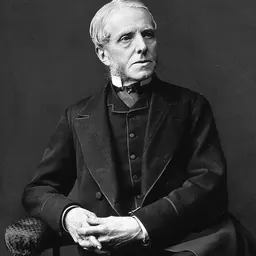
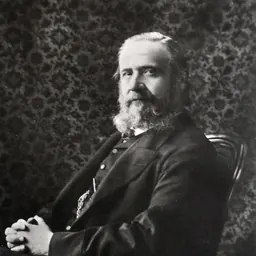
Related people
Same field, nearest in time
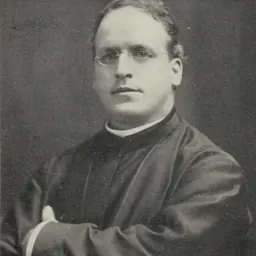

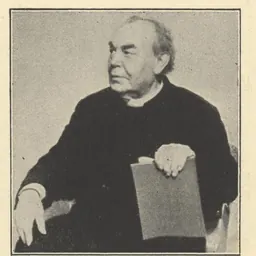
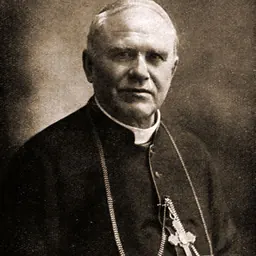
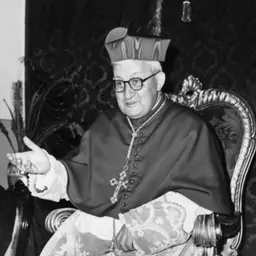
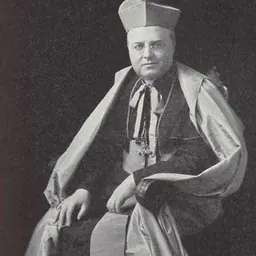
Contemporaries
People whose lives overlapped Anastase-Marie al-Karmali's




Frequently asked questions
Who was Anastase-Marie al-Karmali?
Iraqi Catholic priest and Discalced Carmelite friar, lexicologist and lexicographer of the Arabic language, philologist, periodical editor, founding member of the Academy of the Arabic Language in Cairo
When was Anastase-Marie al-Karmali born?
Anastase-Marie al-Karmali was born on 5 August 1866 in Baghdad.
When did Anastase-Marie al-Karmali die?
Anastase-Marie al-Karmali died on 7 January 1947 in Baghdad.
What was Anastase-Marie al-Karmali's occupation?
Anastase-Marie al-Karmali was a catholic priest, journal editor, lexicologist, lexicographer, philologist and writer.
What nationality was Anastase-Marie al-Karmali?
Anastase-Marie al-Karmali was Turkish.
Sources & further reading
· Wikipedia: Anastase-Marie al-Karmali
· DBpedia: Anastase-Marie al-Karmali
Cite this page
APA: Biography.guide. (2026). Anastase-Marie al-Karmali. https://biography.guide/anastase-marie-al-karmali/
MLA: "Anastase-Marie al-Karmali." Biography.guide, https://biography.guide/anastase-marie-al-karmali/.
Chicago: "Anastase-Marie al-Karmali." Biography.guide. https://biography.guide/anastase-marie-al-karmali/.
Data last updated: 2026-09-20 · Spot an error? Report a correction.
Page generated 2026-09-27 05:24 UTC